


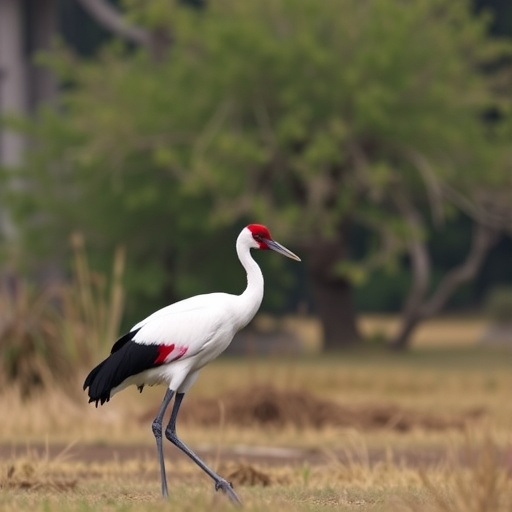
In a rapidly evolving era of ecological conservation, the integration of Volunteered Geographic Information (VGI) into environmental research has sparked both enthusiasm and scrutiny. A groundbreaking study recently published in the journal Big Earth Data delves deeply into the nuances of VGI data quality, particularly emphasizing its application in monitoring and conserving the habitats of the red-crowned crane in Hokkaido, Japan. This work not only forges new understanding about the strengths and limitations of crowd-sourced geographic data but also sets a precedent for future ecological research relying on public participation.
Volunteered Geographic Information, a form of citizen science, involves the collection and sharing of geographic data by non-professionals via platforms like eBird and OpenStreetMap (OSM). These platforms harness the power of millions of volunteers worldwide, offering a wealth of spatial information that is often unattainable through traditional means. However, the reliability and accuracy of such data remain contentious, especially when ecological studies require precision to inform conservation efforts accurately.
This study embarks on a rigorous evaluation by comparing VGI datasets against established authoritative sources—specifically, the Global Biodiversity Information Facility (GBIF) and CASEarth. These reference datasets are considered gold standards, offering scientifically verified records of species distributions and land use. The researchers gathered data focusing on the red-crowned crane, an iconic and ecologically significant species whose habitat in Hokkaido presents unique spatial challenges and biodiversity concerns.
A pivotal revelation from this research is the superior thematic accuracy and extensive spatial coverage demonstrated by VGI in vector-based species distribution data. For example, eBird’s observations of crane sightings showed remarkable congruence with the GBIF records, often covering broader geographic extents due to the sheer volume and frequency of volunteer contributions. This suggests that citizen-reported data can provide a valuable, fine-grained temporal and spatial resolution that is traditionally hard to achieve.
Despite these promising findings, challenges emerged when examining raster-based land use data sourced from OpenStreetMap. While OSM is a widely used platform for mapping and spatial data representation, the study identified significant classification errors and conspicuous coverage gaps, particularly regarding croplands and grasslands within the red-crowned crane’s habitat. These inaccuracies pose critical problems, as land use characterization fundamentally influences conservation planning and habitat suitability models.
The implications of these findings are profound. They articulate a compelling case for tailored validation protocols depending on the type of VGI data employed. Vector-based data, which captures discrete elements such as species occurrences and linear features, benefits from a relatively straightforward accuracy assessment leveraging thematic validation techniques. Conversely, raster-based data, characterized by continuous spatial values like land cover classifications, demands more intricate verification strategies due to the prevalence of misclassifications and spatial inconsistencies.
Further dissecting the nature of VGI errors, the study illuminates common pitfalls linked to user-generated content. In OSM, for instance, contributors may inadvertently misclassify land parcels or omit certain fields, leading to patchy data that can skew environmental models. Conversely, platforms like eBird, benefiting from more structured data input methods and community validation mechanisms such as expert review and automated filters, exhibit enhanced data reliability.
Moreover, the research underscores the dynamic quality of VGI, which is both a strength and a vulnerability. The continuous influx of data from passionate amateurs accelerates temporal updates, ensuring datasets remain current. However, this same fluidity can introduce variability in data precision and consistency, necessitating ongoing quality control efforts. The study’s comprehensive approach, cross-referencing multiple data sources, exemplifies how such calibration can be operationalized.
Another salient point raised is the geographic specificity of VGI accuracy. While the red-crowned crane’s habitats in Hokkaido represent a unique ecological zone, the findings may inform similar conservation endeavors globally. The spatial bias commonly observed in VGI—favoring areas with higher human activity and accessibility—can distort our understanding of less-frequented ecosystems if not adequately addressed via calibration and supplemental data sources.
Ecologists and conservationists stand to gain considerably from these insights. By recognizing the differential quality of VGI types, they can strategize optimal data integration approaches that harness community contributions without compromising scientific rigor. This balance is crucial for advancing conservation goals under the pressures of rapid environmental change and shrinking research budgets.
In this context, the study also accents the importance of interdisciplinary collaboration. Enhancing VGI data quality demands joint efforts spanning ecology, geoinformatics, data science, and community engagement strategies. Developing user-friendly tools for data validation and encouraging best practices among volunteers can vastly improve the overall utility of VGI datasets in biodiversity monitoring.
The methodological innovations presented in this research pave the way for refined ecological modeling and decision-making frameworks that leverage the burgeoning potential of citizen-generated geographic data. Researchers emphasize that while VGI cannot wholly replace traditional data collection methods, it can significantly complement and augment them, offering a critical supplement especially in regions where formal data is sparse or outdated.
Ultimately, this pioneering work in Big Earth Data marks a significant milestone in validating the utility of Volunteered Geographic Information within ecological conservation. It provides a nuanced blueprint for harnessing citizen science with scientific exactitude, propelling conservation efforts into an era of collaborative, data-driven environmental stewardship. As we confront global biodiversity loss, studies such as this reaffirm the indispensable role of both technology and community participation in safeguarding our natural heritage.
News Publication Date: (Not provided)
Web References: (Not provided)
References: Published in Big Earth Data; datasets compared include eBird, OpenStreetMap, GBIF, and CASEarth.
Cite Scienmag News
Margaret Porter. (April 15, 2026). Comparing VGI and Authoritative Data for Red-Crowned Crane Conservation: A New Study Evaluates Quality. Scienmag. https://scienmag.com/comparing-vgi-and-authoritative-data-for-red-crowned-crane-conservation-a-new-study-evaluates-quality/
Margaret Porter. "Comparing VGI and Authoritative Data for Red-Crowned Crane Conservation: A New Study Evaluates Quality." Scienmag, 15 April 2026, https://scienmag.com/comparing-vgi-and-authoritative-data-for-red-crowned-crane-conservation-a-new-study-evaluates-quality/. Accessed 4 September 2026.
Margaret Porter. "Comparing VGI and Authoritative Data for Red-Crowned Crane Conservation: A New Study Evaluates Quality." Scienmag. April 15, 2026. https://scienmag.com/comparing-vgi-and-authoritative-data-for-red-crowned-crane-conservation-a-new-study-evaluates-quality/


