


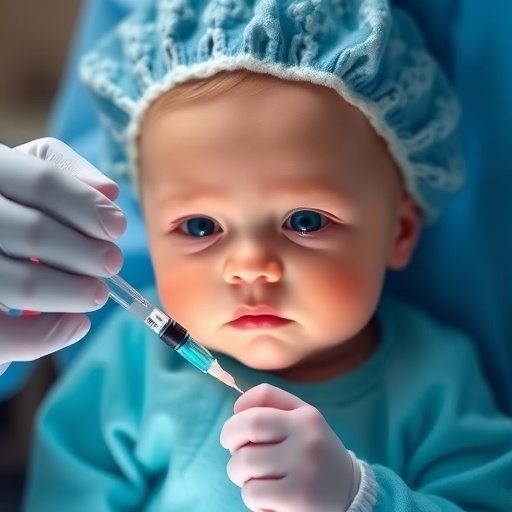
In a groundbreaking advancement poised to revolutionize neonatal surgery, biomedical engineers have engineered a novel injectable microgel designed specifically to curtail bleeding in infants undergoing surgical procedures. This innovative approach addresses a longstanding challenge in pediatric medicine: the critical differences in the blood clotting processes between infants and adults, which complicate current transfusion practices and elevate risks during surgery.
Hemostasis, the biological cascade that halts bleeding following vascular injury, operates distinctly in neonates compared to adults. While adults have a well-characterized, multi-step pathway involving platelets and a series of clotting proteins including fibrin, infants manifest a unique hemostatic profile. This disparity complicates surgical interventions, as infant patients often receive transfusions of adult donor blood to replenish blood loss. However, the adult blood’s clotting mechanisms can over-activate the infant’s system, increasing the risk of thrombotic events such as pulmonary embolism or systemic thrombosis, devastating complications that have long challenged surgeons and hematologists.
Addressing this critical clinical gap, a multidisciplinary team led by Professor Ashley Brown at North Carolina State University has developed what they call B-knob triggered microgels (BK-TriGs). These microgels are exquisitely engineered biomaterials functionalized with specific peptide sequences known as “B peptides”—short amino acid motifs that naturally mediate fibrin polymerization during clot formation. By mimicking this physiological interaction, BK-TriGs promote the assembly of fibrin networks, effectively accelerating clot formation where it is critically needed in neonatal blood vessels.
The innovation lies not only in the biochemical mimicry but also in the physical characteristics of the microgels. These particles behave as soft, water-absorbing hydrogels. Their elasticity and mechanical properties are finely tuned to replicate the behavior of natural platelets, which play a cornerstone role in clotting. This biomechanical emulation enhances the effectiveness of the B peptides displayed on the microgels, anchoring fibrin strands robustly in the injured tissue, thereby significantly improving hemostasis.
Initial in vitro studies utilized advanced microfluidic systems to replicate vascular injury and blood flow, allowing researchers to probe clot formation dynamics in blood plasma derived from both adult humans and infants. Remarkably, BK-TriGs demonstrated superior efficacy in promoting clotting in infant plasma compared to adult plasma, underscoring their targeted design. This outcome validated the hypothesis that the microgels would selectively complement neonatal hemostasis rather than disrupt natural processes.
To translate these promising laboratory findings into physiological relevance, the researchers employed an animal model specially engineered to lack fibrinogen, the key precursor of fibrin. This model provided a controlled biological environment to investigate the effects of introducing infant fibrinogen alongside BK-TriGs. In this rigorous model system, the microgels achieved a stunning 50-60% reduction in blood loss compared to control treatments, outperforming other tested hemostatic agents. Such a significant reduction exemplifies the life-saving potential of BK-TriGs during neonatal surgery.
An essential aspect of this research trajectory is ensuring the safety and efficacy of BK-TriGs before any clinical application. The team is currently planning comprehensive comparative studies juxtaposing BK-TriGs with existing hemostatic therapeutics available on the market. These investigations will evaluate not only standalone performance but also potential synergistic effects when BK-TriGs are combined with conventional treatments, a promising avenue that could optimize perioperative care for infants.
Despite the breakthroughs, the road to clinical implementation is cautiously measured. Professor Brown highlights the necessity for extensive safety profiling to rule out any unforeseen prothrombotic risks inherent in manipulating the coagulation cascade. Given the delicate balance required in infant hemostasis, ensuring that the therapy does not inadvertently precipitate excessive clot formation is paramount.
If future studies confirm the safety profile and clinical benefits, BK-TriGs could usher in a new paradigm of cost-effective, targeted hemostatic therapy tailor-made for neonates. Unlike blood transfusions, which are expensive, complex, and carry transmission risks, microgel manufacturing offers scalable, economically viable production that could expand access globally. Such accessibility is critical for improving surgical outcomes in low-resource settings where blood products are limited or carry heightened risk.
Professor Brown’s vision extends beyond the laboratory as she spearheads translational efforts through Selsym Biotech, Inc., a company dedicated to developing injectable hemostatic materials designed to improve bleeding control. By bridging academic innovation and commercial development, the team aims to expedite the availability of BK-TriGs to patients in need, potentially transforming neonatal surgical care worldwide.
Publication of these remarkable findings is slated for April 3, 2026, in the esteemed journal Science Advances. The peer-reviewed article, titled “Hemostatic B-Knob Triggered MicroGels (BK-TriGs) to Address Bleeding in Neonates,” chronicles the exhaustive experimental work conducted by researchers in biomedical engineering and related disciplines. This publication will undoubtedly catalyze further research into pediatric hemostasis and inspire the development of next-generation biomaterials in medicine.
In summary, the creation of BK-TriGs represents a landmark advancement in addressing the unique challenges of neonatal blood clotting during surgical interventions. By harnessing the molecular and mechanical intricacies of infant hemostasis, this injectable microgel technology promises safer surgeries, reduced dependency on risky blood transfusions, and ultimately improved survival rates for the most vulnerable patients. As the research moves forward, the scientific and medical communities eagerly anticipate the impact of this pioneering therapeutic on neonatal healthcare.
News Publication Date: 3-Apr-2026
Web References: 10.1126/sciadv.ady7698
References: Brown et al., Science Advances, April 2026
Cite Scienmag News
Harold Sullivan. (April 3, 2026). Scientists Develop Injectable Particles to Enhance Safety in Infant Surgeries. Scienmag. https://scienmag.com/scientists-develop-injectable-particles-to-enhance-safety-in-infant-surgeries/
Harold Sullivan. "Scientists Develop Injectable Particles to Enhance Safety in Infant Surgeries." Scienmag, 3 April 2026, https://scienmag.com/scientists-develop-injectable-particles-to-enhance-safety-in-infant-surgeries/. Accessed 3 September 2026.
Harold Sullivan. "Scientists Develop Injectable Particles to Enhance Safety in Infant Surgeries." Scienmag. April 3, 2026. https://scienmag.com/scientists-develop-injectable-particles-to-enhance-safety-in-infant-surgeries/


