


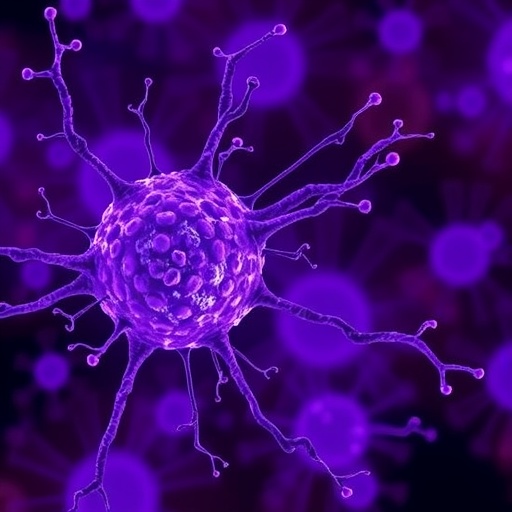
Cancer cells may become harder for the immune system to detect when high blood sugar meets the physical pressures of a tumor, according to a new study from Sanford Burnham Prebys Medical Discovery Institute and collaborating institutions. Published August 7, 2026, in Science Advances, the research identifies a metabolic pathway that helps tumor cells build a thicker sugar-rich surface layer, potentially allowing them to evade immune attack. The findings also point to heat shock factor 1, or HSF1, as a possible drug target for weakening this defense and improving cancer immunotherapy.
The surface layer in question is called the glycocalyx. It is a dense coating made from sugar-containing molecules attached to proteins and lipids, collectively known as glycoconjugates. Although the glycocalyx is found on healthy cells as well as cancer cells, tumors can remodel it into a more substantial barrier. A thickened glycocalyx can physically interfere with contact between cancer cells and immune cells, while also altering the molecular signals that immune cells use to determine whether a cell should be attacked.
Kevin Tharp, a cancer researcher at Sanford Burnham Prebys and the study’s lead and corresponding author, began investigating this process by considering the mechanical environment surrounding tumors. Primary tumors are often stiffer than the normal tissues around them. This stiffness exerts physical stress on cells and can change how they generate energy, communicate with their surroundings and respond to nutrients. Tharp’s team hypothesized that these mechanical forces could influence tumor metabolism in ways that ultimately reshape the cancer cell surface.
To test the idea, the researchers grew cells under laboratory conditions designed to mimic either soft, normal tissue or the stiffer environment found near a primary tumor. They also compared conventional cell-culture media with a newer formulation intended to more closely reproduce the nutrient composition of human blood and tissues. Each medium was tested under normal glucose levels and under elevated glucose conditions resembling hyperglycemia, the high-blood-sugar state associated with diabetes and metabolic syndrome.
The combinations produced sharply different cellular responses. Mechanical stiffness, nutrient composition and glucose availability influenced the proteins made by the cells, the metabolites accumulating inside them and the structure of their glycocalyx. Excess glucose increased the thickness of the surface coating most clearly when cells were grown in physiological, human-like medium. The result suggests that conventional laboratory media may conceal important aspects of tumor biology by exposing cells to nutrient mixtures that differ substantially from those encountered in the body.
The team next examined how glucose metabolism could provide the raw materials needed to construct glycoconjugates. Glucose is not simply burned for energy; its carbon atoms can also be diverted into biochemical pathways that generate sugars and other components used to decorate proteins and lipids. When the researchers altered glucose metabolism, the composition of the glycocalyx changed. Cells grown in conventional medium and those grown in physiological medium developed distinctly different glycoconjugate profiles, and hyperglycemia further modified the molecular architecture of their outer coatings.
Proteomic analyses then highlighted HSF1 as a central regulator of the response. HSF1 is best known as a stress-response protein that helps cells survive high temperatures, toxic conditions and other forms of damage. It is also associated with breast cancer progression and metastasis. In the new experiments, the protein appeared to connect the physical and metabolic conditions of the tumor microenvironment with the production of cell-surface sugars.
The researchers found that hyperglycemia enhanced cancer cells’ ability to avoid immune detection when HSF1 was present and when the cells were grown under conditions designed to resemble the tumor microenvironment. Blocking HSF1 prevented the glucose-associated thickening of the glycocalyx. Using scanning angle interference microscopy, the scientists were able to measure changes in the surface layer and show that inhibiting HSF1 reduced the protective coating that otherwise formed under high-glucose conditions.
This mechanism offers a possible explanation for how elevated blood sugar could worsen cancer outcomes. Epidemiological studies have linked diabetes, metabolic syndrome and hyperglycemia with increased cancer risk and poorer results after treatment, but the biological reasons have remained incompletely understood. The new findings suggest that high glucose may do more than fuel tumor growth: in the right mechanical and nutritional environment, it may help cancer cells construct a molecular shield against immune surveillance.
The work does not establish that lowering blood sugar or blocking HSF1 will automatically improve outcomes for people with cancer, and the researchers emphasize that further studies are needed in animal models and clinical settings. However, the results create a potential therapeutic strategy. Drugs that inhibit HSF1, or treatments that interfere with glycocalyx assembly, could theoretically expose tumor cells to immune cells and make them more vulnerable to immunotherapies. Such an approach may be particularly valuable against metastatic disease, where immune evasion is a defining obstacle. The study also underscores why cancer metabolism experiments must account for both the physical properties of tumors and the complex nutrient conditions inside the human body.
News Publication Date: 7 August 2026
Web References: https://sbpdiscovery.org/scientists/kevin-tharp-phd/; https://doi.org/10.1126/sciadv.aeb1136
References: Tharp et al., “The microenvironment dictates glyco-immune surveillance via HSF1-mediated metabolism,” Science Advances, DOI: 10.1126/sciadv.aeb1136
Cite Scienmag News
Nathaniel Bowman. (August 7, 2026). Revealing How Cancer Cells Evade the Immune System. Scienmag. https://scienmag.com/revealing-how-cancer-cells-evade-the-immune-system/
Nathaniel Bowman. "Revealing How Cancer Cells Evade the Immune System." Scienmag, 7 August 2026, https://scienmag.com/revealing-how-cancer-cells-evade-the-immune-system/. Accessed 4 September 2026.
Nathaniel Bowman. "Revealing How Cancer Cells Evade the Immune System." Scienmag. August 7, 2026. https://scienmag.com/revealing-how-cancer-cells-evade-the-immune-system/


