


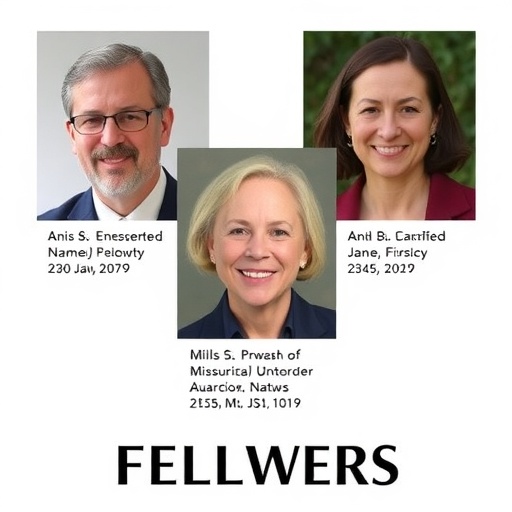
The University of Missouri has recently celebrated a significant milestone in its research community, with three of its distinguished researchers being named Fellows of the American Association for the Advancement of Science (AAAS) for the year 2025. This prestigious recognition highlights the substantial contributions of these scientists in advancing their respective fields, reflecting not only personal achievement but also the university’s commitment to impactful, cutting-edge research that addresses some of the most pressing challenges in health, biology, and veterinary sciences.
AAAS remains the world’s largest general scientific society and is the publisher of the seminal journal Science. Since its founding in 1848, the association has been dedicated to advancing science and serving society through a diverse array of programs, including science policy advocacy, international collaborations, education, and public engagement. Being named an AAAS Fellow is one of the highest honors a scientist can receive, honoring individuals for scientifically or socially distinguished efforts to advance science or its applications.
At the forefront of this recognition are three Mizzou researchers: Paul de Figueiredo, Roman Ganta, and Wesley Warren, all of whom are principal investigators at the Christopher S. Bond Life Sciences Center. Their research spans molecular microbiology, bacterial molecular genetics, and comparative genomics, providing groundbreaking insights that not only deepen scientific understanding but also pave the way for new therapeutic approaches and agricultural innovations.
Paul de Figueiredo’s work is characterized by his innovative methods to elucidate microbial processes. His research centers on the molecular mechanisms of how microbes interact with their hosts and the development of novel tools that allow for a deeper understanding of these interactions at a cellular and molecular level. His lab is particularly notable for applying these insights towards next-generation therapies, exploring microbiome manipulations to combat cancer and autoimmune diseases. Collaborating closely with bioengineers, de Figueiredo’s team has introduced state-of-the-art technologies that reveal the complex dynamics of microbial behavior, which may revolutionize treatments by targeting the microbial contributions to disease pathology.
Roman Ganta’s exceptional scientific contributions lie in unraveling the complexities of bacterial molecular genetics, specifically focusing on the intracellular pathogens Ehrlichia and Anaplasma, which are notoriously difficult to study due to their complex life cycles within host cells. His research has substantially advanced understanding of tick-borne diseases such as ehrlichiosis and anaplasmosis, critical zoonotic infections that impact both human and animal health globally. Ganta’s work integrates molecular biology with immunology, aiming toward the development of vaccines and novel therapeutics that could prevent these debilitating illnesses. His research has crucial implications for reducing the burden of these diseases on livestock, pets, and humans alike, addressing a significant gap in infectious disease management.
Wesley Warren distinguishes himself through his pioneering role in comparative genomics and genome-scale data analysis. His research has transformed evolutionary biology and functional genomics, providing broad applications in biomedicine and agricultural sciences. By comparing whole genomes across diverse species, Warren’s lab sheds light on genetic adaptations responsible for species-specific traits, advancing the understanding of evolutionary processes and contributing critical data to conservation efforts. His use of single-cell genomic technologies further enhances resolution at the cellular level, allowing unprecedented analysis of genetic complexity and novel traits emergence. This holistic genomic approach broadens the framework for deciphering the genetic blueprint of life and has profound implications for human health and animal biology.
The designation of these three scientists as AAAS Fellows not only acknowledges their remarkable individual achievements but also underscores the University of Missouri’s strategic emphasis on interdisciplinary research that bridges molecular biology, genomics, and translational medicine. By fostering a collaborative environment among researchers spanning the School of Medicine, the College of Veterinary Medicine, and the College of Agriculture, Food, and Natural Resources, the university effectively leverages diverse expertise to tackle complex biological problems from multiple angles.
This synergy is particularly evident at the Christopher S. Bond Life Sciences Center, a hub dedicated to interdisciplinary biosciences research. The center’s infrastructure supports advanced research technologies and fosters collaboration across molecular microbiology, veterinary medicine, and agriculture, facilitating rapid translation of discoveries into practical applications. The 2025 AAAS Fellows exemplify this model, as their work addresses challenges ranging from infectious disease and immune disorders to genomic diversity and agricultural productivity.
In recognizing microbial contributions to human disease, Paul de Figueiredo’s work challenges traditional paradigms by highlighting microbes’ dual roles as pathogens and potential therapeutic agents. His research into microbial-host interactions and their manipulation portrays a futuristic vision of precision medicine, where microbes or their components serve as targeted treatments, complementing or even surpassing conventional drugs in efficacy and specificity.
Roman Ganta’s research exemplifies the critical interface between human health and veterinary medicine, a domain often encapsulated by the One Health initiative. By focusing on tick-borne pathogens that affect multiple vertebrate hosts, Ganta integrates molecular genetics and cell biology to inform vaccine development and disease prevention strategies. His work not only aids in protecting public health but also secures agricultural economies dependent on livestock health, exemplifying the far-reaching impact of molecular genetic research on society.
Wesley Warren’s comparative genomics research leverages high-throughput sequencing and bioinformatics to chart evolutionary trajectories and genetic architectures across species. His approaches help unravel the complexities in genome evolution, adaptive traits, and species-specific innovations, creating a foundational resource that benefits fields from ecology and conservation to biomedicine. His incorporation of single-cell genomics presents a cutting-edge framework to explore cellular heterogeneity and evolutionary biology at an unprecedented scale.
The University of Missouri’s researchers’ collective contributions illustrate a broad scientific narrative, underscoring the power of multidisciplinary research to extend the boundaries of knowledge and address real-world problems. Their recognition by AAAS not only honors their scientific excellence but serves as a beacon encouraging sustained inquiry, innovation, and collaboration.
In summary, the 2025 AAAS Fellowships awarded to Paul de Figueiredo, Roman Ganta, and Wesley Warren spotlight a triumvirate of research excellence. Their pioneering work in microbiology, bacterial molecular genetics, and comparative genomics respectively reflect the University of Missouri’s robust ecosystem for scientific discovery. These advancements hold promise for transformative impacts in healthcare, veterinary medicine, and evolutionary biology, with ripple effects extending to the well-being of humans, animals, and ecosystems alike.
News Publication Date: 2024
Web References:
- University of Missouri Bond Life Science Center: https://bondlsc.missouri.edu/
- University of Missouri School of Medicine: https://medicine.missouri.edu/
- University of Missouri College of Veterinary Medicine: https://cvm.missouri.edu/
- University of Missouri College of Agriculture, Food and Natural Resources: https://cafnr.missouri.edu/
- American Association for the Advancement of Science (AAAS): https://www.aaas.org/
Cite Scienmag News
Alan Morgan. (March 26, 2026). Three University of Missouri Professors Named 2025 AAAS Fellows. Scienmag. https://scienmag.com/three-university-of-missouri-professors-named-2025-aaas-fellows/
Alan Morgan. "Three University of Missouri Professors Named 2025 AAAS Fellows." Scienmag, 26 March 2026, https://scienmag.com/three-university-of-missouri-professors-named-2025-aaas-fellows/. Accessed 3 September 2026.
Alan Morgan. "Three University of Missouri Professors Named 2025 AAAS Fellows." Scienmag. March 26, 2026. https://scienmag.com/three-university-of-missouri-professors-named-2025-aaas-fellows/


