


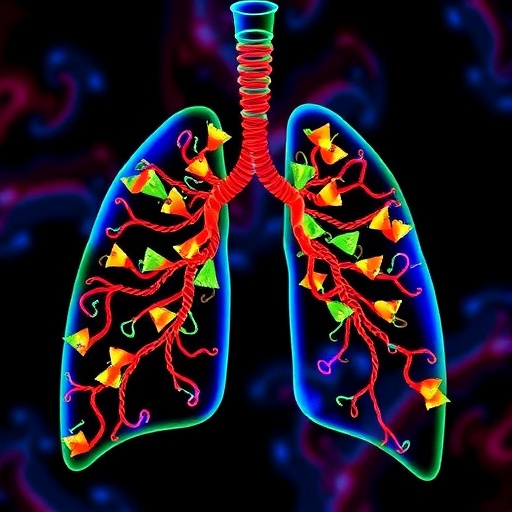
In a groundbreaking development that could redefine therapeutic approaches to respiratory illnesses, a team of researchers led by Yang, W., Meng, X., and Zhu, Y. has uncovered the potential of lysine in mitigating acute lung injury (ALI). Published in the prestigious journal Cell Death Discovery in 2026, this study elucidates a molecular mechanism whereby lysine enhances α-tubulin acetylation and revitalizes ciliary function, offering a sophisticated approach to restoring lung integrity after injury.
Acute lung injury, a condition characterized by rapid-onset inflammation and severe disruption of the alveolar-capillary barrier, has long challenged clinicians due to its complex pathophysiology and limited therapeutic options. The alveolar epithelial cells lining the respiratory tract are essential for efficient gas exchange and maintaining fluid balance, but injury to these cells often leads to respiratory failure. Central to this process is the dysfunction of the epithelial cilia, whose intricate beating motions facilitate the clearance of pathogens and debris. The loss or impairment of ciliary activity exacerbates tissue damage and prolongs recovery.
The research team has pinpointed lysine—a ubiquitous essential amino acid—as a key regulator in maintaining and restoring ciliary function following lung injury. Traditionally recognized for building proteins, lysine’s role in modulating post-translational modifications of cytoskeletal proteins sheds new light on intracellular mechanisms underpinning lung repair. Specifically, lysine mediates the acetylation of α-tubulin, a structural protein fundamental to microtubule stability and the generation of ciliary motion.
Through sophisticated biochemical assays and in vivo models of ALI, the study reveals that lysine supplementation normalizes α-tubulin acetylation levels that are otherwise diminished during acute injury. This restoration translates into enhanced microtubule stability within cilia, reinvigorating ciliary motility critical for mucus clearance and epithelial defense integrity. This molecular rescue mitigates inflammation and fosters tissue regeneration, positioning lysine as a promising adjunct in lung injury management.
The authors employed state-of-the-art imaging techniques including high-resolution live-cell microscopy to visualize ciliary dynamics in real time. Their data convincingly demonstrate a direct correlation between lysine-driven α-tubulin acetylation and the recovery of coordinated ciliary beating. Importantly, this ciliary restoration decreases the buildup of harmful secretions and inflammatory mediators that contribute to alveolar collapse and respiratory distress.
Furthermore, the mechanistic insight into lysine’s intervention reveals that it activates specific acetyltransferase enzymes responsible for α-tubulin modification. By boosting the enzymatic activity that targets α-tubulin, lysine effectively reverses the hypoacetylation state characteristic of injured lung epithelia. This biochemical shift not only stabilizes microtubules but also strengthens the epithelial barrier, limiting the infiltration of immune cells that fuel damaging inflammation.
The study’s animal models confirm the protective effects of lysine treatment on lung tissue architecture and function. Rodents subjected to experimental ALI and subsequently administered lysine exhibited significantly improved oxygenation metrics, reduced histopathological signs of damage, and enhanced survival rates compared to controls. These findings underscore lysine’s translational potential for clinical applications.
Strikingly, the implications of this research extend beyond acute injury. The molecular axis involving lysine, α-tubulin acetylation, and ciliary activity may provide therapeutic avenues in chronic respiratory conditions such as chronic obstructive pulmonary disease (COPD) and cystic fibrosis, where ciliary dysfunction underlies disease progression. By restoring ciliary function, lysine offers a strategy to alleviate mucus stasis and recurrent infections that worsen these conditions.
This discovery emerges amid growing interest in the role of post-translational modifications in cellular resilience and repair mechanisms. It highlights the nuanced interplay between dietary components, cellular metabolism, and protein modification in health and disease. Lysine, long recognized for its nutritional value, now assumes a role as a molecular modulator of cellular architecture and function.
The research team emphasizes that further studies are required to translate these findings into human clinical contexts fully. Dosage optimization, delivery mechanisms, and the safety profile of lysine supplementation in acute and chronic lung disease patients must be rigorously evaluated. Nonetheless, this foundational work provides a compelling rationale to advance lysine-based therapeutic regimens.
In an era of escalating respiratory health challenges exacerbated by pollution, smoking, and emerging pathogens, interventions aimed at preserving and restoring lung epithelial integrity are urgently needed. The ability of lysine to reinstate ciliary activity and microtubule stabilization offers a versatile and biologically elegant tool to combat lung injury at the cellular level.
This research also invites a reevaluation of the role amino acids and metabolic substrates play in maintaining pulmonary function beyond their canonical metabolic roles. As our understanding of lung biology deepens, lysine’s repositioning as a therapeutic agent might herald a new class of biomolecular interventions targeting cytoskeletal dynamics and cellular homeostasis.
Moreover, the study sparks interest in exploring other amino acids and their metabolites as potential modulators of epithelium-driven tissue repair. The crosstalk between metabolic state and structural protein modification represents an exciting frontier in respiratory medicine where targeted biochemical strategies can synergize with conventional therapies.
Conclusively, this pioneering study not only identifies lysine as a critical player in lung injury recovery but also establishes a new paradigm for respiratory disease treatment grounded in precise molecular manipulation of cellular infrastructure. As lysine moves from bench to bedside, it promises to improve outcomes for patients suffering from devastating pulmonary conditions by harnessing the power of protein acetylation and ciliary restoration.
Yang and colleagues’ publication in Cell Death Discovery stands as a testament to the evolving landscape of biomedical science where fundamental molecular insights translate into transformative clinical possibilities. This work exemplifies the fusion of biochemistry, cell biology, and translational medicine to tackle one of the most pressing health challenges worldwide—acute and chronic lung injury.
From molecular intricacies to potential therapeutic breakthroughs, lysine’s story offers hope for millions battling compromised lung function and sets the stage for innovative interventions capable of rewriting the future of pulmonary medicine.
Cite Scienmag News
Ophelia Keating. (March 16, 2026). Lysine Improves Lung Injury via Tubulin Acetylation. Scienmag. https://scienmag.com/lysine-improves-lung-injury-via-tubulin-acetylation/
Ophelia Keating. "Lysine Improves Lung Injury via Tubulin Acetylation." Scienmag, 16 March 2026, https://scienmag.com/lysine-improves-lung-injury-via-tubulin-acetylation/. Accessed 4 September 2026.
Ophelia Keating. "Lysine Improves Lung Injury via Tubulin Acetylation." Scienmag. March 16, 2026. https://scienmag.com/lysine-improves-lung-injury-via-tubulin-acetylation/


