


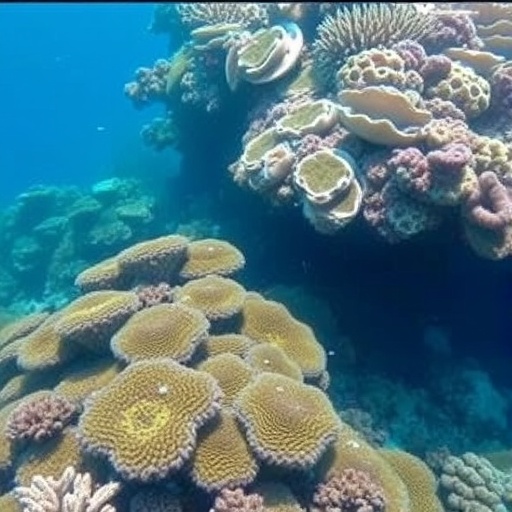
Coral reefs, often heralded as the rainforests of the sea, stand at the frontline of the globe’s environmental challenges. Decimated by escalating climate crises, these vibrant ecosystems are experiencing unprecedented declines. Rapid intervention is not a choice but a necessity if coral reefs are to survive the mounting pressures of ocean warming, acidification, and disease outbreaks. Recognizing the urgency, a pioneering initiative—the Global Coral Tech Transfer Project—is mobilizing scientific expertise and cutting-edge technology to safeguard these underwater treasures. By synergizing efforts from SECORE International and the Australian Institute of Marine Science (AIMS), this venture aims to revolutionize coral restoration methodologies and empower reef restoration practitioners worldwide.
The essence of the Global Coral Tech Transfer Project lies in large-scale coral breeding techniques that prioritize genetic diversity—key to resilience in the face of environmental stressors. Coral Seeding, the core method this project champions, involves breeding coral larvae in controlled conditions and strategically settling them onto substrates that can be transplanted onto reefs. This technique ensures not only the propagation of coral colonies but does so with an emphasis on maintaining genetic heterogeneity, which is crucial to enhancing the adaptive capacity of reef systems against climate-induced disturbances.
Bridging continents, the collaboration unites Australian technological advances with Caribbean scientific expertise, spearheaded by Dominican Republic’s marine conservation organization FUNDEMAR. Together, these entities coalesce decades of research, operational experience, and innovation to curate a versatile restoration toolbox. This toolbox is designed to be adaptable across varied reef environments, thus ensuring its efficacy on a global scale. The inter-continental knowledge exchange enables adaptation, contextualization, and testing of methodologies, facilitating rapid scaling of restoration efforts in vulnerable regions.
At the heart of this project is the fusion of SECORE’s field-tested methodologies with AIMS’s engineering prowess, particularly demonstrated through advanced coral seeding devices. In recent years, AIMS has engineered scalable, cost-effective settlement technologies as part of the Reef Restoration and Adaptation Program, designed to bolster the Great Barrier Reef’s defense against climatic threats. These innovations include a two-part coral seeding substrate that separates the larvae settlement phase from outplanting, significantly streamlining large-scale reef restoration workflows.
The two-part seeding device innovatively decouples settlement and outplanting steps. Coral larvae settle on small concrete tabs, which are then clustered into a triangular framework for outplanting. Such modularity facilitates mass handling and transport, enhancing efficiency in transplantation operations. This device builds on the foundational Seeding Units originally developed by SECORE, representing a leap forward in scaling coral propagation efforts without compromising the well-being of settled larvae or operational logistics. The technical design prioritizes durability, ease of deployment, and compatibility with varied reef environments.
The initial phase of the collaborative effort has been meticulously focused on piloting Australian coral breeding technologies with FUNDEMAR’s teams in the Caribbean. Central to this phase is the evaluation and refinement of tools, ensuring they deliver sustainable outcomes suited to local ecological conditions. The process involves rigorous field trials, data collection, and iterative protocol adjustments to harmonize methodologies from distinct biogeographic and climatic zones. This iterative development is vital for creating a robust, universally applicable coral restoration toolkit.
A standout technological contribution to this project is the ReefSeed system — a sophisticated, containerized platform engineered to maximize fertilization success and coral larvae production. By automating and standardizing fertilization and larval culture processes, ReefSeed reduces labor demands while improving output quality. Integrating such technology into FUNDEMAR’s new aquaculture facility promises to push the boundaries of efficiency in coral sexual reproduction for restoration. Comparative analyses between ReefSeed and traditional methods will determine optimal strategies for scaling larval culture operations under Caribbean conditions.
FUNDEMAR’s role exemplifies how science and grassroots marine conservation can coalesce for regional environmental stewardship. With a history of successful local reef restoration initiatives, FUNDEMAR brings essential expertise and infrastructural capacity, enabling nuanced adaptation of technologies. Through this collaboration, the organization facilitates knowledge transfer and capacity building across the Caribbean, fostering a network of practitioners equipped with cutting-edge coral seeding technologies. This approach is instrumental in overcoming technical barriers that have historically constrained restoration scalability.
The fundamental principle driving the Global Coral Tech Transfer Project is collaboration—not simply across organizations but also across disciplines and geographic boundaries. This cross-pollination accelerates innovation cycles and disseminates best practices, making restoration efforts more resilient and impactful. Such cooperation is key to resolving the complex socio-ecological challenges coral reefs face globally, and the project’s inclusive model serves as a blueprint for future large-scale environmental restoration initiatives.
Looking ahead, the consortium plans to broaden the restoration toolbox’s reach beyond the Caribbean, adapting technologies for diverse reef systems worldwide. To sustain momentum, SECORE and AIMS are initiating a joint research program aimed at continuous innovation, technology refinement, and field validation. This commitment to adaptive research ensures the toolbox remains at the forefront of practical coral restoration science and integrates emerging knowledge and advances.
The broader implications of this initiative extend beyond ecological restoration; they encompass socio-economic resilience for the billions dependent on coral reefs for livelihoods, tourism, and coastal protection. By enabling scalable and replicable restoration methods, the project indirectly supports conservation-driven economic stability in vulnerable coastal communities. Moreover, embedding genetic diversity within restoration protocols aligns with long-term conservation goals by fostering reefs capable of adapting to evolving climate conditions.
In sum, the Global Coral Tech Transfer Project represents a beacon of hope amid burgeoning coral reef declines. Through the convergence of innovative engineering, field-tested ecological methods, and international cooperation, the project is breaking new ground in coral restoration science. As it progresses, the initiative not only enhances reef resilience but also exemplifies how science and community-driven conservation can collectively confront one of the most pressing environmental crises of our time.
Cite Scienmag News
Violet Maxwell. (March 11, 2026). Worldwide Collaboration in Knowledge and Technology Drives Major Advances in Reef Restoration. Scienmag. https://scienmag.com/worldwide-collaboration-in-knowledge-and-technology-drives-major-advances-in-reef-restoration/
Violet Maxwell. "Worldwide Collaboration in Knowledge and Technology Drives Major Advances in Reef Restoration." Scienmag, 11 March 2026, https://scienmag.com/worldwide-collaboration-in-knowledge-and-technology-drives-major-advances-in-reef-restoration/. Accessed 3 September 2026.
Violet Maxwell. "Worldwide Collaboration in Knowledge and Technology Drives Major Advances in Reef Restoration." Scienmag. March 11, 2026. https://scienmag.com/worldwide-collaboration-in-knowledge-and-technology-drives-major-advances-in-reef-restoration/


