


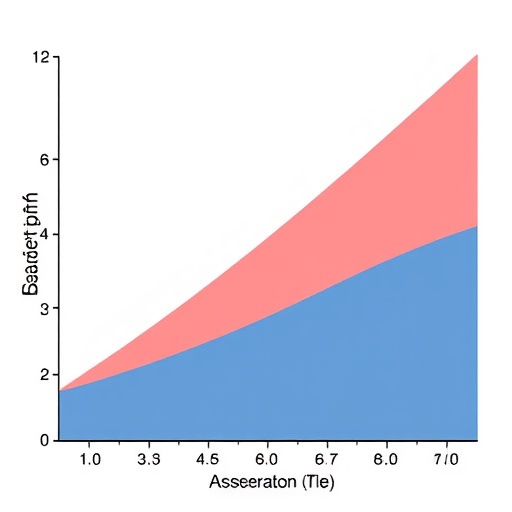
In a groundbreaking study poised to transform the way medical professionals approach post-operative recovery in elderly patients, researchers have mapped the detailed trajectory of test components within a comprehensive geriatric assessment (CGA) for individuals undergoing total hip and knee arthroplasty. This pioneering work, conducted by Kappenschneider, Bammert, Holzapfel, and colleagues, offers unprecedented insight into the multifaceted recovery patterns experienced by orthogeriatric patients, underscoring the nuanced interplay between surgical outcomes and geriatric health complexities.
Total hip and knee arthroplasties are among the most common and impactful surgeries performed on older adults, often resulting in substantial improvements in quality of life and mobility. However, recovery pathways can be highly variable and complicated by pre-existing chronic conditions, frailty, and cognitive impairments inherent to the aging population. The study harnesses the power of the CGA, a multidimensional diagnostic process designed specifically for the elderly, capturing functional status, comorbidities, cognitive and emotional health, social circumstances, and nutritional status, to track recovery dynamics longitudinally.
This research illuminates how the individual components of the CGA evolve following surgery, laying bare which aspects exhibit significant improvement and which remain stagnant or deteriorate. Such detailed temporal mapping moves beyond simplistic before-and-after comparisons, revealing complex trajectories that could inform personalized rehabilitation strategies. For instance, while functional scores generally improved as expected, facets like cognitive performance and psychosocial wellbeing demonstrated more nuanced patterns, sometimes independent of physical recovery.
One critical revelation pertains to mobility assessments. The study documented that improvements in joint-specific function, measured by standardized physical performance tests, followed a positive curve, often surpassing baseline values by several months post-operation. Yet, this purely orthopedic progress did not uniformly translate to broader functional independence. The differentiation suggests that standard orthopedic success metrics may inadequately capture real-world recovery complexities faced by geriatric patients.
Nutritional status, a frequently underappreciated determinant of post-surgical recovery, was meticulously evaluated at multiple intervals. The data revealed that malnutrition or risk thereof persisted in a notable subset of patients despite surgical correction of mobility impairments, signaling the need for integrated nutritional interventions embedded within the orthogeriatric care continuum. This finding emphasizes the importance of viewing recovery through a holistic lens that acknowledges the interplay between physical healing and metabolic resilience.
Cognitive trajectories painted an equally compelling narrative. Contrary to expectations that surgery and anesthetic exposure might exacerbate cognitive decline, some patients maintained or even improved cognitive screening scores over time, implicating factors such as increased social engagement and enhanced mobility as possible contributors. However, cognitive vulnerabilities remained elevated in a substantial fraction, underscoring the imperative to incorporate neurocognitive monitoring and tailored cognitive rehabilitation post-arthroplasty.
Psychosocial assessments added another nuanced layer to the picture. The emotional and psychological aftermath of major surgeries in older adults often remains under-investigated, yet this study elucidated fluctuating patterns of depressive symptoms and social isolation markers. Notably, social support emerged as a key modulator of these outcomes, highlighting the potential for targeted psychosocial interventions to accelerate recovery and improve long-term wellbeing in this delicate population.
Importantly, this research leveraged a prospective longitudinal design combined with sophisticated statistical modeling of repeated measures, ensuring robust characterization of individual recovery trajectories. Through cluster analyses, researchers identified distinct phenotypic recovery profiles, enabling stratification of patients into high, medium, and low responders across multiple health domains. Such stratification holds promise for tailoring rehabilitation protocols and resource allocation to optimize outcomes effectively.
The implications of these findings are profound for clinical practice. The nuanced understanding of how various CGA components evolve post-arthroplasty challenges the existing paradigms that predominantly focus on joint-specific outcomes. Instead, it advocates for integrated multidisciplinary approaches that concurrently address physical, cognitive, nutritional, and psychosocial domains to foster truly holistic recovery.
Healthcare systems, particularly in aging societies, stand to benefit from adopting CGA-driven recovery monitoring as a standard practice. This could catalyze a shift towards precision medicine in orthogeriatrics, where interventions are dynamically adjusted based on comprehensive patient profiles rather than isolated clinical parameters. Enhanced recovery trajectories not only promise to reduce complications and rehospitalizations but could also improve overall life expectancy and quality-adjusted survival.
Moreover, this study opens novel avenues for future research, encouraging deeper exploration into mechanistic drivers behind heterogeneous recovery patterns. Understanding how biological age, genetic predispositions, inflammation, and rehabilitation intensity interrelate with CGA trajectories could unlock targeted therapeutics and preventive strategies. There is also scope for technological integration wherein wearable devices and digital health platforms continuously feed data into CGA frameworks for real-time adaptive care.
While the study is a seminal contribution, it also acknowledges limitations such as potential selection biases and the challenges of generalizing findings across diverse healthcare settings. Nevertheless, its rigorous methodology and comprehensive scope set a benchmark for subsequent investigations. Its prospective approach ensures that results are directly applicable to improving clinical pathways and patient-centered care models.
The research team’s findings herald a new era in geriatric surgery outcomes, where assessments transcend the immediate technical success of an operation to encompass the totality of patient recovery. This paradigm shift acknowledges the complexity of aging biology and the social determinants of health, advocating for an evolved clinical mindset that is both scientifically sophisticated and compassionately attuned.
In conclusion, the trajectory mapping of CGA components in orthogeriatric patients after total hip and knee arthroplasty provides a critical framework to understand, predict, and enhance recovery across multiple health dimensions. As populations worldwide grow older and demand for joint replacement surges, such insights are indispensable for optimizing healthcare delivery, improving patient experiences, and ultimately transforming the science of aging surgery.
Cite Scienmag News
Ophelia Keating. (March 11, 2026). Assessment Trajectory in Orthogeriatric Hip and Knee Patients. Scienmag. https://scienmag.com/assessment-trajectory-in-orthogeriatric-hip-and-knee-patients/
Ophelia Keating. "Assessment Trajectory in Orthogeriatric Hip and Knee Patients." Scienmag, 11 March 2026, https://scienmag.com/assessment-trajectory-in-orthogeriatric-hip-and-knee-patients/. Accessed 3 September 2026.
Ophelia Keating. "Assessment Trajectory in Orthogeriatric Hip and Knee Patients." Scienmag. March 11, 2026. https://scienmag.com/assessment-trajectory-in-orthogeriatric-hip-and-knee-patients/


