


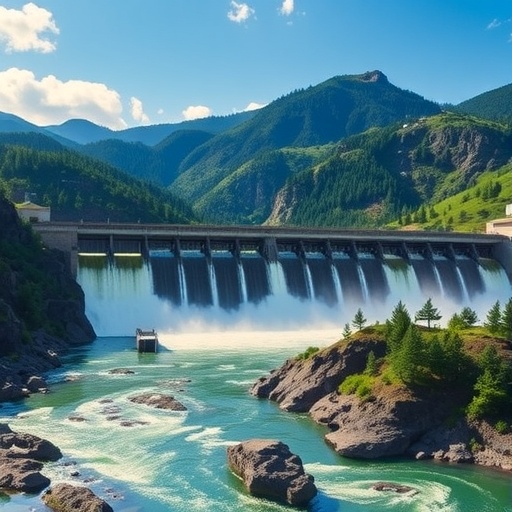
As global demand for sustainable energy sources escalates, large hydropower dams are often championed as a cornerstone for clean, renewable electricity generation. However, emerging research from Michigan State University highlights that these monumental projects, while integral to the renewable energy landscape, harbor profound environmental and social challenges that have yet to be sufficiently addressed. The study, published in the esteemed journal Nature Sustainability, flags the potential for repeating historic mistakes unless dam construction and hydroelectric initiatives undergo transformative rethinking—integrating scientific insight with community-based governance from their inception.
Hydropower currently accounts for more than half of the world’s renewable energy output, a testament to its vital role in reducing fossil fuel dependency and mitigating greenhouse emissions. Yet, these benefits come with a heavy cost. Large-scale dams irrevocably alter riverine ecosystems, disrupt sediment flows, and jeopardize aquatic biodiversity, including critical fisheries. Communities that have thrived on these ecosystems for generations frequently face displacement and the loss of livelihoods, underscoring a social toll that persists alongside ecological damage. The MSU research team, led by eminent geographer Emilio Moran, stresses the urgency of incorporating local community perspectives in hydropower decision-making to prevent such adverse outcomes.
Historically, the World Commission on Dams proposed strategies in the early 2000s designed to minimize the environmental and social pitfalls of large dams. Unfortunately, these recommendations fell on deaf ears among countries like China, India, and Brazil—the global leaders in dam construction who prioritized rapid economic growth over sustainable governance. Two and a half decades later, the ramifications of this approach remain stark, prompting renewed scrutiny and calls for accountability in hydropower governance. This research delves deeply into the characteristics defining the latest wave of dam projects in the Global South, utilizing extensive data from international collaborations and synthesis workshops.
A striking revelation of the study is the persistence of top-down, project-centric decision-making that neglects the interconnected nature of river systems. Rather than isolated interventions, hydropower projects must be conceptualized as components within integrated river basin management frameworks that balance ecological integrity with energy production goals. This systemic perspective enables identification of cumulative impacts and unlocks hidden opportunities to optimize energy generation while preserving ecosystem services and community well-being.
Beyond reconceptualizing planning frameworks, the research advocates for infusing hydropower development with a diversified renewable energy portfolio. Integration of solar photovoltaics, wind turbines, hydrokinetic devices, and innovative floating solar panels with traditional hydropower infrastructure emerges as a promising strategy to enhance both energy output and climate resilience. Technologically validated, these hybrid systems can mitigate some environmental drawbacks of dams, distribute energy production more evenly, and reduce dependency on any single resource subject to seasonal variability or climate-induced fluctuations.
Central to the study’s vision is the adoption of “horizontal governance” models, dismantling hierarchical, centralized control in favor of collaborative, cross-sector partnerships. This governance paradigm distributes authority and accountability among diverse stakeholders—local governments, Indigenous groups, energy producers, and consumers alike. The co-author Sergio Villamayor-Tomas elaborates on the transformative potential of “prosumer” frameworks wherein community members simultaneously produce and consume energy. Empowering these dual roles fosters democratization of energy systems, promotes equitable benefit sharing, and fortifies local energy autonomy, thereby enhancing social justice dimensions often overlooked in mega-infrastructure projects.
The research also underscores that renewable energy is not a monolithic solution—it requires strategic and mindful deployment to truly be sustainable. Reducing fossil fuel emissions via hydropower expansion must proceed hand in hand with safeguarding vital ecosystems and respecting the rights and knowledge of affected populations. This balancing act demands robust, transparent, and adaptive governance structures, comprehensive environmental impact assessments, and continuous monitoring that integrates traditional ecological knowledge with scientific data.
Maria Claudia Lopez, an associate professor at MSU’s College of Agriculture and Natural Resources and co-author, confirms that the necessary tools and institutional frameworks for sustainable hydropower governance already exist. The pressing challenge lies in their widespread adoption and operationalization in diverse sociopolitical contexts. The research offers a critical contribution to this endeavor by synthesizing interdisciplinary perspectives and emphasizing community-led solutions that align energy development with conservation and social equity objectives.
Among the intricacies examined, climate change adaptation emerges as a pivotal consideration. River flow regimes are progressively altered by shifting precipitation patterns and increased drought frequency, threatening the reliability and efficiency of hydropower generation. Flexible, hybrid energy systems and decentralized governance mechanisms can enhance resilience, ensuring energy security despite environmental uncertainties. This insight positions sustainable hydropower not only as a mitigation tool but also as a vital component in climate adaptation strategies.
The collaborative research team comprises experts from multiple disciplines and countries, including the U.K., Cambodia, Italy, and Spain, reflecting the global scope and urgency of the findings. Sponsored by the National Socio-Environmental Synthesis Center and supported by the National Science Foundation, this work advances a more nuanced understanding of hydropower’s complex trade-offs and governance challenges, setting a foundation for policy reform and technological innovation worldwide.
Emphasizing the role of local agency, the study highlights emerging international grassroots movements where Indigenous and local communities mobilize to protect their lands and assert energy sovereignty. Their heightened involvement not only strengthens ecological stewardship but also bridges gaps in governance, offering models for participatory decision-making that can be scaled and adapted across regions. This renaissance in community empowerment signals a pivotal shift in the politics of energy infrastructure development—one grounded in inclusivity and sustainability.
In conclusion, the MSU-led study serves as a clarion call to the global energy sector: large hydropower dams cannot be embraced uncritically as clean energy saviors. Only through systemic planning that accounts for entire river ecosystems, investment in diversified renewable technologies, and equitable governance structures that elevate local voices can hydropower fulfill its promise. This multifaceted approach is indispensable for transitioning to a truly sustainable and just energy future.
News Publication Date: 26-Mar-2026
Web References:
References: Not specified in source material.
Cite Scienmag News
Violet Maxwell. (May 13, 2026). Balancing Act: Designing Dams to Safeguard Communities and Ecosystems. Scienmag. https://scienmag.com/balancing-act-designing-dams-to-safeguard-communities-and-ecosystems/
Violet Maxwell. "Balancing Act: Designing Dams to Safeguard Communities and Ecosystems." Scienmag, 13 May 2026, https://scienmag.com/balancing-act-designing-dams-to-safeguard-communities-and-ecosystems/. Accessed 4 September 2026.
Violet Maxwell. "Balancing Act: Designing Dams to Safeguard Communities and Ecosystems." Scienmag. May 13, 2026. https://scienmag.com/balancing-act-designing-dams-to-safeguard-communities-and-ecosystems/


