


As the global imperative to reduce greenhouse gas emissions intensifies, carbon capture and storage (CCS) technologies have emerged as a critical tool in mitigating climate change by trapping carbon dioxide (CO₂) emissions from industrial and energy sectors and sequestering the gas deep underground. However, ensuring the integrity and safety of CCS infrastructure, especially the wells that inject and store CO₂, is paramount. Recognizing this, Southwest Research Institute (SwRI) has undertaken significant enhancements of its subsurface safety valve (SSSV) testing facilities, positioning itself at the forefront of safety innovation tailored for the extreme conditions unique to CCS environments.
Subsurface safety valves have long been a cornerstone in oil and gas operations, acting as vital emergency shutoff devices that prevent uncontrolled release of hydrocarbons in case of operational anomalies or accidents. Applying these valves in CCS wells introduces new complexities, as the valves must maintain functionality under conditions involving extreme cold temperatures caused by CO₂ leaks or releases. Until recently, industry-wide standards for evaluating SSSVs under these low-temperature scenarios were nonexistent, hampering uniform safety assurance across CCS operations.
SwRI’s legacy in the field of safety valve testing dates back to the mid-1970s, underscoring its extensive experience and technical mastery. With the surge in CCS activities, the institute has expanded its capabilities, completing major upgrades in August 2024 to address the rigorous requirements imposed by CCS applications. These advancements not only enhance safety validation but also prioritize operational efficiency and cost-effectiveness, critical factors for stakeholders navigating the rapidly evolving CCS landscape.
A pivotal element driving these upgrades was SwRI’s involvement in a joint industry project (JIP) aimed at developing standardized protocols for testing subsurface safety valves specifically under CCS conditions. This collaboration brought together leading manufacturers and experts to confront the industry’s previous gap—robust procedures to simulate and validate valve performance amidst the cryogenic challenges posed by CO₂ releases. The data and insights generated through this endeavor directly informed the redesign of SwRI’s testing infrastructure.
Complementing the JIP’s technical groundwork, SwRI contributed actively to the American Petroleum Institute’s (API) formulation of Annex P: Requirements for CCS Environments, integrated into API Specification 14A, 13th Edition Addendum 1, published in December 2025. This annex establishes authoritative criteria for valve design and testing in CCS settings, reflecting the collective knowledge accrued from SwRI’s pioneering efforts. Such alignment with API standards ensures that the safety valve testing and certification processes meet globally recognized benchmarks.
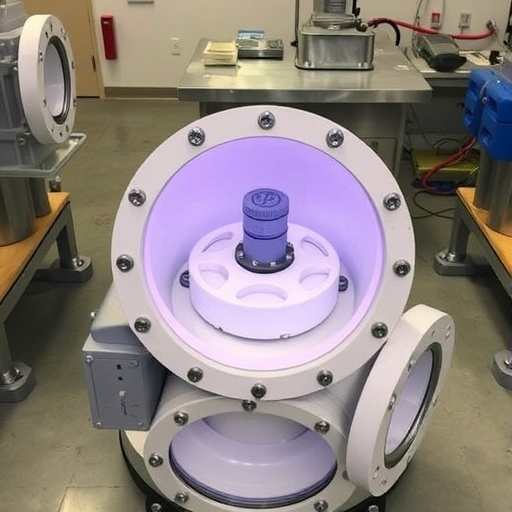
One of the most transformative aspects of SwRI’s facility overhaul involves optimizing the physical setup for valve testing. Previously, configuring tests for SSSVs in intensely cold conditions demanded complex and labor-intensive procedures. The new design incorporates an ergonomically enhanced enclosure coupled with a modular, plug-and-play lid system that seamlessly integrates thermal ducting channels. This innovation allows technicians to assemble the test setup as a single unit, which is then inserted directly into the test pit. The streamlined process minimizes manual handling over hazardous areas and significantly reduces setup time, thereby lowering labor costs and enhancing worker safety.
To simulate the cryogenic environment characteristic of CCS leaks, SwRI employs a sophisticated cooling approach within the test pit. A duct system delivers passively circulated air that has been chilled by an environmental control unit supplied with liquid nitrogen. This setup achieves the extremely low temperatures required to replicate potential CO₂ exposure scenarios, while ingeniously circumventing common obstacles such as frost buildup and ice formation that could compromise test accuracy and repeatability. The approach ensures consistent thermal conditions throughout valve evaluation cycles.
Beyond static testing, SwRI is moving toward dynamic performance assessments, such as cooled gas slam tests. These tests mimic sudden transient events—worst-case scenarios where valves must respond rapidly and reliably to abrupt pressure changes in a CCS environment. By rigorously challenging valve response under these demanding conditions, SwRI assures manufacturers and operators that their safety valves can maintain integrity during emergency fluctuations, reinforcing overall wellbore and environmental protection.
At the core of SwRI’s value proposition is its integration of decades of hands-on experience with state-of-the-art testing infrastructure. The institute’s nitrogen supply systems, precision leakage measurement instrumentation, and highly skilled technical staff collectively enable unparalleled accuracy and repeatability in valve evaluations. This comprehensive approach provides critical assurance to industry clients that their safety valves will perform effectively when deployed in the field.
The heightened demand for CCS-related valve testing reinforces the strategic significance of SwRI’s facility advancements. By focusing on both the quality and efficiency of testing procedures, SwRI not only accelerates validation timelines but also helps reduce operational expenditures, a key consideration for widespread CCS adoption. The upgrades exemplify how targeted engineering innovation can facilitate safer deployment of next-generation energy technologies and contribute to global climate mitigation strategies.
In summary, Southwest Research Institute’s cutting-edge subsurface safety valve testing upgrades represent a landmark development for CCS infrastructure safety. Through meticulous adaptation of testing environments and collaborative standardization efforts, SwRI is ensuring that safety valves meet the stringent requirements posed by CCS conditions. This proactive approach safeguards environmental and human welfare by mitigating risks associated with CO₂ leak events, paving the way for more reliable and trusted carbon capture storage solutions worldwide.
For more detailed information on Southwest Research Institute’s expanded subsurface safety valve testing capabilities and CCS-related services, interested parties can visit the institute’s dedicated web page at https://www.swri.org/markets/energy-environment/fluids-engineering/flow-component-testing/safety-valve-testing.
Cite Scienmag News
Russell Cooper. (March 3, 2026). SwRI Enhances Facilities to Broaden Subsurface Safety Valve Testing for New Applications. Scienmag. https://scienmag.com/swri-enhances-facilities-to-broaden-subsurface-safety-valve-testing-for-new-applications/
Russell Cooper. "SwRI Enhances Facilities to Broaden Subsurface Safety Valve Testing for New Applications." Scienmag, 3 March 2026, https://scienmag.com/swri-enhances-facilities-to-broaden-subsurface-safety-valve-testing-for-new-applications/. Accessed 3 September 2026.
Russell Cooper. "SwRI Enhances Facilities to Broaden Subsurface Safety Valve Testing for New Applications." Scienmag. March 3, 2026. https://scienmag.com/swri-enhances-facilities-to-broaden-subsurface-safety-valve-testing-for-new-applications/


