


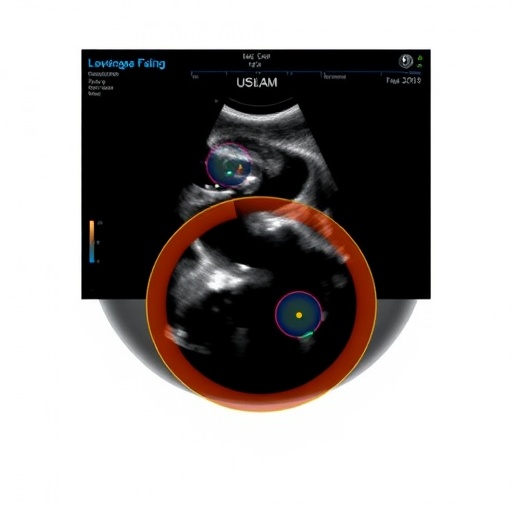
In a groundbreaking advancement poised to transform obstetric care, Ultrasound AI has secured FDA De Novo clearance for its innovative Delivery Date AI technology. This cloud-based software as a medical device (SaMD) harnesses the power of artificial intelligence to predict a pregnancy’s delivery date using only standard ultrasound images. Seamlessly integrated into existing obstetrics and maternal-fetal medicine (OB/MFM) workflows, this technology provides clinicians with real-time insights, enabling more precise and actionable decision-making during prenatal visits.
Underlying Delivery Date AI is a sophisticated ensemble of deep learning neural networks meticulously trained on millions of de-identified ultrasound scans. These images encompass a wide spectrum of fetal and maternal characteristics linked to the timing of delivery, obtained from diverse patient populations across multiple clinical settings. By analyzing the full ultrasound image, the technology surpasses traditional dating methods that rely on last menstrual period or gestational age estimates, which can often be unreliable or inconsistent, especially in complex or high-risk pregnancies.
The advent of this technology marks a critical step forward in obstetric medicine, addressing a long-standing challenge faced by clinicians worldwide: accurately predicting the timing of delivery to preemptively mitigate risks associated with preterm birth. Preterm birth remains a leading cause of neonatal morbidity and mortality, imposing immense medical and financial burdens. By providing a data-driven, image-centered prediction model, Delivery Date AI offers individualized prognostic insights that can profoundly influence care planning and clinical intervention timing.
Robert Bunn, President and Founder of Ultrasound AI, emphasizes that this FDA clearance signifies not just innovation but a clinically validated breakthrough. Unlike traditional predictive tools, Delivery Date AI reduces uncertainty by augmenting clinical judgment with AI-driven precision. Its capacity to render rapid and dependable predictions enhances the support available to mothers and healthcare providers, fostering improved prenatal care outcomes.
The technology’s clinical efficacy has been rigorously examined and validated through the landmark PAIR (Perinatal Artificial Intelligence in Ultrasound) study, a peer-reviewed investigation conducted in partnership with the University of Kentucky. This comprehensive study encompassed over 5,700 patients, demonstrating Delivery Date AI’s exceptional predictive accuracy with an R² value of 0.92 in calculating days to delivery solely from ultrasound images. Such a high correlation underscores the tool’s reliability and potential to standardize pregnancy dating across varied demographic and clinical environments.
Clinicians are particularly excited by the transformative insights enabled by this tool. Dr. Nathan Fox, a board-certified obstetrician specializing in maternal-fetal medicine and a partner physician with Ultrasound AI, notes that the ability to precisely track fetal development and delivery timing reshapes every clinical decision in obstetrics. Informed interventions can now be more strategically timed—improving outcomes in cases ranging from preterm labor to planned deliveries—ultimately enhancing maternal and neonatal health.
Delivery Date AI also distinguishes itself through its compatibility and ease of deployment. It integrates seamlessly with most standard ultrasound machines used in clinical practice today. Installation requires only minutes, and the software generates predictive outputs in mere seconds following image upload. This operational efficiency minimizes disruption to existing prenatal workflows, making it accessible to both high-volume healthcare systems and lower-resource clinics, including those in medically underserved “obstetric deserts.”
Beyond clinical utility, the scalability of Delivery Date AI presents a significant opportunity to reduce systemic healthcare costs. Preterm births and related complications constitute a substantial financial strain on health services. Accurate, early prediction allows for better resource allocation, targeted interventions, and prevention strategies, ultimately curtailing expenses associated with neonatal intensive care and long-term morbidity management.
The FDA’s recognition and clearance of Delivery Date AI now open the door for its broad adoption across the United States. Hospitals, imaging centers, and ultrasound equipment manufacturers can implement this cutting-edge technology to elevate prenatal care standards nationwide. Access to the full FDA decision and documentation can be found on the agency’s website, providing transparency and further validation of the software’s safety and efficacy.
Ultrasound AI, the visionary company behind this technology, continues to expand its research horizon. The company’s patented image-centric AI platform is designed not only to predict delivery timing but also to explore additional obstetric applications. This ongoing research aims to further enhance prenatal diagnostics and interventions, ultimately pushing the frontier of precision medicine in maternal-fetal healthcare.
In a medical landscape increasingly driven by data and AI, Delivery Date AI exemplifies how advanced analytics can bridge critical gaps in traditional clinical practice. By empowering clinicians with unparalleled insight derived from routine ultrasound images, this technology promises improved patient outcomes, greater equity in prenatal care, and a new standard of personalized pregnancy management.
As the healthcare community embraces this innovation, the potential ripple effects extend beyond individual patient encounters. Equitable access to accurate delivery predictions may transform public health approaches to obstetrics, inform policy decisions, and support the global endeavor to reduce preterm birth rates and associated health disparities.
In summary, Ultrasound AI’s Delivery Date AI technology stands at the forefront of a new era in obstetrics—marrying the precision of artificial intelligence with the accessibility of standard imaging techniques. Its FDA clearance heralds a future where data-driven insights foster earlier, more reliable clinical decisions, reshaping maternal and fetal health paradigms across diverse care settings.
Web References:
- Ultrasound AI official website: ultrasound.ai
- FDA De Novo decision: FDA Denovo Clearance
- PAIR study article in The Journal of Maternal-Fetal & Neonatal Medicine: PAIR Study
Keywords
Artificial Intelligence, Ultrasound Imaging, Delivery Date Prediction, Obstetrics, Maternal-Fetal Medicine, FDA Clearance, Preterm Birth, Deep Learning, Perinatal Care, SaMD, Prenatal Diagnosis, Clinical Decision Support
Cite Scienmag News
Blake Davidson. (March 2, 2026). FDA Grants De Novo Clearance to Ultrasound AI for Delivery Date Prediction Technology. Scienmag. https://scienmag.com/fda-grants-de-novo-clearance-to-ultrasound-ai-for-delivery-date-prediction-technology/
Blake Davidson. "FDA Grants De Novo Clearance to Ultrasound AI for Delivery Date Prediction Technology." Scienmag, 2 March 2026, https://scienmag.com/fda-grants-de-novo-clearance-to-ultrasound-ai-for-delivery-date-prediction-technology/. Accessed 5 September 2026.
Blake Davidson. "FDA Grants De Novo Clearance to Ultrasound AI for Delivery Date Prediction Technology." Scienmag. March 2, 2026. https://scienmag.com/fda-grants-de-novo-clearance-to-ultrasound-ai-for-delivery-date-prediction-technology/


