


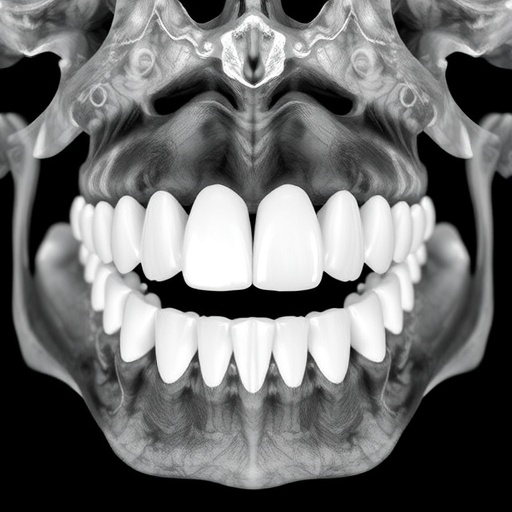
A recent groundbreaking study published in Nature Communications unveils a genetic mutation that alters tooth morphology, leading to a rare condition known as lobodontia. This discovery centers on a missense variant within the ASCL5 gene, profoundly impacting dental development in humans. The implications of this research stretch beyond dentistry, offering novel insights into human developmental biology, evolutionary genetics, and potential therapeutic avenues.
Lobodontia, characterized by the presence of teeth with multiple atypical lobes or cusps, represents a fascinating deviation from normal dental anatomy. Until now, the molecular mechanisms underpinning this anomaly remained elusive. The study led by Theerapanon and colleagues provides a compelling genetic explanation, explicitly implicating a missense variant—where a single nucleotide change results in amino acid substitution—in the ASCL5 gene as the causative factor.
ASCL5, or Achaete-Scute Family BHLH Transcription Factor 5, belongs to a family of basic helix-loop-helix (bHLH) transcription factors known to regulate critical developmental processes. Previously, the functional role of ASCL5 in odontogenesis, the complex process of tooth development, was poorly understood. Through meticulous genomic analysis and functional assays, this investigation identifies ASCL5 as a vital regulator of cusp patterning and morphogenesis within the dental lamina, the embryonic tissue responsible for tooth formation.
The mutational landscape characterized in the study was derived from extensive sequencing of affected individuals presenting with lobodontia phenotypes, compared against healthy controls. By pinpointing a specific missense variant, the researchers demonstrated a clear genotype-phenotype correlation, establishing causality with robust statistical and experimental evidence. Subsequent in vitro studies enabled a detailed characterization of the mutation’s impact on ASCL5 protein structure and function.
At the molecular level, the missense variant induces conformational changes destabilizing the ASCL5 protein’s DNA-binding domain. This alteration negatively affects its ability to regulate target gene expression during critical windows of odontogenic signaling. Notably, the disrupted transcriptional program impacts signaling pathways essential for cusp formation, such as the BMP (Bone Morphogenetic Protein) and SHH (Sonic Hedgehog) pathways, known for their intricate role in dental tissue patterning.
The broader developmental consequences observed emphasize how minute changes in transcription factor function can cascade into significant morphological abnormalities. Functional assays utilizing CRISPR-Cas9-generated cell models reinforced the direct influence of ASCL5 perturbation on odontoblast differentiation and enamel knot formation—the latter serving as the signaling center that orchestrates tooth shape and cusp number.
From an evolutionary biology standpoint, the findings provoke intriguing questions about the regulatory plasticity of tooth morphology genes. Variability in cusp number and shape has long been a hallmark of mammalian dental evolution, correlating with dietary adaptations. The identification of a single genetic variant capable of inducing such a pronounced morphological variation underscores the possible mechanisms driving phenotypic diversity in natural populations.
Clinically, this research holds promise for improving the diagnosis and management of congenital dental anomalies. Understanding the genetic basis allows for refined genetic counseling and potentially, in the future, targeted gene therapy. Moreover, the insights gleaned could extend to regenerative dental medicine, where recapitulating normal tooth development programs is critical to engineering bioengineered teeth.
The complexity and precision of human odontogenesis are underscored by this study’s detailed dissection of ASCL5’s role. Its context-dependent expression patterns and interaction with other transcription factors exemplify the multilayered regulation necessary to produce not only teeth but the intricate patterns of cusps that facilitate mastication and nutrition.
In addition to the experimental work, bioinformatic analyses played a pivotal role by integrating large-scale genomic datasets with evolutionary conservation metrics. These analyses revealed the high conservation of ASCL5 across vertebrates, suggesting a deeply rooted developmental importance that transcends species barriers. This conservation also indicates why even subtle mutations within this gene can lead to profound phenotypic outcomes.
The study also sheds light on potential epistatic interactions where the ASCL5 variant might interact with other genetic loci, modifying the penetrance and expressivity of the lobodontia phenotype. This insight opens avenues for further research into the genetic architecture of dental anomalies, advocating for larger genome-wide association studies and multi-omics approaches.
Perhaps most excitingly, this research leverages cutting-edge interdisciplinary techniques, combining developmental biology, structural genomics, and functional genomics, to unravel the precise molecular underpinnings of a developmental anomaly. This integrated approach not only reveals novel biology but also establishes a template for investigating other rare congenital conditions.
Furthermore, the discovery heightens awareness around dental developmental disorders, areas often overlooked in the shadow of more systemic genetic diseases. It brings dental health genetics to the forefront of medical genetics, encouraging a multidisciplinary focus that intersects dentistry, genetics, and evolutionary biology.
Future investigations inspired by this work may explore the potential compensatory pathways that mitigate or exacerbate lobodontia phenotypes. Understanding how certain individuals manifest severe symptoms while others carry the mutation with subclinical effects could revolutionize personalized medicine in dentistry.
In essence, Theerapanon et al.’s study exemplifies the power of combining human genetics with developmental biology to decode complex traits. Their work on the ASCL5 gene variant implicates a crucial determinant of tooth morphology, offering a window into the genetic choreography that sculpts human dentition.
As this fascinating field advances, the hope is that these molecular insights will not only resolve longstanding questions in developmental tooth biology but will also translate into clinical breakthroughs that enhance dental health and evolutionary understanding alike. This seminal research marks a significant leap toward unraveling the genetic enigma of dental form and function.
Cite Scienmag News
Juliet Wilcox. (February 12, 2026). ASCL5 Missense Variant Causes Lobodontia Defect. Scienmag. https://scienmag.com/ascl5-missense-variant-causes-lobodontia-defect/
Juliet Wilcox. "ASCL5 Missense Variant Causes Lobodontia Defect." Scienmag, 12 February 2026, https://scienmag.com/ascl5-missense-variant-causes-lobodontia-defect/. Accessed 3 September 2026.
Juliet Wilcox. "ASCL5 Missense Variant Causes Lobodontia Defect." Scienmag. February 12, 2026. https://scienmag.com/ascl5-missense-variant-causes-lobodontia-defect/


