


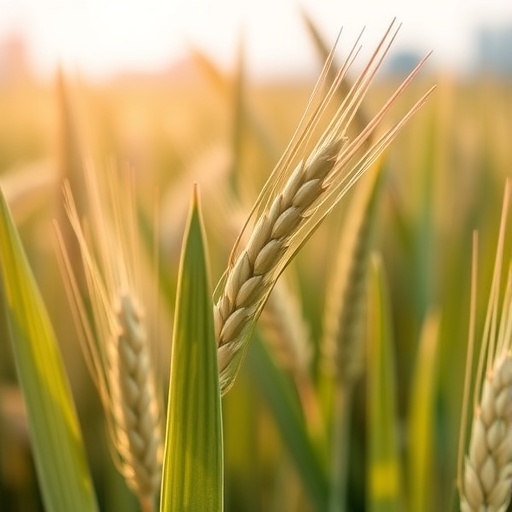
In a groundbreaking study, researchers have explored a transformative approach to enhancing abiotic stress tolerance in wheat, scientifically known as Triticum aestivum L. This study, titled “Nanopriming as a strategic tool to boost abiotic stress tolerance in wheat,” represents a significant leap forward in agricultural practices, emphasizing the urgent need to tackle the increasing challenges posed by environmental extremes. This innovative technique, termed nanopriming, leverages the unique properties of nanoparticles to optimize seed performance, particularly under adverse conditions such as drought and salinity.
The reliance on traditional agricultural methods is becoming increasingly risky due to the escalating effects of climate change. Wheat, one of the world’s staple crops, faces severe threats from abiotic stressors, which can drastically reduce yield and affect food security. The study conducted by Palengara, Kalathingal, and Edakkandiyil offers a glimpse into the future of sustainable agriculture by introducing nanopriming as a viable strategy for growing healthier, more resilient wheat plants. Researchers utilized advanced nanomaterials to treat seeds before planting, enabling them to withstand unfavorable environmental conditions that would typically stunt growth and development.
Nanopriming involves applying a solution containing nanoparticles to seeds, which enhances their germination and subsequent growth. This treatment activates the seeds’ metabolic pathways, leading to improved enzyme activity, increased antioxidant responses, and enhanced protein synthesis. As a result, nanoprimed seeds exhibit stronger and faster initial growth, allowing them to better adapt to the environmental stressors that threaten their growth. This process not only boosts the early development of wheat but also sets a foundation for a more robust crop capable of withstanding future challenges.
In the context of global food security, the implications of this research are profound. With the world population projected to reach approximately 9.7 billion by 2050, the demand for wheat is anticipated to increase dramatically. However, the sustainable increase in crop production necessitates innovative strategies, such as nanopriming, to ensure that wheat can be cultivated successfully in the face of fluctuating climatic conditions. By utilizing nanotechnology in agriculture, researchers aim to enhance crop resilience while minimizing the need for chemical fertilizers and pesticides, thus promoting a more environmentally friendly approach to farming.
Moreover, the study highlighted the specific mechanisms through which nanopriming influences seed health. The nanoparticles used in the treatment can penetrate seed tissues, delivering vital nutrients and eliciting stress tolerance pathways. This intricate interaction between the nanoparticles and the seed biology is essential for understanding how nanopriming can be optimized for different wheat varieties and growing conditions. The researchers conducted various experiments to analyze the physiological and molecular responses of nanoprimed seeds, providing compelling evidence of the technique’s efficacy across multiple environments.
Another critical aspect of this research involves addressing the potential risks associated with the use of nanotechnology in agriculture. While the benefits of nanopriming are compelling, it is essential to consider the long-term impacts on soil health and ecosystems. Researchers are committed to ensuring that the application of nanomaterials does not lead to unintended consequences, such as toxicity to beneficial soil microorganisms or the buildup of nanoparticles in the food chain. Comprehensive studies are necessary to evaluate the environmental safety and sustainability of nanopriming practices.
The findings from this research underscore a crucial point: the integration of nanotechnology into traditional agricultural practices has the potential to revolutionize how we approach crop production. As farmers face the dual challenges of climate change and soil degradation, innovative techniques such as nanopriming could provide the breakthrough needed to enhance crop resilience and ensure stable yields. Furthermore, this technology could be adapted for other vital crops, expanding its impact beyond just wheat.
In light of these findings, the scientific community is urged to promote further research into the mechanisms of nanopriming and its long-term effects on plant health and productivity. This research lays the groundwork for future studies that could investigate the broader implications of nanoparticles in agriculture, including their role in soil health and their interactions with various biotic and abiotic factors. The goal is to create a holistic understanding of how nanotechnology can be harnessed to build sustainable agricultural systems.
As interest in nanotechnology continues to grow within the agricultural sector, policymakers and industry stakeholders must remain informed about the advancements and regulations surrounding these innovative practices. Collaborative efforts between scientists, farmers, and agricultural organizations will be essential to translating research findings into practical applications that can enhance crop resilience and food security on a global scale. Through shared knowledge and resources, a united front can be established to address the pressing challenges of modern agriculture.
Additionally, public awareness and education about nanotechnology in agriculture are paramount. The general population’s understanding of the potential benefits and safety of such treatments will play a significant role in the acceptance and success of nanopriming practices. Outreach initiatives focusing on the scientific foundation and practical applications of nanopriming could foster greater public trust and interest in these advanced agricultural techniques.
Ultimately, the research conducted by Palengara and colleagues serves as a catalyst for a broader dialogue about integrating nanotechnology into sustainable farming practices. As the quest for increased agricultural productivity in the face of climate challenges intensifies, nanopriming may very well emerge as one of the cornerstones of the next agricultural revolution. By combining modern technology with a deep understanding of plant biology, we can pave the way for a more resilient agricultural future.
Cite Scienmag News
Alan Morgan. (January 15, 2026). Nanopriming Enhances Wheat’s Resilience to Abiotic Stress. Scienmag. https://scienmag.com/nanopriming-enhances-wheats-resilience-to-abiotic-stress/
Alan Morgan. "Nanopriming Enhances Wheat’s Resilience to Abiotic Stress." Scienmag, 15 January 2026, https://scienmag.com/nanopriming-enhances-wheats-resilience-to-abiotic-stress/. Accessed 3 September 2026.
Alan Morgan. "Nanopriming Enhances Wheat’s Resilience to Abiotic Stress." Scienmag. January 15, 2026. https://scienmag.com/nanopriming-enhances-wheats-resilience-to-abiotic-stress/


