


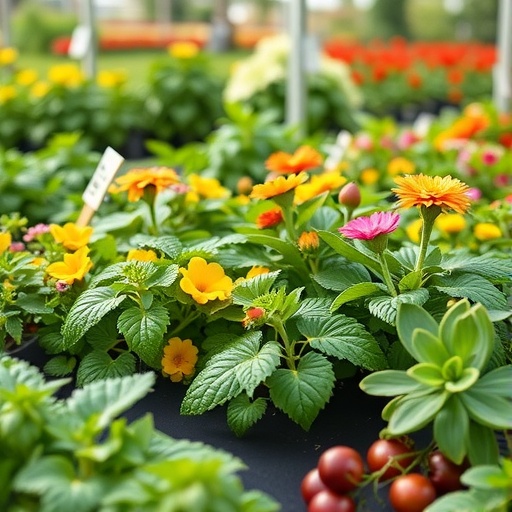
Artificial intelligence (AI) has firmly established itself as a transformative force across numerous sectors, and now it is revolutionizing the field of sustainable horticulture. In a definitive systematic review conducted by Chaudhary, Kumar, Chaudhary, and their colleagues, the researchers have meticulously explored the intersection of AI technologies and sustainable horticultural practices. This detailed investigation touches upon varied dimensions, making it an indispensable read for anyone concerned with the future of agriculture and environmental sustainability.
The paper rigorously examines how AI tools, including machine learning algorithms and data analytics, are being applied in horticultural settings to augment productivity while minimizing environmental impact. The authors delve into case studies showcasing successful implementations of AI technologies in crop management, pest control, and resource optimization, thereby laying a robust foundation for understanding the potential of these innovations.
One of the focal areas of the review is the role of AI in enhancing decision-making processes in horticultural practices. The utilization of predictive analytics allows farmers to achieve higher yields by enabling precise interventions based on data-driven insights. The authors discuss various AI models that can forecast weather changes, soil conditions, and pest outbreaks, empowering farmers to plan and execute their strategies more effectively. As climate change continues to pose challenges to agriculture, this aspect is particularly vital for ensuring food security.
Moreover, the systematic review underscores the importance of automation in the future of sustainable horticulture. Robotics, propelled by AI, is taking center stage in activities such as planting, watering, and harvesting. The authors spotlight several robotic systems and their integration with AI for optimal performance. This convergence not only enhances efficiency but also reduces labor costs and the physical toll on agricultural workers. With these advancements, the sector is on the brink of a significant technological renaissance.
A crucial highlight is the application of AI-driven precision agriculture techniques which aim to utilize resources judiciously. The review meticulously points out how sensor technologies and drones equipped with AI capabilities facilitate real-time monitoring of crops. This real-time data collection is critical for farmers to make informed decisions regarding irrigation and fertilization, thus conserving water and reducing chemical runoff. By minimizing the use of harmful inputs, sustainable practices can flourish, protecting ecosystems while bolstering agricultural output.
An interesting notion presented in the review is the integration of AI with Internet of Things (IoT) devices. This symbiotic relationship is reshaping the agricultural landscape by promoting smart farming solutions. The interconnectedness of devices provides a comprehensive ecosystem wherein data flows seamlessly, allowing farmers to assess metrics on soil quality, plant health, and environmental conditions instantaneously, further informing their sustainable practices.
The review also emphasizes the challenges that accompany the integration of AI in horticulture. While there is immense potential, factors like high initial costs, the need for training personnel, and infrastructural limitations pose significant hurdles. The authors discuss potential strategies for overcoming these obstacles, including governmental incentives and partnerships between private enterprises and educational institutions. Their insights are crucial for stakeholders aiming to foster a conducive environment for AI adoption in agriculture.
Furthermore, the socio-economic implications of deploying AI technologies in horticulture are examined. The review raises pertinent questions about equity and access in the farming community. As advanced tools may favor larger operations with greater resources, there is a need for frameworks that ensure smallholders and marginalized groups can also reap the benefits of AI innovations. This balance is crucial for sustaining livelihoods and promoting inclusivity in agricultural advancements.
Another aspect explored involves the ethical considerations surrounding AI in horticulture. The authors advocate for transparent practices to prevent the misuse of data and ensure the privacy of farmers. By establishing ethical standards, the agricultural community can foster trust in AI technologies. This is particularly relevant as the sector transitions towards a more data-driven paradigm, with an increased reliance on algorithms in decision-making.
The systematic review offers a forward-looking perspective, contemplating the future landscape of horticulture influenced by AI. The authors speculate about upcoming trends, such as the increased capability of AI to analyze vast datasets to generate actionable insights, leading to highly specialized horticultural practices tailored to individual farms. This granularity is expected to enhance sustainability and productivity alike.
Additionally, the review presents a critical analysis of the current state of research and development in this domain. Highlighting gaps in literature, the authors call for interdisciplinary collaborations bringing together agronomists, data scientists, and policy-makers. Such collaborations could spawn innovative solutions and drive forward the agenda of sustainable horticultural production.
In conclusion, the systematic review by Chaudhary et al. serves as a clarion call to harness the power of AI in sustainable horticulture. As the global population continues to rise, the pressure on agricultural systems intensifies, demanding innovations that can meet these challenges head-on. This exhaustive study not only showcases the current applications of AI in horticulture but also articulates a vision for a future where technology and sustainability coalesce to create a resilient agricultural ecosystem.
It is clear that further advances in AI are imperative for overcoming existing challenges and paving the way for sustainable practices in horticulture. The authors’ insights provide a roadmap for researchers, practitioners, and policymakers to collaborate more effectively, ensuring that the agricultural sector can thrive amid uncertainty. Sustainable horticulture powered by artificial intelligence is not just an ideal but an attainable reality, promising a future where technology enriches natural ecosystems rather than detracts from them.
Cite Scienmag News
Alan Morgan. (December 25, 2025). AI Innovations for Sustainable Horticultural Production: A Review. Scienmag. https://scienmag.com/ai-innovations-for-sustainable-horticultural-production-a-review/
Alan Morgan. "AI Innovations for Sustainable Horticultural Production: A Review." Scienmag, 25 December 2025, https://scienmag.com/ai-innovations-for-sustainable-horticultural-production-a-review/. Accessed 1 September 2026.
Alan Morgan. "AI Innovations for Sustainable Horticultural Production: A Review." Scienmag. December 25, 2025. https://scienmag.com/ai-innovations-for-sustainable-horticultural-production-a-review/


