


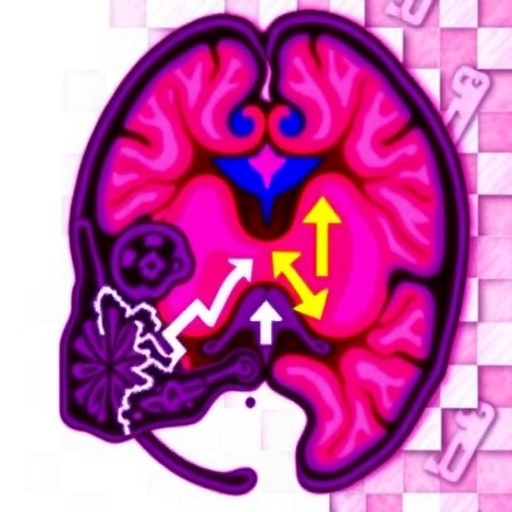
In a groundbreaking study published in Biology of Sex Differences, researchers have unveiled critical insights into the sexual dimorphism of the ventral premammillary nucleus (PMV) in rats. The PMV has long been recognized for its roles in reproductive behavior and various neural functions, making this inquiry particularly significant. This stereological evaluation delves deep into the anatomical variations between male and female rats, providing a comprehensive understanding of how sexual differences manifest in this specific brain region.
Sexual dimorphism refers to the differences in form or behavior between sexes of the same species, and the ventral premammillary nucleus serves as a prime example of this phenomenon. The study investigates the volume, neuronal count, and overall structural integrity of the PMV across both male and female rats, offering a nuanced perspective on how these distinctions may influence behavior and physiological responses tied to sex. The findings are not just crucial for the field of neuroscience but also open avenues for understanding broader implications in sexual differentiation and behavioral ecology.
Utilizing advanced stereological methods, the research team meticulously quantified the differences observed in the PMV between the genders. Stereology allows for a three-dimensional assessment of tissue sections, providing accurate estimations of volume and cell densities without the bias associated with traditional histological techniques. This rigorous methodological approach ensures the validity of the data, making the study’s conclusions robust and scientifically compelling.
The results showcased a marked difference in the volume of the PMV when comparing male and female rats. Males exhibited a significantly larger PMV, suggesting that this brain region may play a more prominent role in the regulation of male-specific behaviors. This finding aligns with previous studies that have indicated a correlation between larger brain structures and enhanced performance in sex-specific activities, thus reinforcing the relevance of sexual dimorphism in animal behavior.
In addition to volumetric differences, the investigations also revealed significant variations in neuronal populations within the PMV. Male rats not only had a greater number of neurons in this region, but these neurons were structurally distinct, exhibiting variations in size and complexity compared to those found in female rats. This raises intriguing questions about how these structural differences might influence the neural circuitry involved in mating behaviors, aggression, and territoriality among male rats.
The implications of this research extend beyond just the realm of rodent behavior. Understanding how sexual differentiation occurs at the neural level can provide insights applicable to a variety of species, including humans. The knowledge gained from such studies can inform fields ranging from behavioral biology to neuropsychiatry, shedding light on the underpinnings of certain gendered behaviors and potential disorders that may arise from neurobiological imbalances.
Moreover, the role of hormones in shaping the PMV cannot be overlooked. The research also discusses the influence of testosterone and estrogen on the development and structural integrity of the ventral premammillary nucleus. Fluorescent tagging techniques allowed the researchers to visualize receptor distributions, revealing how hormone exposure during critical developmental periods can lead to permanent changes in brain structure and function. These findings may have broader implications for understanding gender differences in health outcomes, including the risk factors for conditions like anxiety and depression.
Interestingly, the study hints that the sexual dimorphism observed in the PMV is not just a byproduct of biological differences. The researchers propose that evolutionary pressures may have sculpted these brain regions to optimize reproductive success among males and females. This theory posits that males, competing for mates, may have evolved more sophisticated neural circuits for navigation and aggression, while females may have developed robust systems that promote nurturing and caregiving behaviors.
The significance of the ventral premammillary nucleus expands when considering its connections to other brain structures involved in motivational and emotional processing. By understanding how this nucleus interacts with areas such as the hypothalamus and amygdala, Further research could illuminate how these structures coordinate behaviors essential for survival and reproduction. Investigating the PMV’s role in the network of regions that govern stress responses, feeding behaviors, and social interactions presents an exciting frontier for future research.
In summary, the evidence gathered in this study paints a vivid picture of the complexities and nuances associated with sexual dimorphism in the brain. The ventral premammillary nucleus stands as a beacon for understanding how our neuroanatomy can dictate not just biological sex differences but the myriad behaviors and strategies that arise from them. The potential applications of this research span across various disciplines, including medicine, psychology, and evolutionary biology, urging scientists to further investigate the intricate mechanisms that underlie sex differences in the brain.
As we venture into an era where neurobiological research continues to unveil the secrets of the brain, studies like this one serve to remind us of the profound elegance of nature’s designs. Understanding that sexual dimorphism is intricately woven into the fabric of our neuroanatomy underscores how evolution has tailored distinct brain structures to meet the demands of survival and reproduction. Such revelations will surely continue to spur both public interest and scientific inquiries in the years to come.
This research not only enriches our understanding of the functional anatomy of the rat but also serves as a cornerstone for future investigations into sexual differentiation. By assessing the delicate balance of neurological structures shaped by evolutionary forces, we can gain a clearer perspective on the biological underpinnings that support behavioral diversity across species, including our own. The ventral premammillary nucleus is now firmly established as a critical focus area for exploring the nexus of sex, behavior, and brain structure.
The complexities of the ventral premammillary nucleus thus reflect broader themes in biology, where structure and function coalesce to influence behavior. As fresh data emerges, it is vital that researchers remain vigilant in examining how these neural intricacies play out in various contexts, providing crucial insights that could one day translate into therapeutic strategies for addressing sex-specific neurological conditions or enhancing our understanding of gendered behaviors in humans.
In conclusion, this cutting-edge research by de Andrade and colleagues is setting new benchmarks for future investigations into sexual dimorphism in the brain. The revelations about the ventral premammillary nucleus not only highlight the diversity of neural architecture shaped by biological and hormonal factors but also expand our appreciation for the evolutionary narratives that continue to shape behavior in every living organism. As we press forward, driven by curiosity and innovation, the journey of unraveling the complexities of the brain has only just begun.
de Andrade, C.M.S., Ladd, F.V.L. & Cavalcante, J.C. Sexual dimorphism of the ventral premammillary nucleus of the rat: stereological evaluation.
Biol Sex Differ (2025). https://doi.org/10.1186/s13293-025-00805-5
Cite Scienmag News
Cassandra Pierce. (December 12, 2025). Sexual Dimorphism in Rat Premammillary Nucleus Revealed. Scienmag. https://scienmag.com/sexual-dimorphism-in-rat-premammillary-nucleus-revealed/
Cassandra Pierce. "Sexual Dimorphism in Rat Premammillary Nucleus Revealed." Scienmag, 12 December 2025, https://scienmag.com/sexual-dimorphism-in-rat-premammillary-nucleus-revealed/. Accessed 4 September 2026.
Cassandra Pierce. "Sexual Dimorphism in Rat Premammillary Nucleus Revealed." Scienmag. December 12, 2025. https://scienmag.com/sexual-dimorphism-in-rat-premammillary-nucleus-revealed/


