


The University of Plymouth is poised to take a central role in the United Kingdom’s defense and marine technology landscape, following a substantial government investment reflecting the city’s unparalleled marine autonomy expertise. As part of the UK Defence Growth Deals initiative, Plymouth will receive a significant allocation from a £250 million fund, aimed at fortifying regional capabilities in defense innovation, advanced manufacturing, and critical national infrastructure support. This investment underpins Plymouth’s designation as the National Centre for Marine Autonomy and reinforces the city’s strategic importance in addressing emergent maritime security and technological challenges.
Central to this transformative agenda is the establishment of the Advanced Marine Technology Hub, an innovative collaborative platform designed to marry the academic prowess of the University of Plymouth with industrial partners and government agencies. This hub will function as a focal nexus for pioneering research, development, and application of cutting-edge dual-use marine technologies. These technologies span autonomous systems, maritime cyber security solutions, offshore renewable energy platforms, and environmental intelligence frameworks – all critical domains underpinning national defense resilience and economic competitiveness in marine sectors.
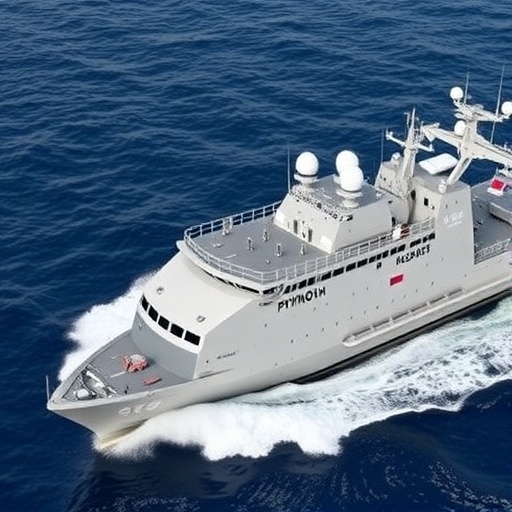
The Advanced Marine Technology Hub is envisioned to catalyze synergistic interactions between disciplines, combining advancements in sensor technology, information systems, instrumentation, and autonomous vehicle engineering. By doing so, it will accelerate the design, testing, and deployment of sophisticated unmanned surface vessels (USVs) like the University’s own USV Cetus. This vessel exemplifies the innovative dual-use approach that characterizes Plymouth’s contribution: a platform operational in both civilian marine science applications and defense-oriented surveillance and reconnaissance missions.
Notably, the hub’s research initiatives will delve deeply into maritime cyber security—a field of growing strategic importance as naval and marine systems become increasingly networked and digitized. Protecting these systems against electronic intrusion, sabotage, and data compromise demands advanced cybersecurity protocols, algorithmic anomaly detection, and resilient communication frameworks. The University’s established expertise in software and cybersecurity positions Plymouth to pioneer these innovations, securing both defensive readiness and maritime information integrity.
In parallel with technological innovation, the Plymouth Defence Growth Deal is designed to nurture and expand the local skills ecosystem, particularly within STEM disciplines essential to the sector’s evolving demands. Targeted outreach and educational programs focusing on areas such as electrical engineering, renewable energy systems, nuclear operations, and autonomy will not only supply a steady stream of qualified professionals but also foster diversity and inclusion in technology domains central to national security.
The university’s commitment extends beyond research and education, encompassing active partnerships with the UK Armed Forces and defense industry stakeholders. These collaborations enable rapid technology transfer and real-world operational testing, ensuring that the innovations emanating from Plymouth are robust, scalable, and aligned with current and future defense requirements. This integrated approach accelerates the translation of laboratory successes into deployable technologies that enhance the UK’s marine autonomy and resilience.
Graduating from legacy research cluster models, the Plymouth Defence Growth Deal introduces the concept of ‘Team Plymouth’—a consortium approach that coordinates academia, government, and industry partners under a unified strategic vision. This model leverages multidisciplinary expertise to address complex defense challenges, encouraging cross-sector collaboration that transcends traditional organizational boundaries. The collective ambition is to establish Plymouth as a global leader in defense innovation, marine autonomy, and advanced manufacturing technologies.
Furthermore, the economic implications of this initiative extend well beyond defense technology. The growth deal supports Plymouth’s broader regional renewal efforts by stimulating local supply chains, attracting skilled talent, and catalyzing export opportunities in high-tech maritime and security sectors. Enhanced capabilities in autonomous vehicles and sensor technologies developed here will likely influence commercial shipping, environmental monitoring, offshore energy extraction, and coastal protection strategies.
The integration of environmental intelligence within the hub’s research portfolio highlights an awareness of the increasingly complex interaction between technological development and ecological stewardship. Advanced monitoring systems, underpinned by autonomous platforms, will provide granular data essential for understanding changing marine ecosystems, climate impacts, and environmental resilience. These insights also bear strategic importance in safeguarding critical infrastructure and maintaining operational readiness in dynamic marine environments.
The University of Plymouth’s initiative exemplifies how an academic institution can drive national security imperatives through innovation, education, and partnership. Its advanced facilities, combined with a historic maritime legacy and prime geographical location, provide unparalleled opportunities to accelerate cutting-edge research and practical applications. The investment by the UK Government not only validates this potential but also positions Plymouth as a cornerstone of the nation’s defense and marine technology future.
As Plymouth advances these initiatives, new frontiers open in autonomous marine systems design, sensor integration, maritime cybersecurity, and defense manufacturing. The emerging technologies will redefine the operational capabilities of marine assets, embedding intelligence and autonomy that adapt to evolving threats and missions. This progress will cement the city’s status as a nexus of technological excellence while bolstering the UK’s standing in global maritime defense strategy.
Professor Richard Davies, Vice-Chancellor of the University of Plymouth, underscores the transformational nature of the investment, emphasizing the region’s readiness to confront complex defense challenges. His vision articulates a future where Plymouth not only innovates but also nurtures the next generation of security experts. This holistic approach ensures the longevity and sustainability of the UK’s marine defense infrastructure, creating a dynamic environment where research breakthroughs translate into tangible national security benefits.
In conclusion, the UK Government’s allocation of funding under the Defence Growth Deals to Plymouth represents a significant endorsement of the city’s technical expertise and strategic importance. The development of the Advanced Marine Technology Hub will spearhead innovation in marine autonomy, cybersecurity, and critical infrastructure support, fostering a resilient, technologically advanced maritime defense ecosystem. This initiative sets Plymouth on a trajectory to become a globally recognized hub for defense technology and marine science, demonstrating the transformative impact of focused investment in advanced research and regional collaboration.
News Publication Date: Not specified
Web References: https://mediasvc.eurekalert.org/Api/v1/Multimedia/9242f9ff-8150-4057-ba66-afb65dcec62a/Rendition/low-res/Content/Public
Cite Scienmag News
Violet Maxwell. (September 8, 2025). £250 Million Defence Deal Fuels University of Plymouth’s Breakthroughs in Advanced Marine Technology. Scienmag. https://scienmag.com/250-million-defence-deal-fuels-university-of-plymouths-breakthroughs-in-advanced-marine-technology/
Violet Maxwell. "£250 Million Defence Deal Fuels University of Plymouth’s Breakthroughs in Advanced Marine Technology." Scienmag, 8 September 2025, https://scienmag.com/250-million-defence-deal-fuels-university-of-plymouths-breakthroughs-in-advanced-marine-technology/. Accessed 3 September 2026.
Violet Maxwell. "£250 Million Defence Deal Fuels University of Plymouth’s Breakthroughs in Advanced Marine Technology." Scienmag. September 8, 2025. https://scienmag.com/250-million-defence-deal-fuels-university-of-plymouths-breakthroughs-in-advanced-marine-technology/


