


In a groundbreaking study that promises to reshape our understanding of pediatric brain tumors, a collaborative team of researchers from Baylor College of Medicine, St. Jude Children’s Research Hospital, Texas Children’s Hospital, and partner institutions have unveiled an unprecedented mechanism responsible for the development of pediatric supratentorial ependymoma (EPN). This tumor, known as one of the most aggressive and chemotherapy-resistant childhood brain cancers, has long puzzled scientists due to its unique occurrence predominantly in young children’s brain cortexes and its resistance to conventional treatments. The study, published in the reputable journal Nature, opens promising new avenues for therapeutic intervention.
Ependymomas are malignant tumors originating from ependymal cells lining the ventricles of the brain and the central canal of the spinal cord. Among these, the ZFTA-RELA (ZR) fusion-positive subtype is particularly notorious for afflicting young children in the cortical regions of the brain. This tumor arises from a genetic fusion of two genes: ZFTA and RELA. This fusion event produces an abnormal oncoprotein capable of activating oncogenic pathways that promote tumor growth. However, the precise developmental context that permits this fusion protein to induce tumorigenesis exclusively during early childhood within certain cell populations has remained an enigma.
The research team hypothesized that the answer to this selective tumor manifestation lies embedded in the developmental trajectory of the brain’s cellular landscape. During critical windows in fetal and early postnatal development, neural stem-like progenitor cells proliferate rapidly, gradually differentiating into a myriad of mature brain cell types, including neurons and glia. This proliferative state is accompanied by dynamic chromatin landscapes where DNA regions transiently become accessible, thereby allowing gene regulatory machineries to orchestrate complex developmental programs. Conversely, as cells mature, the chromatin architecture condenses, restricting DNA accessibility.
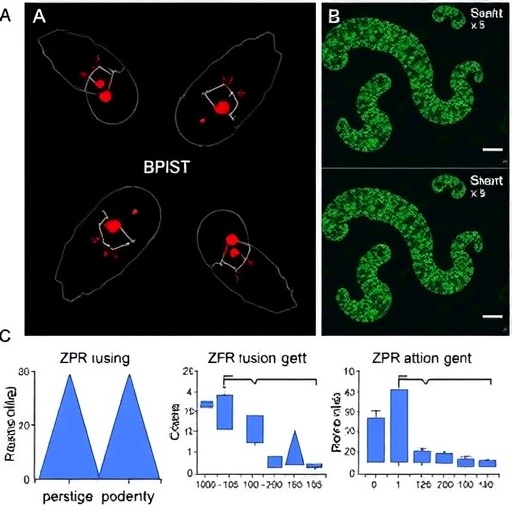
By leveraging state-of-the-art epigenomic profiling and molecular analyses on human tumor tissue, the investigators discovered that the ZR fusion protein does not independently open previously inaccessible regions of chromatin. Instead, it opportunistically exploits the naturally open epigenetic states inherent in embryonic neural progenitors. In other words, the fusion protein hijacks pre-existing chromatin accessibility in rapidly dividing progenitor populations, facilitating aberrant transcriptional programming that leads to oncogenesis. This insight sheds light on why the tumor initiates at such a specific developmental stage and in specialized cell types.
Further dissection of tumor heterogeneity through single-cell sequencing revealed that once the ZR fusion protein initiates oncogenic signaling, it gives rise to a dominant founder clone. This clone spawns a heterogeneous tumor architecture, which partially recapitulates elements of normal brain developmental programs. Strikingly, this tumor cell population becomes molecularly arrested in an immature state, failing to undergo full differentiation. This developmental “lock” underpins the malignancy’s aggressive growth dynamics and chemoresistance, highlighting a developmental vulnerability that could be therapeutically exploited.
Researchers emphasize that understanding these epigenomic vulnerabilities opens exciting new horizons for treating these devastating tumors. Therapeutic strategies could be designed to coax tumor cells to resume normal differentiation pathways, effectively pushing them out of their malignant immature state. Alternatively, targeting the early progenitor cells that fuel tumor initiation and growth could curtail disease progression. Such approaches represent a paradigm shift away from conventional chemotherapeutics, aligning treatment with the developmental biology of the tumor.
This study also demonstrates the value of integrating developmental neurobiology with cancer genomics, emphasizing that pediatric tumors cannot be fully understood without considering the unique epigenetic and cellular context of the developing brain. The team’s findings underscore that oncogenic drivers like ZFTA-RELA fusion proteins are not isolated actors but operate in a complex interplay with the epigenomic architecture of the developmental stage in which they arise.
Experts in the field have hailed this research as a major leap forward. Dr. Stephen Mack of St. Jude Children’s Research Hospital noted, “By elucidating how the ZR fusion protein leverages existing open chromatin states rather than creating them anew, we gain critical insights into tumor specificity and developmental timing.” This perspective enhances the scientific community’s capacity to devise more precisely targeted interventions that disrupt this oncogenic synergy.
Moreover, the interdisciplinary collaboration bridging cancer biology, neurodevelopment, and epigenomics exemplifies how cross-sector research can yield transformative discoveries. Dr. Benjamin Deneen of Baylor College of Medicine, a senior lead in the project, pointed out that the integration of molecular biology with pediatric neurosurgery and developmental neuroscience was instrumental in uncovering these mechanisms. The research not only advances theoretical understanding but also lays the foundation for translational applications that may directly benefit children suffering from ependymoma.
In conclusion, this seminal study elucidates a critical developmental epigenomic mechanism driving pediatric supratentorial ependymoma through the intervention of dominant oncogenic clones exploiting open chromatin states in neural progenitors. These results challenge traditional views of tumorigenesis by revealing that the temporal and cellular specificity of pediatric brain tumors is dictated by the interplay between genetic mutations and the brain’s developmental epigenetic landscape. The identification of this vulnerability paves the way for innovative treatments aimed at disrupting the tumor’s developmental arrest and, ultimately, improving outcomes for affected children.
This research was comprehensively documented in the article titled “Dominant clones leverage developmental epigenomic states to drive ependymoma,” published in Nature on March 25, 2026. The findings represent a bold step toward decoding the developmental origins of pediatric brain cancers and have large-scale implications for future therapeutic strategies.
Cite Scienmag News
Nathaniel Bowman. (March 25, 2026). ZR Fusion Protein Redirects Normal Brain Cell Development Toward Cancer Progression. Scienmag. https://scienmag.com/zr-fusion-protein-redirects-normal-brain-cell-development-toward-cancer-progression/
Nathaniel Bowman. "ZR Fusion Protein Redirects Normal Brain Cell Development Toward Cancer Progression." Scienmag, 25 March 2026, https://scienmag.com/zr-fusion-protein-redirects-normal-brain-cell-development-toward-cancer-progression/. Accessed 4 September 2026.
Nathaniel Bowman. "ZR Fusion Protein Redirects Normal Brain Cell Development Toward Cancer Progression." Scienmag. March 25, 2026. https://scienmag.com/zr-fusion-protein-redirects-normal-brain-cell-development-toward-cancer-progression/


