


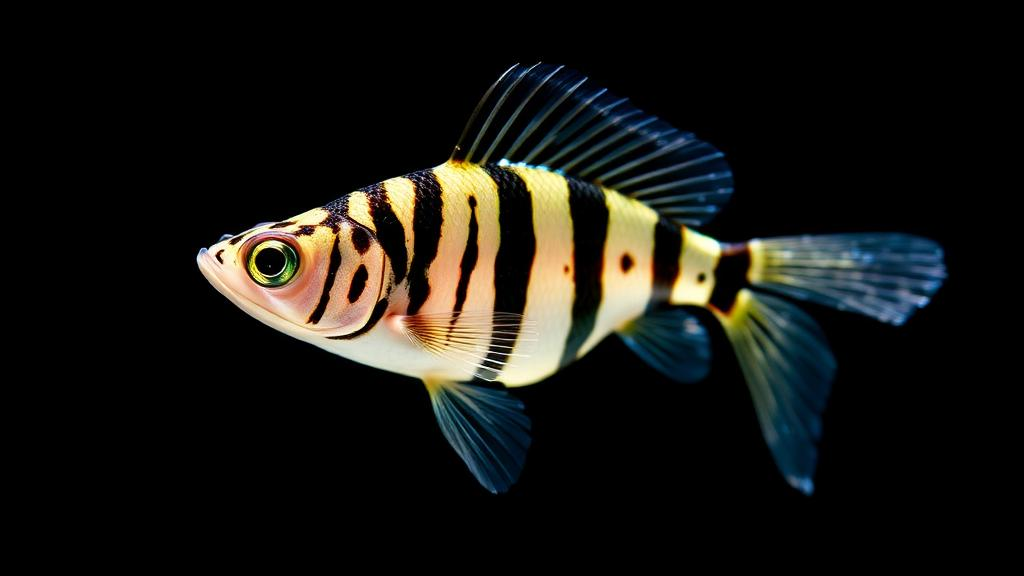
A new review published in Discover Life examines how this small tropical fish serves as a translational model for melanogenesis—the process by which melanocytes produce melanin—and for the pigmentation disorders that arise when that process goes wrong, from albinism and melasma to melanoma.
The logic behind the model is genetic. Roughly 87 percent of zebrafish genes share considerable similarity with human genes, and about 70 percent of human disease genes have functional equivalents in the fish. The melanogenesis pathways themselves are substantially conserved: key players such as tyrosinase (TYR), TYRP1, SLC24A5, SLC45A2, and the master regulator MITF operate in comparable ways across both species. Mutations in SLC24A5 and SLC45A2, for example, are linked to albinism types 4 and 6 and to normal variation in human skin color, and their functions can be studied in a living, genetically modifiable organism whose development unfolds in plain view.
That visibility is the fish’s defining advantage. Zebrafish embryos develop outside the mother in optically transparent eggs roughly 0.7 millimeters in diameter, allowing researchers to watch pigment cells form, migrate, and organize in real time. Melanocytes become evident around 28 hours post-fertilization, xanthophores around 42 hours, and iridophores shortly after. Together these three pigment cell types—producing black melanin, yellow pteridine, and reflective crystalline guanine, respectively—build the adult striped pattern through self-organization within the hypodermis, a process influenced by ion channels, gap junctions, tight junction protein 1a, thyroid hormone, and even the polyamine spermidine.
The practical economics are equally compelling. Conventional mammalian models such as mice, rats, rabbits, and guinea pigs are time-consuming to generate, complicated to handle, and expensive to maintain. Zebrafish, by contrast, produce up to 200 eggs per clutch every two to three days, transition from a single cell to a fully formed animal within 24 hours of fertilization, and can generate stable disease lines in just three to four months. Embryos can be used in experiments as early as three days after fertilization, and because the fish readily absorb small molecules from their surrounding water, drugs can be delivered simply through the aquatic environment—ideal conditions for high-throughput screening of depigmenting agents and therapeutic compounds.
The review also details the standardized assays that make zebrafish a quantitative platform. Two principal tests dominate: the melanogenesis inhibition assay, in which homogenized embryos or adults are centrifuged, the melanin-containing precipitate isolated, and absorbance measured at 405 nanometers to quantify melanin content; and the tyrosinase activity inhibition assay, which records absorbance at 475 nanometers in the supernatant to determine how strongly a compound suppresses the enzyme that initiates melanin synthesis. Combined with melanin distribution imaging, these methods allow direct, measurable evaluation of pigmentation changes and candidate drug effects.
The chemical toolkit extends further. The compound 1-phenyl-2-thiourea, commonly known as PTU, inhibits melanin production in zebrafish and is widely used to study depigmentation and its underlying biology. This manipulability, paired with the fish’s transparent larvae and cutting-edge microscopy, means pigment cell growth and distribution can be directly observed and quantified rather than inferred from fixed tissue—a capability mammalian models simply cannot match.
Where the translational promise becomes most concrete is in disease modeling. Zebrafish genetics can recapitulate features of albinism, vitiligo, Waardenburg Syndrome, melanoma, and nevi. Mutant and CRISPR-edited zebrafish lines have provided insight into the vesicle trafficking defects underlying Hermansky–Pudlak syndrome subtypes, including the AP3D1-associated form HPS10, and have helped dissect functional differences within the AP3 complex. Albino zebrafish have also contributed to melanoma research by revealing how altered melanosome biology contributes to drug sequestration and resistance to agents such as cisplatin. Beyond depigmentary conditions, zebrafish models have informed the study of hyperpigmentation disorders including melasma, nevi, and café-au-lait macules through conserved pathways of melanocyte differentiation and patterning.
Specific experimental findings illustrate the model’s precision. In one study, adult zebrafish treated with neocuproine, a copper chelator, showed melanocyte regeneration that depended on the gene sox10: after 70 days post-treatment, fish lacking functional sox10 regenerated only 53 percent of their melanocytes, compared with 82 percent in controls. Such experiments demonstrate how zebrafish can isolate the contribution of single genes to pigment cell survival and renewal—knowledge directly relevant to human pigmentation biology, where sox10, tyrosinase, Mitf, Dct, and SLC25A4 are shared, highly conserved molecular factors in neural crest-derived melanocytes.
The review is candid about the limits. Differences in skin architecture and immune complexity mean zebrafish cannot fully replicate human pigmentation disorders; physiological differences from humans, simpler immunological and skin structure, and the difficulty of modeling complex adult diseases and deep-tissue metastases all constrain direct clinical translation. There is also a fundamental biological divergence: in humans, melanocytes produce and distribute melanin to surrounding keratinocytes to provide skin color and UV protection, whereas fish alter color mainly by changing pigment location and reflectivity during background adaptation or stress, and fish melanophores produce only eumelanin, never the yellow-red pheomelanin found in mammals.
Even so, the authors position zebrafish as a powerful complementary vertebrate system bridging fundamental research and practical application. Future advances in genome editing, single-cell transcriptomics, live-cell imaging, and humanized zebrafish models are expected to address current limitations and enhance the model’s translational value for studying pigmentation disorders and evaluating novel therapeutic strategies, including CRISPR-based gene correction. For a disorder field long constrained by costly and slow animal models, the transparent fish offers something rare: a living system where the genetics of skin color can be watched, measured, and manipulated in real time.
Subject of Research: Zebrafish as a translational model for melanogenesis and human pigmentation disorders
Article Title: Translational zebrafish model for molecular and developmental pathways of melanogenesis and pigmentation dysfunctions in humans
Article References: Meena, P., Verma, R., & Awasthi, K. K. (2026). Translational zebrafish model for molecular and developmental pathways of melanogenesis and pigmentation dysfunctions in humans. Discover Life, 56(1), Article 33. https://doi.org/10.1007/s11084-026-09750-8
Image Credits: AI Generated
DOI: 10.1007/s11084-026-09750-8
Keywords: zebrafish, melanogenesis, pigmentation disorders, albinism, melanoma, melanocytes, melanin, SLC24A5, tyrosinase, CRISPR, drug screening, translational model
Cite Scienmag News
Juliet Wilcox. (October 29, 2026). Zebrafish Offer a Transparent Window Into Human Pigmentation Disorders. Scienmag. https://scienmag.com/zebrafish-offer-a-transparent-window-into-human-pigmentation-disorders/
Juliet Wilcox. "Zebrafish Offer a Transparent Window Into Human Pigmentation Disorders." Scienmag, 29 October 2026, https://scienmag.com/zebrafish-offer-a-transparent-window-into-human-pigmentation-disorders/. Accessed 21 November 2026.
Juliet Wilcox. "Zebrafish Offer a Transparent Window Into Human Pigmentation Disorders." Scienmag. October 29, 2026. https://scienmag.com/zebrafish-offer-a-transparent-window-into-human-pigmentation-disorders/




