

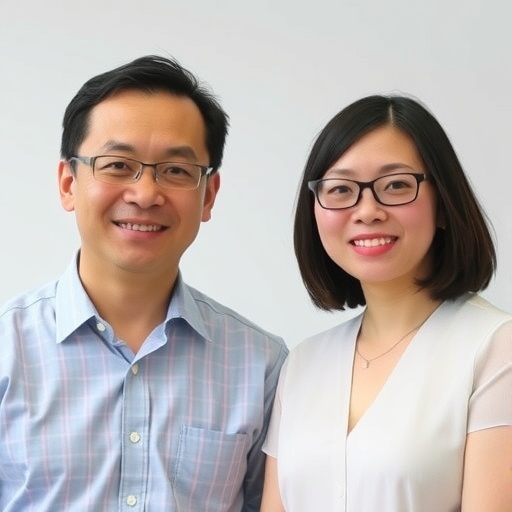
The rapidly evolving field of intelligent computing, which sits at the bustling crossroads of artificial intelligence, computational science, and quantum information processing, has a newly fortified captaincy. Intelligent Computing, a Science Partner Journal launched jointly by Zhejiang Lab and the American Association for the Advancement of Science (AAAS), announced the appointment of two distinguished computer scientists, Philip S. Yu and Osmar R. Zaïane, as its incoming Editors-in-Chief. This dual leadership model, increasingly common in high-impact scientific publishing, signals the journal’s ambition to deepen its international reach and accelerate the convergence of intelligence and computation across an expanding array of disciplines.
The journal’s mission is nothing short of mapping the future of thinking machines and the scientific discoveries they enable. Since its inception in 2022, Intelligent Computing has positioned itself as a premier open-access venue for original research articles, critical reviews, and innovative data and software reports. Its scope deliberately blurs traditional academic boundaries, encompassing core artificial intelligence and machine learning alongside computational imaging, next-generation communication architectures, and the tantalizing promise of quantum computing. A central pillar is the emerging paradigm of “AI for Science,” where deep learning models untangle complex phenomena in fields ranging from protein folding to climate dynamics, fundamentally altering the scientific method itself. Under the stewardship of Yu and Zaïane, the journal is poised to expand this vision, emphasizing not just algorithmic novelty but the robust, reproducible, and ethical deployment of intelligence across the entire scientific enterprise.
Philip S. Yu brings to the role a legendary stature in data mining and large-scale information systems. A Distinguished Professor and Wexler Chair in Information Technology at the University of Illinois Chicago, and a fellow of both the ACM and the IEEE, Yu’s career has been defined by pioneering work on how to extract meaningful patterns from vast, heterogeneous, and often noisy datasets. His technical contributions include foundational algorithms for association rule mining, privacy-preserving data analytics, and deep learning on graph-structured data—techniques that underpin modern recommendation engines, fraud detection systems, and social network analysis. His appointment is a strong signal that Intelligent Computing will maintain a rigorous focus on the scalability and reliability of intelligent systems, demanding that new architectures be theoretically sound and empirically validated on real-world, terabyte-scale challenges rather than merely synthetic benchmarks.
Osmar R. Zaïane, a Professor of Computing Science at the University of Alberta and a Fellow of the Canadian Academy of Engineering, complements this with deep expertise in the human-centric applications of machine learning. Zaïane’s research focuses on deploying artificial intelligence in high-stakes domains such as healthcare and education, where model interpretability and fairness are non-negotiable. His work has tackled challenges like mining electronic health records for early disease prediction while mitigating algorithmic bias, and developing adaptive learning systems that can model student cognition in real time. This grounding ensures that the journal’s editorial direction will remain attentive to the societal context of intelligent systems, aligning with global movements toward responsible AI that is not only powerful but also transparent and equitable.
The journal’s trajectory already places it among the elite. In its short lifespan, it has been indexed in a formidable lineup of databases including the Emerging Sources Citation Index (ESCI), Scopus, EI Compendex, and the Directory of Open Access Journals (DOAJ). More tangibly, in the most recent Journal Citation Reports released by Clarivate, Intelligent Computing received an impressive Impact Factor of 6.4. This score placed it squarely in the first quartile (Q1) across three distinct categories: Computer Science, Theory & Methods; Computer Science, Artificial Intelligence; and Computer Science, Interdisciplinary Applications. Such a multi-category Q1 ranking is a rare and convincing indicator that the journal’s interdisciplinary model is resonating with researchers who are pushing computational theory, AI algorithms, and cross-domain application in a single integrated effort.
A key challenge for the incoming editors will be navigating the explosive growth of quantum computing research and its integration with classical AI. The theoretical underpinnings of quantum machine learning—where variational quantum circuits attempt to learn from data in exponentially large Hilbert spaces—remain fiercely debated, with some physicists questioning whether a demonstrable quantum advantage is achievable on near-term noisy hardware. Intelligent Computing has already become a forum for these critical discussions, publishing rigorous perspectives that separate hype from reality. Under Yu and Zaïane, the journal is expected to intensify its scrutiny of quantum claims, demanding reproducible benchmarks and clear theoretical justifications, while also providing a home for genuine breakthroughs in computational imaging that leverage quantum sensors or entanglement-based illumination.
This editorial transition arrives at a pivotal moment when the very definition of “computing” is expanding beyond silicon-based von Neumann architectures. Neuromorphic chips, which mimic the brain’s spiking neural networks, and optical computing systems that process information using light rather than electrons, are moving from laboratory curiosities to practical accelerators. Intelligent Computing’s mandate to cover such novel hardware-software co-design will likely see a surge of submissions detailing end-to-end systems where the physical properties of a device are tailored to a specific AI algorithm’s topology. The new Editors-in-Chief, with their combined expertise spanning abstract algorithm theory to applied system engineering, are uniquely qualified to curate this technically intricate landscape, ensuring that published works provide complete recipes from physical substrate to software abstraction layer.
The dual-editor model also reflects a growing recognition that the intellectual bandwidth required to oversee such a multidisciplinary journal exceeds the capacity of any single individual. By splitting the editorial burden, Yu and Zaïane can maintain a high-touch approach with authors, spearhead targeted special issues on topics like AI-driven materials discovery or federated learning for privacy, and forge strategic alliances with international research institutes. The scientific community can anticipate a refined editorial process that values deep technical review over superficial novelty, accelerating the publication of truly foundational work that shapes how future intelligent systems are conceptualized, built, and verified against the messy reality of the world.
Subject of Research: Appointment of Philip S. Yu and Osmar R. Zaïane as Editors-in-Chief of Intelligent Computing journal
Article Title: Intelligent Computing Journal Enters New Era with Dual Editors-in-Chief
News Publication Date: [Not provided]
Web References: https://spj.science.org/journal/ic
References: [Not available]
Image Credits: Philip S. Yu
Keywords
Intelligent Computing, scientific journal, Editor-in-Chief, Philip S. Yu, Osmar R. Zaïane, artificial intelligence, machine learning, open access, impact factor, AI for science, quantum computing, data mining, computational science


