


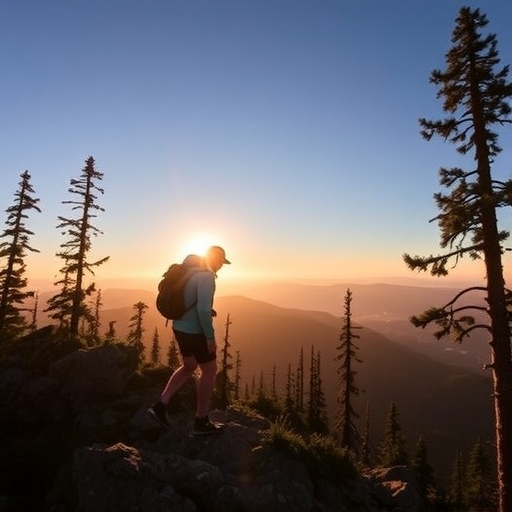
As the spring sun warms the vast wilderness across the United States, a noticeable surge of outdoor enthusiasts heads into national parks and forests to immerse themselves in hiking and trail running. These activities, while offering profound connective experiences with nature, also bring an unsettling increase in emergencies. Search and rescue teams face growing demands, undertaking extensive and costly efforts to aid lost or injured individuals. An alarming example unfolded recently in New Hampshire’s White Mountains, where within one week in April, seven hikers were rescued and tragically, one solo backpacker was found deceased after failing to return from his trip.
In response to the escalating need to enhance safety, innovative research led by Boston University has shed light on the preparedness levels of day hikers and trail runners. This pioneering study, conducted in Rocky Mountain National Park, aimed to dissect how well-equipped and knowledgeable wilderness visitors are before embarking on their journeys into nature’s unpredictability. Beyond mere curiosity, the findings promise to inform strategies that could ultimately reduce search and rescue incidents by educating adventurers about essential gear and survival knowledge.
At the heart of the research lies a rigorous survey of over 600 visitors returning from their outings. This cohort included both hikers and trail runners, distinct groups with differing approaches to wilderness travel. John Lambert, a public health scientist and researcher associated with Boston University’s Center for Climate & Health, implemented a multifaceted metric to evaluate preparedness. Participants were deemed adequately prepared if they carried at least one liter of water, possessed seven emergency items from the National Park Service’s renowned “Ten Essentials” list, had a map or equivalent wayfinding device, and included either two rescue tools or eight out of fifteen recommended first aid items.
The study’s revelations are compelling and, in many respects, unsettling. A significant majority believed themselves to be sufficiently prepared, yet the reality told a different story. Only 15.7% of day hikers and 25% of trail runners met the study’s criteria for wilderness readiness. This stark discrepancy calls into question common perceptions of preparedness and highlights a broader issue within outdoor recreation culture—overconfidence coupled with insufficient equipment or knowledge.
Exploring this gap reveals insights into human psychology and decision-making under the guise of outdoor adventure. Lambert suggests that individual definitions of “preparedness” vary widely, often influenced by the perceived duration or difficulty of the trip. Many simply pack food and water, overlooking critical survival tools that could prove vital in emergencies. This underestimation underscores the necessity of comprehensive educational outreach, focusing not just on physical gear but also on raising awareness of potential risks and best practices to mitigate them.
A groundbreaking aspect of this research is its dedicated focus on trail runners as a unique demographic, scrutinizing their behavior and risk profiles independently from traditional hikers. Trail runners frequently cover extensive distances more rapidly and often travel lighter than hikers, altering their exposure to risk. The survey discovered that trail runners tend to be younger, often venture solo, and are more prone to going off-trail—factors which elevate their vulnerability to accidents or medical issues such as altitude sickness and ankle injuries. Intriguingly, despite these risks, trail runners showed a higher preparedness rate compared with hikers, reflecting perhaps a more attuned awareness or previous wilderness experience.
This distinction confirms that a one-size-fits-all approach to safety outreach is insufficient. Tailored messaging and educational programs designed around the specific habits and challenges of distinct outdoor groups—like trail runners and hikers—may yield better results in enhancing readiness. Understanding these nuances invites a more granular approach to wilderness safety that respects the diversity within outdoor communities.
Critical to being well-prepared is prior experience. The research found that years of outdoor activity or calendar age were less predictive of preparedness than actual encounters with wilderness injury or illness. Those who had previously been injured or ill in the outdoors were more conscientious, packing more essential items and presumably adopting a more cautious mindset. Moreover, frequent users of wilderness areas demonstrated higher preparedness, possibly due to accumulated knowledge and learned caution from repeated exposure to potential hazards.
Rocky Mountain National Park appears responsive to these findings, initiating plans to improve signage and trail information. Their efforts to leverage social media platforms, including Instagram, reflect a modern approach to outreach aimed at both educating visitors and reminding them pragmatically of the risks and required equipment for safe excursions. Such proactive measures demonstrate how protected areas are evolving to balance increasing visitation with visitor safety.
Preventative search and rescue (PSAR) remains a promising paradigm. This strategy emphasizes education and readiness to minimize the need for costly and complex rescue operations. Lambert highlights one of the simplest yet most overlooked preparedness actions: informing someone of your travel itinerary and expected return time. While three-quarters of hikers reported notifying someone, a concerning one-quarter skipped this critical step. For trail runners, this figure was better but still lagged behind ideal safety norms. Timely alerts can drastically reduce the time search and rescue teams spend locating missing persons, underscoring this habit as a no-cost, high-impact intervention.
Equally vital is equipping visitors with accurate information on altitude risks, navigation, and emergency signaling devices. Emergencies in wilderness areas often arise from unpredictable weather, altitude-related illnesses, or injuries that impair mobility. Equipping hikers and runners with rescue tools such as whistles, mirrors, or personal locator beacons plays a crucial role in enabling prompt assistance. But awareness is the cornerstone; without appreciating the importance of these items beforehand, visitors are unlikely to carry them.
This research serves as a wake-up call to the outdoor community and park management alike. It shines a light on glaring gaps in safety culture and the essential role of education in evolving visitor behavior. The data-driven clarity provided by this survey empowers authorities and nonprofits to craft targeted strategies, optimizing resource allocation toward outreach and ultimately saving lives. The wilderness experience is deeply rewarding but demands respect and preparedness to ensure enjoyment is not overshadowed by tragedy.
In conclusion, as more people seek solace and adventure amid natural landscapes, the responsibility to be smart and ready grows ever more critical. Research like Lambert’s is instrumental in identifying vulnerabilities and paving the way toward safer outdoor recreation. The promise lies in transforming perception into reality, where every adventurer steps onto the trail not just with enthusiasm, but with the preparedness and knowledge needed to navigate the wilderness safely.
News Publication Date: 23-Mar-2026
Web References:
- Journal: Wilderness & Environmental Medicine
- National Park Service Ten Essentials
- Rocky Mountain National Park Instagram
References: DOI 10.1177/10806032261430331
Cite Scienmag News
Ophelia Keating. (May 26, 2026). You’re probably hiking without the proper safety gear: What science reveals. Scienmag. https://scienmag.com/youre-probably-hiking-without-the-proper-safety-gear-what-science-reveals/
Ophelia Keating. "You’re probably hiking without the proper safety gear: What science reveals." Scienmag, 26 May 2026, https://scienmag.com/youre-probably-hiking-without-the-proper-safety-gear-what-science-reveals/. Accessed 3 September 2026.
Ophelia Keating. "You’re probably hiking without the proper safety gear: What science reveals." Scienmag. May 26, 2026. https://scienmag.com/youre-probably-hiking-without-the-proper-safety-gear-what-science-reveals/


