


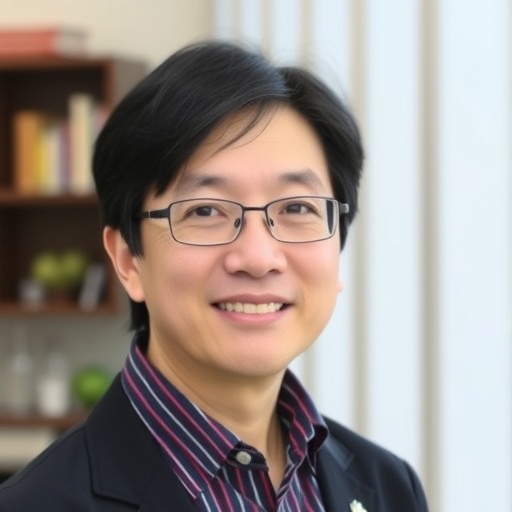
Han Xiao of Rice University has been distinguished with the David W. Robertson Award for Excellence in Medicinal Chemistry, a prestigious accolade bestowed by the American Chemical Society’s Division of Medicinal Chemistry. This biennial award recognizes exceptional scientists under the age of 40 who have significantly advanced the discovery of novel therapeutic agents or conceptual frameworks pivotal to medicinal chemistry. Along with the honor of this award, Xiao will be presented with a $6,000 prize, a commemorative plaque, and coverage for travel to the award ceremony scheduled for March 24, 2026, in Atlanta.
Xiao, a professor spanning the fields of chemistry, bioengineering, and biosciences, serves as the director of Rice Synthesis X (SynthX), an innovative center uniting chemical biology, nanomaterial synthesis, and organic chemistry to accelerate therapeutic development. His research trajectory focuses on the design and development of chemical tools that interrogate and manipulate biological systems with precision, aiming to translate these discoveries into clinically relevant therapies. Xiao’s team works at the intersection of synthetic chemistry and biology to create molecular entities capable of guiding therapeutic action with specificity and efficiency.
Central to Xiao’s scientific endeavors is his pioneering approach to cancer therapy. By integrating principles from synthetic chemistry, molecular biology, and immunology, he has engineered therapeutic strategies that target tumor microenvironments and metastatic niches. Notably, his research team has introduced a bone-targeting antibody therapy that represents a paradigm-shifting approach, enabling the delivery of biologics specifically to bone tumors and metastases. This innovative concept of skeleton-targeted therapeutics has broad implications for metastatic cancers, notably breast and prostate cancer, where bone metastasis significantly worsens prognosis.
In addition to this breakthrough, Xiao uncovered a novel glyco-immune checkpoint within the bone metastatic niche. This discovery revealed a mechanism by which tumor cells exploit glycosylation patterns to create an immunosuppressive milieu, thereby evading immune-mediated destruction. By targeting and blocking this checkpoint, Xiao’s research demonstrates the ability to reprogram the tumor microenvironment, restoring immunotherapy sensitivity and improving therapeutic outcomes. This work has provided new insights into immune regulation within metastatic cancer and has shaped the development of next-generation immunomodulatory therapies.
The translational impact of Xiao’s work is further evidenced by the founding of OsteoLogic Therapeutics in 2022, a venture dedicated to advancing skeleton-targeted drug delivery systems. Supported by forward-thinking venture entities such as Curie.Bio, Pillar VC, and New York Ventures, OsteoLogic is actively developing therapies that selectively target bone metastases from breast and prostate cancers, aiming to mitigate disease progression and enhance patient quality of life. The company’s platform leverages the molecular principles elucidated in Xiao’s research, emphasizing targeted delivery and immune modulation.
SynthX, under Xiao’s leadership, harnesses multidisciplinary collaborations spanning chemical biology, nanotechnology, and cancer immunology to drive innovative therapeutic solutions. The center has cultivated significant partnerships with top-tier institutions in the Texas Medical Center, including Baylor College of Medicine’s Dan L Duncan Comprehensive Cancer Center, Houston Methodist, and the University of Texas MD Anderson Cancer Center. These alliances foster a vibrant ecosystem for translational research, accelerating the bench-to-bedside pipeline for novel cancer therapeutics.
Xiao’s laboratory focuses on developing novel molecular building blocks that enhance the functional specificity and efficacy of chemical-biological tools. Through sophisticated synthetic methodologies, his team delivers molecules capable of modifying cellular pathways with unprecedented precision. These innovations allow for the modulation of pathogenic processes underlying cancer, autoimmunity, and metabolic diseases. His research strategy integrates glycobiology and cancer immunology, fields that illuminate the complex interactions governing disease progression and therapeutic response.
The scientific community has recognized Xiao’s integrated approach to merging fundamental chemistry with biological complexity as transformative. His ability to engineer molecules that serve both as probes and therapeutic agents exemplifies the power of chemical biology in solving intricate biomedical challenges. The tools developed in his lab not only elucidate cellular mechanisms but also serve as blueprints for designing next-generation medicines.
Central to Xiao’s vision is the concept of leveraging synthetic chemistry to engineer smarter, more targeted therapeutics that minimize off-target effects and improve patient outcomes. His team employs cutting-edge synthetic techniques to generate molecular entities with tailored functionalities that can navigate the sophisticated landscapes of tumor microenvironments. This strategy enhances drug efficacy while reducing undesirable systemic toxicity, a perennial challenge in cancer therapy.
The discovery of the glyco-immune checkpoint is illuminating new modalities in immunotherapy, showcasing how carbohydrate-mediated interactions within the tumor niche can regulate immune cell activity. By unraveling these complex biochemical pathways, Xiao’s work is pioneering novel checkpoint blockade strategies that complement and potentially overcome resistance to existing immunotherapies, heralding a new chapter in cancer modulation.
Xiao’s innovative approach extends beyond cancer to encompass autoimmune and metabolic disorders, deploying his chemical biology expertise to modulate cellular behavior in diverse pathological contexts. His translational research is rooted in understanding how chemical agents can be harnessed to restore normal cellular function or selectively eliminate diseased cells, broadening the impact of his work across multiple domains of medicine.
In conclusion, Han Xiao’s award acknowledges his leadership in medicinal chemistry and chemical biology, exemplified by his pioneering development of bone-targeted biologics and glyco-immune checkpoint inhibitors. His work epitomizes the synthesis of chemical innovation with biomedical application, driving forward the frontiers of therapeutic discovery with the promise of more precise and effective treatments across oncology and beyond.
News Publication Date: Not explicitly provided; award ceremony scheduled for March 24, 2026
Web References:
- https://profiles.rice.edu/faculty/han-xiao
- https://synthx.rice.edu/
- https://news.rice.edu/news/2021/drug-doubles-down-bone-cancer-metastasis
- https://news.rice.edu/news/2024/rice-study-unlocks-breakthrough-breast-cancer-bone-metastases
Cite Scienmag News
Nathaniel Bowman. (October 14, 2025). Xiao Honored with the David W. Robertson Award for Excellence in Medicinal Chemistry. Scienmag. https://scienmag.com/xiao-honored-with-the-david-w-robertson-award-for-excellence-in-medicinal-chemistry/
Nathaniel Bowman. "Xiao Honored with the David W. Robertson Award for Excellence in Medicinal Chemistry." Scienmag, 14 October 2025, https://scienmag.com/xiao-honored-with-the-david-w-robertson-award-for-excellence-in-medicinal-chemistry/. Accessed 6 September 2026.
Nathaniel Bowman. "Xiao Honored with the David W. Robertson Award for Excellence in Medicinal Chemistry." Scienmag. October 14, 2025. https://scienmag.com/xiao-honored-with-the-david-w-robertson-award-for-excellence-in-medicinal-chemistry/


