

Monday, November 16, 2026
Science
No Result
View All Result
  • Login
  • HOME
  • SCIENCE NEWS
  • CONTACT US
  • HOME
  • SCIENCE NEWS
  • CONTACT US
No Result
View All Result
Scienmag
No Result
View All Result
Home Science News Biology

WTAP Regulates TRAF6 in Experimental HCC Models

November 8, 2026
in Biology
Nathaniel Bowman
By Nathaniel Bowman Scienmag Editorial Profile - Precision Oncology
Reading Time: 2 mins read
0
WTAP Regulates TRAF6 in Experimental HCC Models

WTAP Regulates TRAF6 in Experimental HCC Models

65
SHARES
587
VIEWS
Share on FacebookShare on Twitter
ADVERTISEMENT

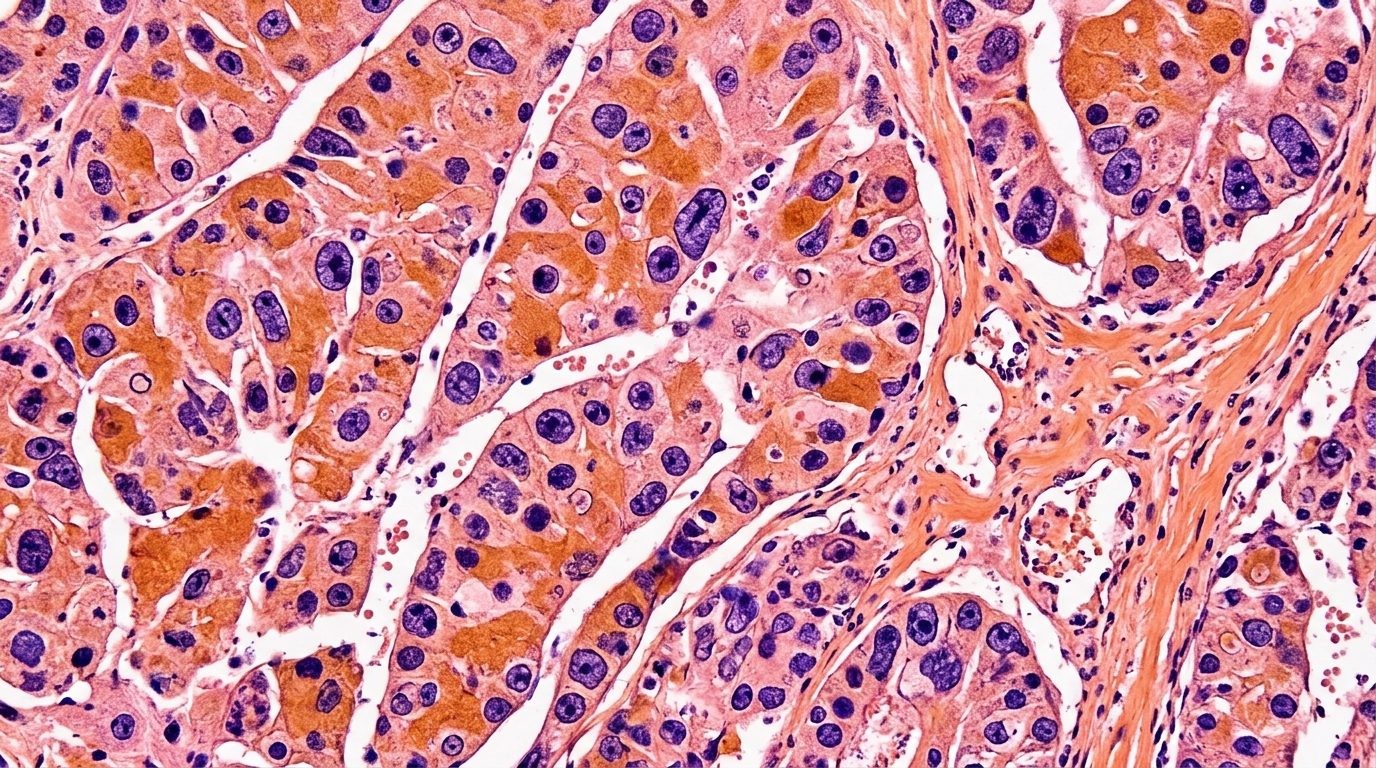
Researchers from Dongguan First Hospital affiliated to Guangdong Medical University have reported that the Wilms tumor 1-associated protein, known as WTAP, influences the expression of TNF receptor-associated factor 6, or TRAF6, in experimental models of hepatocellular carcinoma. This study, published in Frontiers in Cell and Developmental Biology, investigates the epitranscriptomic mechanisms that contribute to aggressive tumor behavior and reduced sensitivity to antiangiogenic therapy. The findings indicate that WTAP contributes to cellular and xenograft phenotypes partly through the post-transcriptional regulation of TRAF6, a process associated with altered m6A enrichment and mRNA stability.

Hepatocellular carcinoma is characterized as a highly vascular malignancy with marked tumor vascular plasticity. Phenotypes associated with vasculogenic mimicry, or VM, have been linked to aggressive tumor behavior. However, the specific epitranscriptomic mechanisms contributing to these phenotypes in HCC remained incompletely defined prior to this investigation. The study examined whether WTAP regulates cell growth and vascular plasticity-associated phenotypes through m6A-associated post-transcriptional regulation of TRAF6.

The experimental design involved measuring WTAP and TRAF6 expression in HepG2 and BEL-7402 cells, as well as a hepatocyte comparator, using RT-qPCR and Western blotting. Gain- and loss-of-function experiments were performed to assess cell viability, wound closure, invasion, and the ability of the examined cells to support vascular-like network formation in tumor cell-HUVEC co-culture. The researchers also evaluated the expression of vascular plasticity- and EMT-associated proteins.

To evaluate the specific molecular mechanisms, MeRIP-qPCR was used to assess m6A enrichment of TRAF6 transcripts, while an Actinomycin D chase assay was performed to assess TRAF6 mRNA stability. Additional aspects of TRAF6 regulation were examined using WT/MUT reporter assays, YTHDF1 RNA immunoprecipitation followed by qPCR, and YTHDF1 depletion. Subcutaneous xenograft models were utilized to evaluate tumor growth and the presence of PAS-positive/CD31-negative VM-like structures.

The results demonstrated that WTAP and TRAF6 were upregulated in the examined cells. WTAP overexpression enhanced cell viability, wound closure, invasion, and tumor cell-supported vascular-like network formation. WTAP manipulation altered TRAF6 mRNA abundance, m6A enrichment, and decay, with the effect being greater on the WT reporter than the MUT reporter.

Further experiments revealed that YTHDF1 depletion reduced the associated TRAF6 protein increase despite persistently elevated mRNA levels. TRAF6 knockdown attenuated WTAP-driven phenotypes and tumor growth, while TRAF6 overexpression partially rescued the effects of WTAP knockdown. PAS/CD31 staining provided qualitative evidence of VM-like morphology in the xenograft models. These findings support a functional link between WTAP, TRAF6, and vascular plasticity in experimental HCC models.

The authors conclude that WTAP contributes to the observed cellular and xenograft phenotypes partly through TRAF6 post-transcriptional regulation associated with altered m6A enrichment and mRNA stability. The precise m6A sites and the perfusion of VM-like structures remain unclear.

Subject of Research: Epitranscriptomic regulation of vascular plasticity in hepatocellular carcinoma

Article Title: WTAP regulates TRAF6 expression and vascular plasticity-associated phenotypes in experimental cell models

Article References: Liang, M., Wang, W., & Wang, W. (2026). WTAP regulates TRAF6 expression and vascular plasticity-associated phenotypes in experimental cell models. Frontiers in Cell and Developmental Biology, 14, Article 1773936. https://doi.org/10.3389/fcell.2026.1773936

Image Credits: AI Generated

DOI: 10.3389/fcell.2026.1773936

Keywords: Hepatocellular Carcinoma, WTAP, TRAF6, m6A Modification, Vasculogenic Mimicry, Vascular Plasticity, Epitranscriptomics, Tumor Biology, regulates, expression, vascular, plasticity-associated

Cite Scienmag News

Nathaniel Bowman. (November 8, 2026). WTAP Regulates TRAF6 in Experimental HCC Models. Scienmag. https://scienmag.com/wtap-regulates-traf6-in-experimental-hcc-models/

Nathaniel Bowman. "WTAP Regulates TRAF6 in Experimental HCC Models." Scienmag, 8 November 2026, https://scienmag.com/wtap-regulates-traf6-in-experimental-hcc-models/. Accessed 16 November 2026.

Nathaniel Bowman. "WTAP Regulates TRAF6 in Experimental HCC Models." Scienmag. November 8, 2026. https://scienmag.com/wtap-regulates-traf6-in-experimental-hcc-models/

Tags: epitranscriptomicsExpressionhepatocellular carcinomam6A modificationplasticity-associatedRegulatesTRAF6tumor biologyvascularVascular Plasticityvasculogenic mimicryWTAP
Share26Tweet16
Previous Post

Cross-Validation Exposes Inflated Effect Size Estimates in Brain Association Studies

Next Post

CTCF-FADS1 Axis Regulates Oncogenic Energy Metabolism in Liver Cancer

Related Posts

Quercetin Inhibits Lung Cancer Progression Through Multiple Molecular Mechanisms
Biology

Quercetin Inhibits Lung Cancer Progression Through Multiple Molecular Mechanisms

November 16, 2026
HAT1 Depletion Accelerates Glioblastoma Proliferation and Alters Cell Membrane Lipids
Biology

HAT1 Depletion Accelerates Glioblastoma Proliferation and Alters Cell Membrane Lipids

November 16, 2026
Disruption of piRNA Pathway Frequently Accompanies Human Pachytene Spermatogenic Arrest
Biology

Disruption of piRNA Pathway Frequently Accompanies Human Pachytene Spermatogenic Arrest

November 16, 2026
Histone lactylation feedback loop promotes cisplatin resistance in intrahepatic cholangiocarcinoma
Biology

Histone lactylation feedback loop promotes cisplatin resistance in intrahepatic cholangiocarcinoma

November 16, 2026
Endothelial PLK2 Depletion Suppresses Pathological Ocular Blood Vessel Growth in Mice
Biology

Endothelial PLK2 Depletion Suppresses Pathological Ocular Blood Vessel Growth in Mice

November 15, 2026
IL-6 Trans-Signaling Suppresses Alzheimer’s Amyloid-β Production via ADAM17 Activation
Biology

IL-6 Trans-Signaling Suppresses Alzheimer’s Amyloid-β Production via ADAM17 Activation

November 15, 2026
Next Post
CTCF-FADS1 Axis Regulates Oncogenic Energy Metabolism in Liver Cancer

CTCF-FADS1 Axis Regulates Oncogenic Energy Metabolism in Liver Cancer

  • Mothers who receive childcare support from maternal grandparents show more optimized

    Mothers who receive childcare support from maternal grandparents show more parental warmth, finds NTU Singapore study

    27656 shares
    Share 11059 Tweet 6912
  • University of Seville Breaks 120-Year-Old Mystery, Revises a Key Einstein Concept

    1061 shares
    Share 424 Tweet 265
  • Bee body mass, pathogens and local climate influence heat tolerance

    682 shares
    Share 273 Tweet 171
  • Researchers record first-ever images and data of a shark experiencing a boat strike

    546 shares
    Share 218 Tweet 137
  • Groundbreaking Clinical Trial Reveals Lubiprostone Enhances Kidney Function

    531 shares
    Share 212 Tweet 133
Science

Embark on a thrilling journey of discovery with Scienmag.com—your ultimate source for cutting-edge breakthroughs. Immerse yourself in a world where curiosity knows no limits and tomorrow’s possibilities become today’s reality!

RECENT NEWS

  • Stem Cell Arterial Organoids Assemble Into Perfusable Vascular Networks in Mice
  • Brain Perfusion Pattern Distinguishes Lewy Body Dementia in MRI Study
  • Subashi Temple Ceramic Analysis Reveals Lead Glaze Degradation Mechanisms
  • Resting Brain Connectivity Patterns Reveal Distinct Profiles Across Core Depression Dimensions

Categories

  • Agriculture
  • Anthropology
  • Archaeology
  • Athmospheric
  • Biology
  • Biotechnology
  • Blog
  • Bussines
  • Cancer
  • Chemistry
  • Climate
  • Earth Science
  • Editorial Policy
  • Marine
  • Mathematics
  • Medicine
  • Pediatry
  • Policy
  • Psychology & Psychiatry
  • Science Education
  • Science News
  • Social Science
  • Space
  • Technology and Engineering

Subscribe to Blog via Email

Enter your email address to subscribe to this blog and receive notifications of new posts by email.

Join 5,150 other subscribers

© 2026 Scienmag - Science Magazine

Welcome Back!

Login to your account below

Forgotten Password?

Retrieve your password

Please enter your username or email address to reset your password.

Log In
No Result
View All Result
  • HOME
  • SCIENCE NEWS
  • CONTACT US

© 2026 Scienmag - Science Magazine

Discover more from Science

Subscribe now to keep reading and get access to the full archive.

Continue reading

