


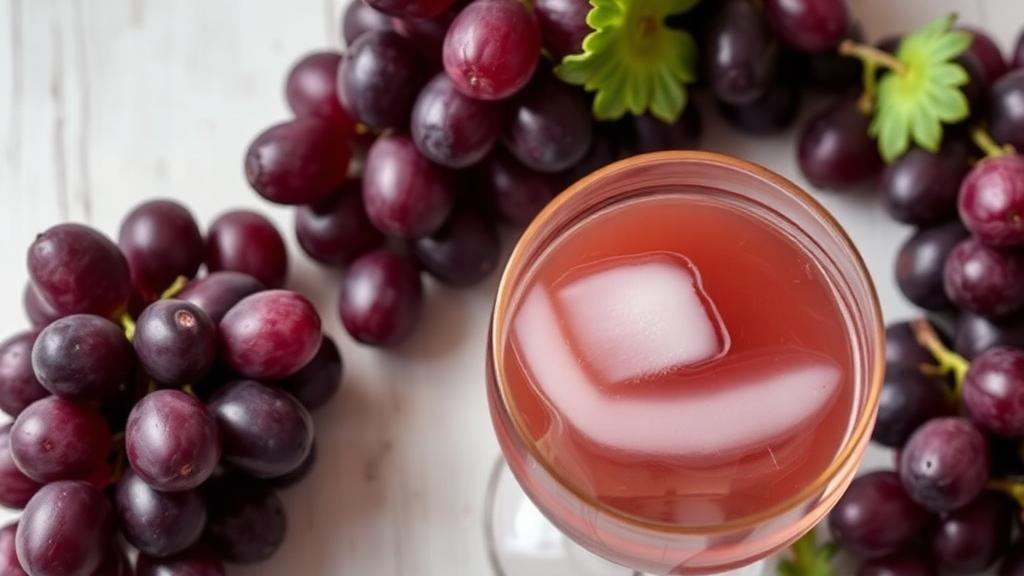
Every liter of wine leaves behind a trail of leftovers. Grape pomace, the pulpy mass of skins, seeds and stems pressed out during winemaking, accumulates at a rate of roughly 0.3 to 0.5 kilograms per liter of wine produced, and that figure does not even count the debris from pruning season. Traditionally, wineries have treated this residue as a disposal problem, relying on expensive physico-chemical and biological treatments such as evaporation, ozonation, anaerobic digestion and aerobic processing, all of which generate side-products of their own. Now a team of researchers working between Lebanon and France has proposed a more appetizing fate for the waste: turning it into kombucha, the tangy fermented tea drink that has swept through the global functional beverage market. Their new study, published in Heliyon, is among the first to ask not just whether grape pomace kombucha can be made, but whether anyone would actually want to drink it.
The science behind the beverage is a story of microbial cooperation. Kombucha is produced by fermenting sweetened substrate with a symbiotic culture of bacteria and yeast, known as a SCOBY. In the classic process, yeasts first convert sucrose into glucose and fructose while generating ethanol; acetic acid bacteria then transform glucose into gluconic acid and cellulose, and fructose into acetic acid, while lactic acid bacteria, when present, contribute lactic acid. The result is a two-phase product, a floating cellulose biofilm atop a sour, lightly carbonated liquid whose flavor can range from pleasantly fruity and sparkling to outright vinegar-like depending on how it is prepared. In the new work, the laboratory SCOBY was dominated by the bacterial genera Gluconoacetobacter, Gluconobacter and Komagataeibacter, together with the yeasts Brettanomyces and Schizosaccharomyces, a consortium maintained by regular back-slopping every two weeks.
What makes grape pomace an intriguing substrate is its chemistry. The residue is naturally acidic and loaded with polyphenols, the antioxidant compounds concentrated in grape skins, along with anthocyanins, the pigments responsible for red wine’s color. Earlier work by the same team had already shown that fermenting grape pomace with kombucha cultures significantly increases polyphenol and anthocyanin concentrations, and that in-vitro assays reveal enhanced antioxidant, anti-diabetic and anti-inflammatory activity. The authors are careful to stress that the present study assessed neither health effects nor superiority over other beverages; its goal was narrower and more commercial: to gauge consumer interest and measure how the drinks actually taste to real people.
To map the potential market, the researchers distributed a bilingual French and English questionnaire and collected roughly 400 responses, of which 388 to 392 valid answers were analyzed depending on the question. The panel skewed young and educated: 58.2 percent were aged 18 to 30, most held a master’s or doctoral degree, and the majority were Lebanese (69.9 percent) or French (23.5 percent). The survey probed eight sociodemographic variables alongside twenty questions covering juice and soda habits, awareness of functional foods, purchasing behavior and openness to novel products. Quality dominated shopping decisions, cited by 51 percent of respondents, while taste (58.2 percent) and nutrient content (23 percent) were the leading criteria for choosing a beverage. Notably, 57 percent of participants rarely drank soda, hinting at an appetite for alternatives perceived as healthier.
The kombucha-specific findings revealed a striking awareness gap. Sixty percent of respondents were unfamiliar with kombucha tea, and even among the 156 participants who knew the drink, 64.1 percent had never consumed it and only 41 percent were aware or very aware of its purported health benefits. Yet curiosity ran high: 82.4 percent said they would be interested or very interested in trying a novel kombucha knowing it had health advantages, 96.5 percent would try new products with health benefits, and 92.3 percent were drawn to eco-friendly novelties. The researchers ran 160 chi-square tests linking each survey item to each participant characteristic, adjusting for the false discovery rate with the Benjamini-Hochberg procedure. Ninety-two associations survived correction, though the effect sizes were uniformly modest, with a median Cramer’s V of 0.15, indicating weak but consistent patterns.
Physical activity emerged as the most broadly connected factor, associated with 17 of the 20 questionnaire items, followed by nationality (15 items), age (14), education and gender (11 each). To sharpen the picture, the team built a multivariable logistic regression model predicting interest in a novel healthy kombucha. Five characteristics retained independent associations. Women had nearly four times the odds of interest compared with men (adjusted odds ratio 3.99), Lebanese participants more than eight times the odds of French participants (AOR 8.05), and the self-employed nearly six times the odds of employees (AOR 5.74). Older respondents, aged 55 and above, showed markedly lower interest than the 18-to-30 group (AOR 0.24), and, counterintuitively, physically active participants were less interested than sedentary ones. Education and self-reported health issues dropped out of significance after adjustment, and income showed no association at all, suggesting that enthusiasm for the drink is not simply a function of purchasing power.
With the market signal established, the team turned to the harder question of palatability. Two pomace types were fermented: a Lebanese blend of Cabernet Sauvignon, Cabernet Franc, Syrah and Merlot, and a single-variety Négrette pomace from the Fronton region of France. Grape pomace at 100 grams per liter dry weight was infused in 80-degree-Celsius water for 20 minutes with either 20 or 30 grams per liter of sucrose, then inoculated with the SCOBY and fermented at 25 degrees Celsius for five or seven days. Seven formulations reached the tasting bench: three natural, three sweetened post-fermentation with a stevia-based sweetener at 5 grams per liter, and one flavored with natural raspberry aroma. Physicochemical analysis of the base fermentations showed pH values between 3.02 and 3.55, titratable acidity from 5.29 to 8.80 grams per liter as sulfuric acid, and residual sugars between 12.31 and 20.35 grams per liter.
Twenty untrained panelists, 13 women and 7 men aged 24 to 60, rated all seven drinks on the nine-point hedonic scale in an ISO-compliant sensory laboratory, with randomized serving orders, palate cleansers and five-minute intervals between samples. The researchers acknowledge the panel falls short of the sample sizes recommended by the AFNOR NF ISO 11136 standard for consumer testing, a constraint imposed by pandemic-era logistics, so the results are explicitly exploratory. Still, the statistics were emphatic. Repeated-measures ANOVA found a significant formulation effect for all seven attributes, with the formulation explaining 82 percent of the variance in overall acceptance. The raspberry-flavored sample topped the table with a mean liking score of 6.75, statistically tied with the sweetened Négrette formulation at 6.15, and was chosen as the favorite by 65 percent of panelists. Sweetening reliably lifted scores for sweetness, sourness, fruity taste and overall liking across every base formulation, while the raspberry aroma delivered its clearest advantage on smell, scoring 7.05 against 4.30 for its unsweetened counterpart.
The chemistry helped explain the preferences. The least-liked natural formulation, the seven-day Lebanese fermentation, carried the highest titratable acidity and the lowest residual sugar, while better-accepted drinks balanced lower acidity against more remaining sweetness. Interestingly, acetic acid concentration alone did not predict acceptance; the Négrette base contained the most acetic acid yet outperformed the more acidic Lebanese blend, pointing to the overall sweet-sour balance rather than any single parameter as the sensory key. One caveat deserves attention: residual ethanol was detected in all base fermentations, ranging from 3.84 to 7.93 grams per liter, a natural byproduct of yeast activity over the short five-to-seven-day fermentations. The authors caution that these experimental formulations therefore cannot be considered strictly non-alcoholic, and that process optimization would be needed to meet regulatory thresholds for non-alcoholic beverages.
Taken together, the study sketches a plausible path from winery waste to supermarket shelf, while remaining candid about its limits. The convenience sample, the modest sensory panel and the confounding of grape variety with sucrose concentration and fermentation parameters all mean the findings are preliminary rather than proof of market readiness. Open questions include willingness to pay, the optimal branding strategy, and whether promoting the drink as a wine-industry by-product would help or hinder acceptance, since prior research suggests informed consumers respond positively to upcycled foods but education was not independently linked to interest here. What the study does establish is a concrete signal: a young, sustainability-minded public is willing to try a kombucha made from discarded grape skins, and with the right balance of sweetness and fruit aroma, that willingness could translate into genuine liking. For an industry drowning in pomace, that may be the most valuable fermentation of all.
Subject of Research: Consumer acceptance and sensory evaluation of kombucha fermented from wine-industry grape pomace
Article Title: Grape pomace kombucha: consumer interest and sensory characteristics
Article References: Barakat, N., Julien, S. G., Bouajila, J., Beaufort, S., Rizk, Z., Taillandier, P., & El Rayess, Y. (2026). Grape pomace kombucha: consumer interest and sensory characteristics. Heliyon, 12(15), Article e45527. https://doi.org/10.1016/j.heliyon.2026.e45527
Image Credits: AI Generated
DOI: 10.1016/j.heliyon.2026.e45527
Keywords: grape pomace, kombucha, SCOBY, fermentation, functional beverages, sensory analysis, consumer survey, food waste valorization, polyphenols, wine by-products, circular economy, hedonic testing
Cite Scienmag News
Sloane Callahan. (October 2, 2026). Wine Waste Gets a Second Life: Grape Pomace Kombucha Wins Over Tasters. Scienmag. https://scienmag.com/wine-waste-gets-a-second-life-grape-pomace-kombucha-wins-over-tasters/
Sloane Callahan. "Wine Waste Gets a Second Life: Grape Pomace Kombucha Wins Over Tasters." Scienmag, 2 October 2026, https://scienmag.com/wine-waste-gets-a-second-life-grape-pomace-kombucha-wins-over-tasters/. Accessed 5 October 2026.
Sloane Callahan. "Wine Waste Gets a Second Life: Grape Pomace Kombucha Wins Over Tasters." Scienmag. October 2, 2026. https://scienmag.com/wine-waste-gets-a-second-life-grape-pomace-kombucha-wins-over-tasters/


