


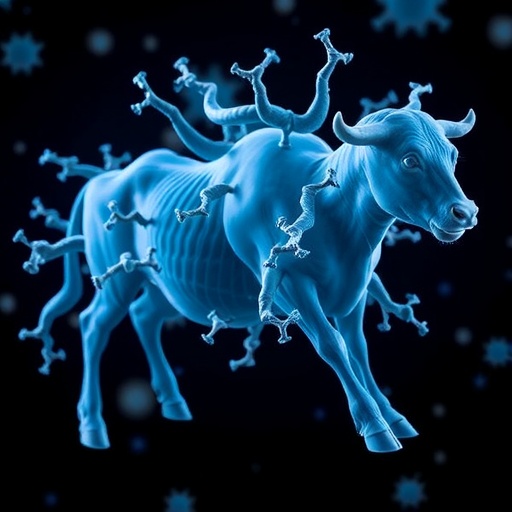
In the ever-evolving arena of cellular agriculture, the quest for sustainable and efficient methods to cultivate animal cells outside the body has taken a significant leap forward. A groundbreaking study recently published explores the enhancement of bovine myoblast expansion through a novel serum-free culture medium enriched with whey—a substance historically undervalued in this context. This breakthrough not only promises to revolutionize the production of lab-grown meat but also addresses critical bottlenecks associated with cell culture, potentially accelerating the future of clean meat technology.
Cultivated meat, or lab-grown meat, hinges on the ability to proliferate animal muscle cells efficiently and at scale. Traditionally, serum, often fetal bovine serum (FBS), has been the gold standard for cell culture mediums, providing a rich amalgamation of growth factors, hormones, and nutrients essential for cell proliferation. However, reliance on serum introduces challenges including high cost, ethical concerns, batch variability, and contamination risks. Consequently, developing robust serum-free media formulations that can sustain optimal cell growth is paramount for commercial scalability and consumer acceptance.
The study introduces a whey-enhanced serum-free medium designed specifically to support the expansion of bovine myoblasts—the muscle precursor cells responsible for muscle fiber formation. Whey, a by-product of cheese production rich in proteins, peptides, and bioactive molecules, has traditionally been used in nutrition and dietary supplements but is now being harnessed for biotechnological applications. The team hypothesized that whey proteins could mimic certain growth-promoting functions of serum, providing an accessible and cost-effective supplement for cell culture media.
Experimentally, bovine myoblasts cultured in this newly developed medium demonstrated significantly improved expansion rates compared to conventional serum-free conditions. Cellular morphology remained healthy, with no evident signs of differentiation or senescence over prolonged culture periods. Importantly, the proliferation efficiency rivaled that of serum-supplemented media, suggesting that whey peptides could effectively substitute serum-derived factors without the ethical or economic drawbacks.
Further biochemical analysis illuminated the mechanisms underlying whey’s beneficial effects. The complex mixture of bioactive peptides in whey appeared to interact synergistically with other medium constituents, enhancing cell survival pathways and promoting proliferation. Key signaling cascades such as the PI3K/Akt and MAPK pathways, known to regulate cellular growth and metabolism, were notably activated in cells cultured with whey supplementation. This molecular insight provides a foundation for optimizing medium formulations and tailoring them for diverse cell types.
From an industrial standpoint, the utilization of whey—an abundant and low-cost dairy by-product—addresses two critical challenges simultaneously. First, by replacing costly serum components, production expenses can be dramatically reduced, making cultivated meat more economically viable. Second, incorporating whey valorizes dairy waste streams, contributing to circular economy principles. This dual advantage aligns with sustainability goals fundamental to the future food production landscape.
Furthermore, eliminating animal serum from culture media mitigates the risk of viral contamination, immunogenic reactions, and batch variability. These factors have long impeded regulatory approval and consumer confidence in cell-based meat products. The serum-free, whey-enhanced medium thus represents a step forward toward safer, more standardized, and ethically sound production methods that could accelerate market readiness.
The implications of this research extend beyond cultivated meat. Muscle cell expansion is critical for regenerative medicine, tissue engineering, and pharmaceutical testing. A readily available, cost-effective serum-free medium could drive advances in these fields by providing a reliable platform for muscle cell culture. Additionally, whey’s nutritional and biochemical complexity might inspire novel approaches for culturing other challenging cell types.
Despite these promising results, the authors acknowledge that further investigations are essential to optimize medium components fully and validate long-term cell functionality. Factors like differentiation capacity, contractile properties of cultured muscle tissue, and genetic stability over extended passages require thorough assessment. Scaling from laboratory to industrial bioreactors also presents challenges in shear stress tolerance and nutrient delivery that must be addressed.
The study’s methodology exemplifies cutting-edge approaches combining cell biology, biochemistry, and food science to tackle one of cultivated meat’s pivotal hurdles. Integrating bio-resource utilization with cellular agriculture underscores a multidisciplinary ethos critical to innovation in sustainable food technologies. As consumer demand for ethical and environmentally benign protein sources rises, such foundational research lights the path toward practical solutions.
Looking ahead, this whey-enhanced serum-free medium could catalyze a paradigm shift in cultivated meat manufacturing. By reducing dependency on animal-derived serum, it eases ethical qualms and economic constraints, bringing affordable clean meat closer to everyday tables globally. Additionally, it opens avenues to diversify culture media formulations, potentially customizing growth conditions for different livestock species or muscle cell types to optimize yield and product quality.
In conclusion, the innovative use of whey to enrich serum-free media for bovine myoblast expansion represents a promising breakthrough in cultured meat technology. By combining scientific rigor with practical considerations of cost, sustainability, and scalability, this research propels the field forward, offering a glimpse into a future where laboratory-cultivated meat is not only feasible but also socially and environmentally responsible. The insights gained here lay a robust foundation for subsequent studies aimed at refining and industrializing serum-free culture systems for a new era of food production.
Cite Scienmag News
Drew Townsend. (September 27, 2025). Whey-Boosted Serum-Free Medium Expands Bovine Myoblasts. Scienmag. https://scienmag.com/whey-boosted-serum-free-medium-expands-bovine-myoblasts/
Drew Townsend. "Whey-Boosted Serum-Free Medium Expands Bovine Myoblasts." Scienmag, 27 September 2025, https://scienmag.com/whey-boosted-serum-free-medium-expands-bovine-myoblasts/. Accessed 4 September 2026.
Drew Townsend. "Whey-Boosted Serum-Free Medium Expands Bovine Myoblasts." Scienmag. September 27, 2025. https://scienmag.com/whey-boosted-serum-free-medium-expands-bovine-myoblasts/


