


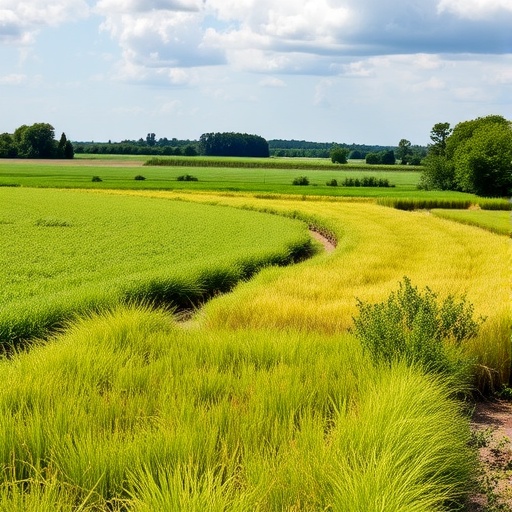
The question of where to restore cultivated land is becoming increasingly urgent as cities expand, soils degrade and climate pressures reshape agricultural production. A new study by Yin, Wang, Qiao and colleagues proposes that restoration decisions should no longer be based on a single factor, such as soil quality or current agricultural output. Instead, the researchers introduce an integrated framework that evaluates three dimensions at once: natural adaptability, economic adaptability and spatial stability. Published in Humanities and Social Sciences Communications, the work offers a decision-making model designed to identify land where restoration is most likely to succeed environmentally, remain economically viable and contribute to a stable agricultural landscape.
Cultivated land restoration generally refers to efforts to recover farmland that has been abandoned, degraded, converted to other uses or placed under pressure from erosion, pollution, salinization, water shortages and urban development. Although restoring farmland can strengthen food security, not every parcel is equally suitable for intervention. Some areas may possess fertile soils but lack reliable irrigation. Others may be economically attractive but highly vulnerable to flooding, erosion or future construction. Restoring land without accounting for these differences can lead to wasted investment, low crop productivity and renewed degradation. The study’s central message is that restoration must be treated as a spatial planning problem rather than as a simple process of returning land to cultivation.
The first component of the proposed framework, natural adaptability, describes how well a site can support agricultural production based on its environmental characteristics. This dimension can include soil fertility, topography, climate, water availability, ecological conditions and exposure to hazards. In technical terms, natural adaptability reflects the capacity of an agroecosystem to maintain crop growth and soil function under prevailing physical conditions, ideally with limited dependence on costly external inputs. Flat terrain, adequate moisture, suitable temperatures and healthy soils may increase adaptability, while steep slopes, severe erosion, poor drainage or persistent drought can reduce it. The concept also recognizes that a parcel may be technically cultivable yet ecologically fragile, meaning that intensive restoration could create new environmental damage.
Economic adaptability forms the second pillar of the model. Restoration requires labor, machinery, seeds, fertilizers, irrigation infrastructure and long-term management. Even land with strong natural potential may not be a realistic restoration target if production costs are too high or farmers lack access to markets. Economic adaptability therefore concerns whether restored land can support agricultural activity within local economic conditions. Factors may include proximity to roads and processing facilities, agricultural returns, labor availability, investment requirements, land-use costs and the economic resilience of farming households. By incorporating these variables, the framework moves beyond the assumption that ecological suitability automatically translates into practical feasibility.
The third component, spatial stability, focuses on the durability and territorial coherence of restoration outcomes. A restored parcel should not be assessed in isolation from its surrounding landscape. If farmland is surrounded by expanding construction, fragmented infrastructure or unstable land uses, its long-term agricultural function may be difficult to maintain. Spatial stability can be understood as the likelihood that a site and its neighboring areas will remain compatible with cultivation over time. It also involves the continuity of farmland networks, the concentration or fragmentation of agricultural patches and the relationship between restoration zones and broader land-use plans. Stable areas are more likely to support efficient irrigation, mechanized farming, ecological protection and coordinated management.
What makes the framework potentially influential is the way these dimensions are combined rather than applied separately. A multi-criteria evaluation system can assign indicators to each dimension, standardize measurements with different units and calculate an overall priority score. Geographic information systems and spatial analysis can then map the results, revealing areas where environmental suitability, economic feasibility and land-use permanence overlap. Such an approach may also identify conflicts. For example, land with excellent natural conditions could have weak spatial stability because it lies near a rapidly urbanizing corridor. Conversely, a stable rural area might be economically unattractive because transportation costs are high. The framework is designed to make these trade-offs visible.
This integrated perspective could change how governments rank restoration projects. Instead of directing resources toward the largest or most visibly degraded parcels, planners could prioritize land with the strongest combination of long-term advantages. High-priority areas would be those where restoration is environmentally compatible, financially defensible and spatially secure. Medium-priority areas might require targeted improvements, such as irrigation upgrades, soil remediation, market support or stronger land-use controls. Low-priority areas could be directed toward alternative ecological or economic functions when cultivation would demand excessive investment or create unacceptable risks. Such differentiation is important because restoration budgets are limited and poorly targeted projects can undermine public confidence.
The framework also has implications for food security under climate change. Agricultural systems are being exposed to more frequent heatwaves, irregular rainfall, water scarcity and extreme storms. A parcel that performs well under current conditions may become unreliable in the future, while land that appears marginal today could gain importance as climate patterns shift. Natural adaptability should therefore be interpreted dynamically, with climate projections and hazard scenarios incorporated where data are available. Economic adaptability may also change as crop prices, labor costs and infrastructure develop. Spatial stability is equally fluid, particularly in regions experiencing rapid urbanization. The study’s integrated structure provides a foundation for updating restoration priorities as these conditions evolve.
The researchers’ approach is especially relevant to countries and regions facing simultaneous pressure to protect farmland, increase agricultural productivity and control uncontrolled land expansion. It encourages policymakers to coordinate agricultural planning with ecological conservation, transportation development and urban management. Restoration is not presented as a universal solution or as a mandate to cultivate every available parcel. Instead, it becomes a selective process guided by evidence about where intervention can generate durable benefits. The framework may support more transparent decisions by showing why one area receives priority over another and by making the environmental and economic consequences of those decisions easier to compare.
As the study enters the scientific conversation, its most important contribution may be conceptual: cultivated land restoration is not simply a question of whether land can be farmed, but whether farming can remain sustainable, profitable and spatially secure. By linking natural adaptability, economic adaptability and spatial stability, Yin, Wang, Qiao and their colleagues offer a more comprehensive lens for a problem traditionally divided among separate agencies and disciplines. The model will ultimately depend on the quality of local data, the selection of indicators and the ability of planners to validate predictions in the field. Nevertheless, its central principle is clear: the best restoration target is not necessarily the most degraded land or the land with the highest immediate yield, but the land where nature, economics and geography align to give agriculture a lasting future.
Cite Scienmag News
Denise Maddox. (August 13, 2026). Where to Prioritize Cropland Restoration: Integrating Natural, Economic, and Spatial Stability. Scienmag. https://scienmag.com/where-to-prioritize-cropland-restoration-integrating-natural-economic-and-spatial-stability/
Denise Maddox. "Where to Prioritize Cropland Restoration: Integrating Natural, Economic, and Spatial Stability." Scienmag, 13 August 2026, https://scienmag.com/where-to-prioritize-cropland-restoration-integrating-natural-economic-and-spatial-stability/. Accessed 4 September 2026.
Denise Maddox. "Where to Prioritize Cropland Restoration: Integrating Natural, Economic, and Spatial Stability." Scienmag. August 13, 2026. https://scienmag.com/where-to-prioritize-cropland-restoration-integrating-natural-economic-and-spatial-stability/


