Aquaculture has quietly become the largest source of aquatic animals raised for human consumption, and the scale of slaughter is staggering. Recent estimates suggest that around 124 billion individual finfish were killed for food in 2019, within a plausible range of 78 to 171 billion. That figure exceeds the combined total of all farmed birds and mammals slaughtered annually, and it does not even include the aquatic invertebrates raised in the same systems or the wild-caught animals used to feed them. Against this enormous backdrop, formal welfare protection remains scarce. Researchers estimate that 70 to 72 percent of farmed finfish have no legal welfare protection at all, and fewer than 1 percent benefit from any fish-specific legal protection at the time of killing.
The justification most often offered for this gap is evidentiary. The claim is that sentience in fish, and even more so in aquatic invertebrates, has not been established with enough certainty to warrant regulation. But a new opinion article argues that this framing is mistaken in a specific and consequential way. The difficulty is not a shortage of evidence, since a substantial body of research now supports the capacity for pain in fish at minimum. The real problem, according to the authors, is that the evidentiary standard used to convert that evidence into policy is miscalibrated. It is a standard borrowed from scientific inference, where the conservative course is to withhold assent until uncertainty is low, rather than a standard for decision-making under uncertainty, where the costs of both kinds of error have to be weighed. That mismatch is not neutral. It has a direction, and the direction favours inaction.
The empirical case for pain in fish has been built over two decades of careful research. Teleost fish possess nociceptors comparable to those found in mammals. They show physiological and behavioural responses to noxious stimuli that are reduced by analgesics, display elevated brain activity under noxious stimulation, and will trade off a noxious experience against other motivations rather than responding by simple reflex. Reviews of cognition and behaviour place fish well within the range of capacities normally treated as morally relevant in other vertebrates. This is not to claim the question is closed. A sceptical literature holds that the absence of a mammalian-style cortex means the behavioural and physiological data do not demonstrate felt experience. That position has been contested in detail rather than ignored, and the broad direction of expert opinion has moved towards acceptance of fish sentience. The point for policy is narrower and does not require the debate to be settled. Even on a cautious reading, the evidence establishes a credible and non-negligible probability that farmed fish experience pain and distress.
Science and policy ask different questions of evidence, and they are right to. Scientific inference is conservative by design. To avoid populating the literature with false positives, it sets a high bar for accepting a hypothesis and treats failure to clear that bar as a reason to withhold assent. Withholding assent is the appropriate scientific response to uncertainty. Policy faces a fundamentally different problem. A regulator is not deciding whether to believe a claim but whether to act, and inaction is itself a decision with consequences. Importing the scientific standard into that setting quietly converts not yet proven into treat as false, which is a substantive policy choice disguised as epistemic caution. The alternative has been set out directly in a precautionary framework proposing that credible evidence of sentience in even one species of a group should trigger proportionate and species-appropriate welfare measures, and that a lack of full scientific certainty is not by itself a sufficient reason to postpone them. The same logic has been applied in practice: a structured review of sentience in cephalopod molluscs and decapod crustaceans assessed the evidence against eight neural and behavioural criteria and supported their inclusion in welfare law without waiting for proof that would satisfy a neuroscientist.
Once the question is framed as a decision under uncertainty, the asymmetry between the two ways of being wrong becomes the central fact. If a regulator acts as though fish are sentient and they are not, the cost is the expense of welfare measures that turn out to be unnecessary. If a regulator acts as though fish are not sentient and they are, the cost is large-scale suffering sustained over the time it takes for certainty to arrive, multiplied across the tens of billions of individuals involved. These costs are not symmetrical, and a decision rule that ignores the asymmetry is not cautious but reckless in one direction only. This is not a novel or radical way to handle uncertainty. Environmental regulation, food safety and occupational health all operate on precautionary lines, acting on credible evidence of serious harm before the underlying mechanism is fully characterised, precisely because the cost of waiting is borne while the science matures. Principle 15 of the Rio Declaration states the general form: where there are threats of serious harm, a lack of full scientific certainty should not be used to postpone cost-effective preventive measures. There is no principled reason why animal welfare should carry a higher burden of proof than the safety of a pesticide or an industrial emission, yet in practice it routinely does.
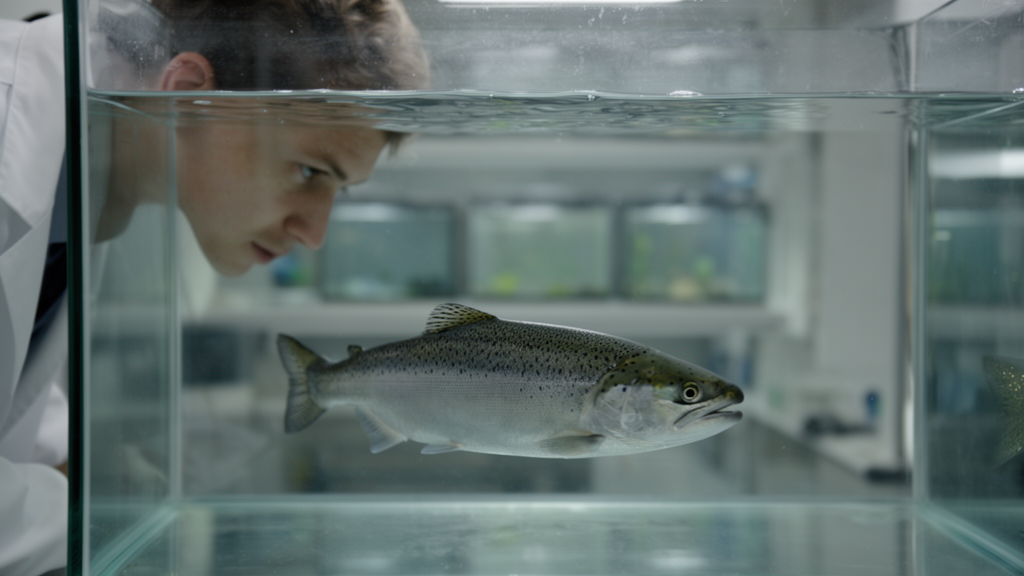
The slaughter of farmed fish makes the stakes concrete. Killing by asphyxiation in air, alone or in ice, is among the most widely used methods worldwide and is also among the most clearly aversive. It does not induce rapid loss of consciousness, so the animal remains sensible to the process for an extended period. A recent quantitative assessment estimated that a rainbow trout killed by air asphyxia experiences around 10 minutes of moderate to intense pain, within a range of roughly 2 to 22 minutes depending on size and temperature. The same study modelled the alternative and found that electrical stunning could avert between 60 and 1,200 minutes of pain per US dollar of capital expenditure. Comparable work is now defining humane endpoints for other farmed species, including Nile tilapia. Here the demand for certainty is hardest to defend. The counterfactual to reform is not a neutral status quo but a method already shown to cause prolonged suffering, used on a large share of production. Waiting for complete neurobiological confirmation before requiring, or even recommending, stunning does not hold welfare constant while the science improves. It allows a known harm to continue, and that continuation is a choice for which the evidentiary standard, not the evidence, is responsible.
The miscalibration bites hardest where it is least visible. Most aquaculture takes place in low- and middle-income countries, while most of the research capacity needed to generate sentience evidence of the kind that satisfies a high evidentiary bar sits in a small number of high-income institutions. Welfare policy in producing countries, where it exists at all, tends to follow international scientific consensus rather than lead it. The result is a compounding delay. Producers and regulators wait for evidence; the evidence accrues slowly and elsewhere; translation into species-appropriate and context-appropriate guidance takes further years; and the animals continue to suffer at scale throughout. A standard calibrated for certainty therefore does not distribute its delay evenly. It concentrates the cost of waiting on the systems least equipped to shorten the wait, which is the opposite of where precaution is most warranted.
Why does this miscalibration persist, and why for aquatic animals in particular? The demand for certainty does not operate in isolation. It is easier to sustain, and more appealing, where it coincides with pressures that already push towards inaction. Fish attract less moral concern than birds or mammals, a discounting that tracks phylogenetic distance from humans and reflects measurable speciesist attitudes. Welfare reform also carries real costs for producers, so a high evidentiary bar offers a convenient reason to defer it. And the norms of scientific inference themselves reward caution, making researchers reluctant to endorse regulation before the underlying question is regarded as settled. None of these pressures is usually stated openly as a reason for inaction. The evidentiary framing is what allows them to operate, by dressing a substantive value choice in the language of epistemic rigour. None of this requires abandoning rigour or pretending that uncertainty about fish experience has been resolved. It requires applying the right kind of standard to the right kind of question.
Evidentiary standards for aquatic animal welfare policy should be proportionate to the stakes, so that the strength of evidence demanded scales with the severity and scale of the harm at issue. They should be comparative rather than absolute, asking whether a proposed measure is better than the status quo rather than whether it rests on settled science. And they should be explicitly precautionary where uncertainty is high and the cost of inaction is severe, in line with how serious risks are already handled across environmental and public-health policy. For the editors, regulators, certifiers and funders who shape this field, the practical implication is to assess sufficient evidence relative to the decision in front of them rather than against an abstract scientific ideal. The question is not whether we are certain that fish suffer, but whether a credible probability that they do, at the scale at which they are farmed, is enough to justify measures whose cost is modest and whose downside, if we are wrong, is small. Framed that way, treating uncertainty as a reason for proportionate action rather than a licence for inaction is not a departure from sound reasoning. It is an application of it.
Subject of Research: Aquatic animal sentience and welfare policy
Article Title: When uncertainty becomes permission: evidentiary standards for aquatic animal sentience and the structural bias toward policy inaction
Article References: Emam, W., & Unerman, M. (2026). When uncertainty becomes permission: evidentiary standards for aquatic animal sentience and the structural bias toward policy inaction. Frontiers in Aquaculture, 5, Article 1906844. https://doi.org/10.3389/faquc.2026.1906844
Image Credits: AI Generated
DOI: 10.3389/faquc.2026.1906844
Keywords: fish sentience, aquaculture, animal welfare, precautionary principle, humane slaughter, evidentiary standards, policy inaction, uncertainty, becomes, permission, evidentiary, standards
Cite Scienmag News
William Thompson. (October 16, 2026). When Uncertainty Becomes Permission: The Flawed Evidentiary Standards Behind Aquatic Animal Welfare Inaction. Scienmag. https://scienmag.com/when-uncertainty-becomes-permission-the-flawed-evidentiary-standards-behind-aquatic-animal-welfare-inaction/
William Thompson. "When Uncertainty Becomes Permission: The Flawed Evidentiary Standards Behind Aquatic Animal Welfare Inaction." Scienmag, 16 October 2026, https://scienmag.com/when-uncertainty-becomes-permission-the-flawed-evidentiary-standards-behind-aquatic-animal-welfare-inaction/. Accessed 16 October 2026.
William Thompson. "When Uncertainty Becomes Permission: The Flawed Evidentiary Standards Behind Aquatic Animal Welfare Inaction." Scienmag. October 16, 2026. https://scienmag.com/when-uncertainty-becomes-permission-the-flawed-evidentiary-standards-behind-aquatic-animal-welfare-inaction/