


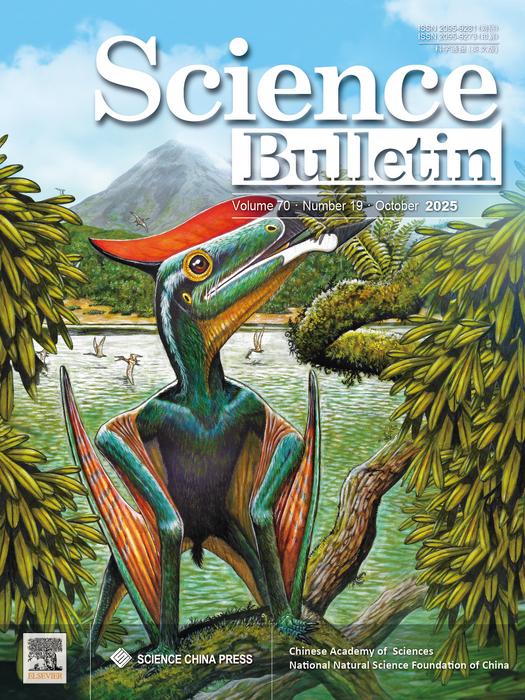
Pterosaurs, the first vertebrates capable of powered flight, have long fascinated paleontologists due to their complex evolutionary history and diverse ecological niches. Emerging in the Late Triassic period and surviving until the close of the Cretaceous alongside non-avian dinosaurs, these flying reptiles exhibited a range of feeding strategies that remain contentious among researchers. While hypotheses about their diet have spanned insectivory, piscivory, filter-feeding, and even herbivory, definitive evidence for many taxa has been elusive. Recent scientific advances, however, are challenging traditional perceptions, shedding new light on the dietary habits of pterosaurs, particularly through the unprecedented discovery of plant-based remains in a Sinopterus specimen.
The dietary debate surrounding pterosaurs has historically relied heavily on indirect methods such as comparative anatomy and functional morphology. Morphological assessments of jaw and skull structures have hinted at feeding capabilities tailored to various prey types or plant materials. Still, these interpretations often confront conflicting evidence and lack direct corroboration. Preservation of stomach contents—arguably the most conclusive evidence of dietary preferences—has been notoriously rare, with only a handful of specimens worldwide offering glimpses into actual feeding behavior. Prior findings, such as the Triassic Eudimorphodon and Jurassic Rhamphorhynchus, have primarily yielded fish remains, reinforcing interpretations centered on piscivory for these taxa.
A groundbreaking study published in Science Bulletin now introduces unequivocal direct evidence supporting herbivory within pterosaurs. The research team identified a stomach content mass measuring 7.7 centimeters in length secured within the ribcage of a Sinopterus fossil. Advanced computed tomography (CT) scans revealed this mass in its original anatomical context, dismissing postmortem displacement. Intriguingly, the internal composition of the stomach content included numerous gastroliths—small stones commonly used by modern herbivores to mechanically process tough plant material—and over 300 extracted phytoliths, microscopic silica bodies uniquely formed during plant growth.
Phytoliths serve as highly diagnostic plant microfossils due to their species-specific morphologies and distribution patterns within plant tissues. The extraction of these phytoliths from the stomach contents of Sinopterus stands as the first documented example in any pterosaur, marking a significant milestone in understanding dietary ecology within this clade. The presence of gastroliths alongside phytoliths further supports a model whereby Sinopterus engaged in the mechanical breakdown of fibrous plant material, analogous to herbivorous behaviors observed in extant avian and reptilian taxa.
Researchers meticulously ruled out alternative explanations to affirm the authenticity of this herbivorous evidence. Contamination by environmental or diagenetic sources was excluded through rigorous sediment analysis from the surrounding matrix, which revealed an absence of phytoliths. Additionally, the scenario wherein plant remains originated from the consumption of herbivorous prey was considered unlikely given the rapid metabolism inferred for Sinopterus, which would typically yield residual hard parts such as bones or exoskeletons in stomach contents—none of which were observed. The possibility of deriving plant material indirectly by preying on soft-bodied herbivorous insects like caterpillars was also found inconsistent, as the abundance of gastroliths implies a requirement for processing tough, fibrous substances rather than soft tissues.
Prior biomechanical research strengthens this interpretation. For example, studies on the cranial mechanics of Tapejara, a close relative within the tapejarid clade, demonstrate adaptations conducive to herbivory, including robust jaw musculature and specialized dentition patterns optimized for processing vegetation. The fossil evidence from Sinopterus corroborates these morphological inferences, reinforcing the herbivorous niche hypothesized for certain pterosaur lineages.
This new discovery necessitates a revision of prevailing dietary models for pterosaurs, emphasizing ecological plasticity and complexity. Sinopterus, and potentially other tapejarid species, likely exploited terrestrial plant resources, employing a digestive strategy involving gastrolith-assisted mastication similar to that of seed-eating birds and some dinosaurs. This challenges prior assumptions that pterosaurs were predominantly animal feeders and broadens the understanding of their ecological roles in Mesozoic ecosystems.
The integration of phytolith analysis as a paleodietary tool marks a paradigm shift in vertebrate paleontology. These microscopic silica structures, resilient to diagenesis, offer an untapped proxy for reconstructing ancient diets with taxonomic and anatomical precision. Coupled with CT imaging and sedimentological controls, this multi-disciplinary approach enhances the resolution with which researchers can distinguish genuine dietary constituents from taphonomic artifacts.
Moreover, this research underscores the evolutionary significance of gastroliths in facilitating efficient digestion of plant matter among archosaurs, including non-avian dinosaur relatives and early birds. The second instance of gastrolith presence in pterosaurs documented here suggests convergent evolution of digestive strategies aligned with herbivory. Such findings contribute to broader discussions regarding the origins and diversification of herbivory in vertebrates.
The identification of herbivory in Sinopterus also invites reconsideration of its physiology and metabolic rates. A bird-like, high metabolic rate implied by lung architecture and related traits would necessitate nutrient-rich diets or adaptations such as gastrolith-assisted digestion to maximize energy extraction from fibrous plants. This physiological context enriches interpretations of pterosaur life history and behavior, illustrating their adaptability and evolutionary success.
Finally, the sedimentary context and preservation quality of the Sinopterus specimen provide exceptional opportunities for future research. Continued application of non-destructive imaging and molecular paleoecological techniques could unveil additional insights into pterosaur biology and their interactions with contemporaneous flora and fauna, thereby refining reconstructions of Mesozoic terrestrial ecosystems.
This seminal finding of phytoliths and gastroliths associated with a pterosaur marks a transformative step in resolving long-standing debates on pterosaur dietary ecology. It not only affirms herbivory as a viable feeding strategy but also demonstrates the power of integrated paleontological methods in unraveling prehistoric life. As research progresses, this discovery will undoubtedly inspire fresh inquiries into the adaptive radiations and ecological dynamics that defined the Mesozoic skies.
Cite Scienmag News
Courtney Benton. (November 6, 2025). Were There Herbivorous Pterosaurs in Earth’s Ancient Past? Scienmag. https://scienmag.com/were-there-herbivorous-pterosaurs-in-earths-ancient-past/
Courtney Benton. "Were There Herbivorous Pterosaurs in Earth’s Ancient Past?" Scienmag, 6 November 2025, https://scienmag.com/were-there-herbivorous-pterosaurs-in-earths-ancient-past/. Accessed 4 September 2026.
Courtney Benton. "Were There Herbivorous Pterosaurs in Earth’s Ancient Past?" Scienmag. November 6, 2025. https://scienmag.com/were-there-herbivorous-pterosaurs-in-earths-ancient-past/


