


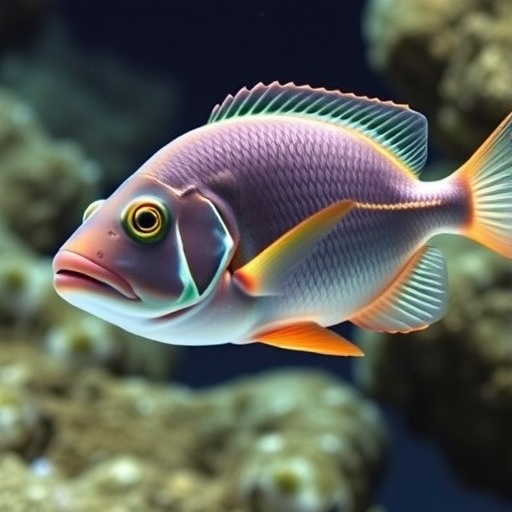
In the vast expanse of the world’s oceans, a remarkable evolutionary adaptation sets a select group of fish apart from their cold-blooded peers. Large predatory fish such as tunas and certain shark species have developed the extraordinary ability to retain metabolic heat within their bodies, a physiological trait known as mesothermy. This adaptation imbues them with enhanced performance capabilities, enabling them to thrive as apex predators. However, emerging research underscores a profound energy cost and an alarming vulnerability these warm-bodied fish face as global ocean temperatures steadily rise.
Mesothermy represents a middle ground between ectothermy, where animals rely entirely on external temperatures to regulate their body heat, and endothermy, where internal physiological processes maintain consistent body temperatures regardless of the environment. The warm-bodied fish’s capacity to generate and conserve heat internally provides increased muscle efficiency, sustained swimming speed, and optimized digestion. These advantages facilitate their dominance across vast oceanic territories, outpacing cold-bodied fish in hunting prowess and migration stamina. Yet, this metabolic sophistication does not come without significant biological investments.
Nicholas Payne and his team have made a pivotal stride in illuminating the energetic demands of mesothermic fish through an innovative methodological approach combining empirical heat exchange measurements with extensive respiratory data. By tagging individuals across a substantial size spectrum — from minuscule larvae scarcely visible to the naked eye, to giant sharks tipping the scales at three metric tons — and integrating physiological data gathered from diverse marine environments, their comprehensive dataset offers unprecedented insight into the metabolic intricacies of these remarkable creatures.
The researchers’ analyses reveal a startling disparity in energy consumption: mesothermic fish demand nearly four times more energy than their ectothermic relatives to maintain their elevated body temperatures and activity levels. This heightened metabolic rate is essential to fuel their physiological processes but simultaneously imposes constraints on their body size and survival viability. In ecological terms, it represents a critical trade-off that shapes the evolutionary trajectories and extinction risks for mesothermic species, both extant and extinct.
Intriguingly, Payne and colleagues identified a scaling imbalance between heat production and heat dissipation as mesothermic fish increase in size. Heat generation accelerates at a disproportionately higher rate compared to heat loss, meaning larger mesothermic individuals become progressively warmer-bodied. This physiological mismatch exacerbates their “overheating predicament,” limiting these species to cooler, deeper, or higher-latitude waters where external conditions mitigate excessive internal temperature elevation.
The interplay between body size, environmental temperature, and mesothermic physiology paints a complex portrait of survival challenges. Large mesothermic fishes, often occupying top trophic positions, are particularly susceptible to thermal stress. Their elevated metabolic fuel demands translate into intensified energetic pressure, especially under current trajectories of climate change. Warming oceans impinge upon the temperate oceanic refuges these fish rely on, effectively shrinking their viable habitats and compounding extinction risks.
Furthermore, the metabolic cost of mesothermy entails an elevated ecological footprint. These fish require substantially more food intake to maintain their internal heat and activity, thereby influencing marine food webs by imposing augmented predation pressure on prey populations. This dynamic underscores the cascading implications of mesothermic physiology, not only at individual survival but across marine ecosystems and fisheries management frameworks.
The evolutionary success of tunas and warm-bodied sharks has been inextricably linked to their ability to generate and conserve metabolic heat. However, the research by Payne and associates cautions that the very physiological advantage which propelled their dominance also renders them precariously vulnerable in an era of anthropogenic climate change. Their overheating risk threatens population viability, prompting urgent considerations for conservation strategies, especially for those species already burdened by overfishing and habitat disruption.
Climate models forecast continued ocean warming, pushing thermal environments beyond the tolerance thresholds of many marine organisms. For mesothermic fishes sustaining high metabolic demands, these changes might trigger physiological stress, decreased reproductive success, and increased mortality. The compounded impacts of global warming and human exploitation heighten the probability of local extinctions and potential collapse of mesothermic fish populations.
This study also accentuates the need to integrate physiological ecology into conservation paradigms. Understanding the fine-scale thermal biology and energetic requirements of mesothermic fishes can guide the formulation of marine protected areas, fisheries quotas, and climate adaptation initiatives. Prioritizing resilience for these crucial species demands interdisciplinary approaches grounded in cutting-edge physiological data.
As oceans continue to transform under climate stressors, the metabolic balancing act performed by mesothermic fish like tunas and sharks emerges as a central theme in marine biology and conservation. The revelation of their nearly quadruple energy costs and overheating risk adds urgency to global efforts to mitigate climate change and to sustainably manage marine resources, ensuring these iconic predators endure within their aquatic realms.
News Publication Date: 16-Apr-2026
Web References: 10.1126/science.adt2981
Cite Scienmag News
Violet Maxwell. (April 16, 2026). Warm-Blooded Fish Face Overheating Threat in Rising Ocean Temperatures. Scienmag. https://scienmag.com/warm-blooded-fish-face-overheating-threat-in-rising-ocean-temperatures/
Violet Maxwell. "Warm-Blooded Fish Face Overheating Threat in Rising Ocean Temperatures." Scienmag, 16 April 2026, https://scienmag.com/warm-blooded-fish-face-overheating-threat-in-rising-ocean-temperatures/. Accessed 5 September 2026.
Violet Maxwell. "Warm-Blooded Fish Face Overheating Threat in Rising Ocean Temperatures." Scienmag. April 16, 2026. https://scienmag.com/warm-blooded-fish-face-overheating-threat-in-rising-ocean-temperatures/


