


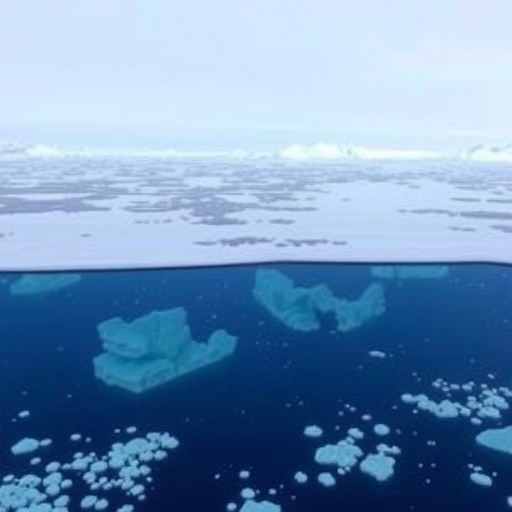
The Arctic Ocean is undergoing a profound and irreversible transformation in its chemical composition driven by ongoing climate change, with significant consequences for marine ecosystems and global biogeochemical cycles. This shift, revealed through extensive analysis of nutrient data collected over the past two decades, highlights a critical depletion of nitrate — a key nutrient that underpins the productivity of plankton, the foundational component of the Arctic marine food web. The unprecedented loss of sea ice has catalyzed novel biogeochemical processes in shallow continental shelf regions, fundamentally altering nutrient availability and ecosystem dynamics in the Arctic basin.
Arctic sea ice serves as a critical regulator of oceanic light penetration and nutrient cycling. However, the rapid and sustained reduction in sea ice cover since the late 2000s has expanded the ocean’s illuminated surface area, facilitating enhanced photochemical reactions. While the initial expectation was that greater light exposure would stimulate phytoplankton growth, recent findings contradict this assumption; instead, nitrate availability has emerged as the primary limiting factor of biological productivity in Arctic waters. This paradigm shift is unprecedented and indicates that the Arctic marine ecosystem has passed a tipping point from a light-limited to a nitrate-limited system.
Nitrate is a fundamental macronutrient that phytoplankton utilize for growth and reproduction. Its reduction has cascading ecological effects, primarily because phytoplankton form the basis of the Arctic trophic structure, supporting zooplankton, fish, seabirds, and marine mammals. The extensive nitrate depletion in Fram Strait waters, the main channel through which Arctic waters flow into the Atlantic, was found to coincide temporally with accelerated sea ice decline starting around 2009. This temporal synergy implicates sea ice loss as a critical driver of nutrient changes.
A key process underlying nitrate reduction is benthic denitrification, where nitrate is biologically converted into nitrogen gas and subsequently lost to the atmosphere. This process is intensified in the shallow continental shelves of the Arctic Ocean, which comprise nearly half of the basin’s area. With the retreat of ice, sunlight penetrates these shallow waters, stimulating microbial communities that facilitate benthic denitrification. Consequently, nitrate is depleted from the water column, constraining the availability of this essential nutrient for primary producers.
The implications of a nitrate-limited Arctic Ocean are multifaceted. Reduced plankton productivity not only diminishes the base of the food web but also affects the structure and size distribution of planktonic species. Smaller-sized plankton species are favored under nitrate scarcity, which in turn influences feeding efficiency and energy transfer to higher trophic levels, potentially reducing overall biomass of commercially and ecologically important species. Additionally, the ability of the Arctic Ocean to act as a carbon sink may be compromised, as phytoplankton play an essential role in sequestering atmospheric carbon dioxide through photosynthesis.
This intricate interplay between physical changes in sea ice extent, chemical nutrient dynamics, and biological responses underlines the complexity of Arctic marine ecosystem transformations. Prior to this research, understanding of the chemical underpinnings driving observed shifts in animal populations was limited. The use of high-resolution long-term nutrient datasets allowed the research team to distinguish nutrient dynamics trends from physical oceanographic variability, thereby elucidating the consequential shift in the Arctic’s biogeochemical regime.
The study draws on a multidisciplinary collaboration involving institutions from Norway, Denmark, Scotland, and Germany, emphasizing the importance of international efforts in Arctic research. Utilizing robust statistical analyses and comprehensive time-series data spanning 20 years, the research underscores the significance of interdisciplinary approaches in detecting subtle yet profound environmental changes in polar regions.
The irreversible nature of the Arctic Ocean’s shift highlights considerable challenges for ecosystem management and conservation policies. Given that sea ice loss is driven by global anthropogenic climate change, the prospects for nutrient recovery in the Arctic are dim. This fundamentally alters future projections of Arctic biodiversity and fisheries, necessitating revised strategies that incorporate changing nutrient limitations and altered food web dynamics.
Moreover, the downstream consequences for the North Atlantic Ocean and beyond warrant urgent attention. Changes in nutrient levels and plankton communities in Arctic outflows may propagate into Atlantic ecosystems, potentially affecting commercial fisheries and global carbon cycling. Continuous monitoring and advanced biogeochemical modeling are essential to predict and mitigate these far-reaching impacts.
The research presented in this groundbreaking study was published in the journal Communications Earth & Environment. It charts a transformative phase in the Arctic Ocean system, constraining the biological potential through nutrient limitation triggered by sea ice loss. This discovery compels a reevaluation of how climate change is influencing marine ecosystems at fundamental chemical and biological levels.
Marta Santos-García, who co-led the study, highlighted the paradigm shift, stating that the Arctic Ocean, previously limited by light, is now an ecosystem increasingly constrained by nitrate availability. This shift disrupts the expected productivity gains from sea ice loss, signaling broader repercussions for the Arctic’s marine food webs and climate regulation.
Professor Raja Ganeshram, leading this extensive research effort, stressed the critical timing of this ecological tipping point around 2009 and emphasized the need for close monitoring of trophic cascades to understand the full implications for northern hemisphere marine resources, including economically important fisheries.
In summary, this comprehensive investigation reveals how climate-driven physical changes in the Arctic have initiated profound chemical alterations, fundamentally restructuring the ocean’s ecological capacity. These insights into nutrient dynamics urge immediate attention to the resilience and adaptation of Arctic marine ecosystems amidst rapidly changing environmental conditions.
News Publication Date:
(Information not provided)
Web References:
http://dx.doi.org/10.1038/s43247-026-03569-x
References:
(Information not provided)
Cite Scienmag News
Violet Maxwell. (May 28, 2026). Key Tipping Point Crossed: Arctic Ocean Food Chain Faces Disruption. Scienmag. https://scienmag.com/key-tipping-point-crossed-arctic-ocean-food-chain-faces-disruption/
Violet Maxwell. "Key Tipping Point Crossed: Arctic Ocean Food Chain Faces Disruption." Scienmag, 28 May 2026, https://scienmag.com/key-tipping-point-crossed-arctic-ocean-food-chain-faces-disruption/. Accessed 4 September 2026.
Violet Maxwell. "Key Tipping Point Crossed: Arctic Ocean Food Chain Faces Disruption." Scienmag. May 28, 2026. https://scienmag.com/key-tipping-point-crossed-arctic-ocean-food-chain-faces-disruption/


