


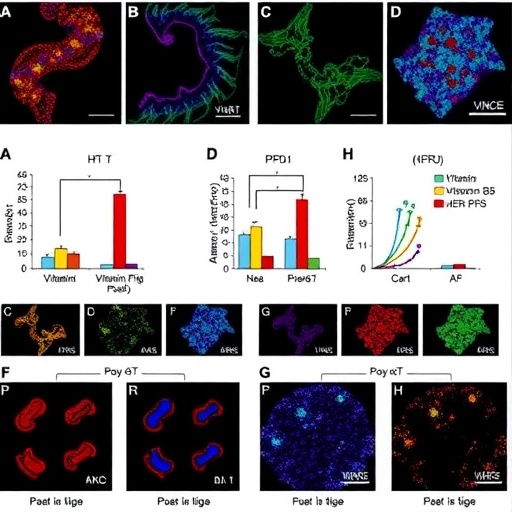
Gastric cancer has long presented oncologists with a difficult biological puzzle: two tumors that look similar under a microscope can behave very differently when exposed to the immune system. A new study by Wang, Yang, Lai and colleagues reports that a familiar nutrient, vitamin B5, may help solve part of that puzzle in HER2-positive gastric cancer. Published in Nature Communications, the research links vitamin B5 metabolism with the success of anti-PD-1 immunotherapy and identifies a stronger partnership between naïve B cells and T cells as a potential explanation.
The finding is significant because anti-PD-1 drugs do not work uniformly across gastric cancers. These medicines are immune checkpoint inhibitors, designed to release a molecular brake imposed by the PD-1 pathway. PD-1 is a receptor found primarily on activated T cells, while its ligands, including PD-L1, can be displayed by tumor cells or other cells in the tumor microenvironment. When PD-1 binds its ligand, T-cell signaling is dampened, limiting the immune attack. Blocking that interaction can restore T-cell activity, but only when the surrounding immune ecosystem is capable of mounting a meaningful response.
HER2-positive gastric cancer is defined by increased activity of the human epidermal growth factor receptor 2, a protein involved in cell growth and survival. HER2-targeted therapies have transformed treatment for some patients, yet resistance and disease progression remain common. The new work places vitamin B5, also known as pantothenic acid, in this therapeutic landscape. Vitamin B5 is traditionally recognized as a precursor of coenzyme A, a central metabolic molecule required for fatty-acid synthesis and breakdown, energy production, and the modification of proteins. The study suggests that its influence may extend beyond basic nutrition into the immune biology of cancer.
Rather than acting simply as a fuel, vitamin B5 appears to support the cellular conditions needed for an effective response to PD-1 blockade. The reported association is especially intriguing because immune cells undergo major metabolic changes when they become activated. T cells need energy and biosynthetic materials to proliferate, produce cytokines, and maintain their attack on malignant cells. B cells also depend on carefully regulated metabolic programs as they transition from a resting state into antibody-producing or antigen-presenting populations. A nutrient connected to coenzyme A metabolism could therefore affect how immune cells communicate and function inside a tumor.
The study highlights an interaction between naïve B cells and T cells. Naïve B cells are mature lymphocytes that have not yet encountered, or been fully activated by, their specific antigen. They are not immunologically inactive; under the right signals, they can capture antigen, present peptide fragments on major histocompatibility complex class II molecules, and provide additional stimulatory cues to T cells. This makes them potential organizers of antitumor immunity rather than passive bystanders. According to the research, vitamin B5 enhances the interaction between these naïve B cells and T cells, creating a cellular dialogue that may reinforce the response unleashed by anti-PD-1 treatment.
That dialogue matters because successful checkpoint therapy depends on more than the presence of exhausted T cells. T cells must recognize tumor-derived antigens, receive appropriate costimulatory signals, and remain supported by neighboring immune populations. B cells can contribute to this process by presenting antigens, producing immune-regulating molecules, and helping shape organized lymphocyte responses. When B-cell and T-cell communication is strengthened, tumor antigens may be more effectively introduced to the adaptive immune system, potentially expanding the pool of T cells capable of recognizing cancer cells.
The findings also add to a growing scientific shift toward studying cancer metabolism and the tumor microenvironment together. Cancer cells compete with immune cells for nutrients, while local conditions such as oxygen deprivation, acidity, and abnormal metabolite concentrations can suppress immune function. A dietary compound or metabolic cofactor may have different effects depending on which cells can access it and how they process it. Vitamin B5 could influence the balance between malignant cells and immune populations through coenzyme A-dependent pathways, although the precise molecular steps linking supplementation or availability to immune activation will require further investigation.
Importantly, the research does not mean that vitamin B5 is established as a standalone cancer treatment or that patients should self-administer high doses alongside immunotherapy. Nutrients can have context-dependent effects, and immune checkpoint inhibitors can cause serious inflammatory side effects when activated T cells attack healthy tissues. The clinical relevance of the findings will depend on validation in additional experimental systems and, ultimately, carefully designed clinical trials that establish dose, safety, patient selection, and treatment timing. It will also be necessary to determine whether the effect is specific to HER2-positive gastric cancer or applies to other tumor types and molecular subgroups.
The study nevertheless offers a compelling therapeutic concept: improving immunotherapy may involve not only blocking inhibitory receptors such as PD-1, but also nourishing and coordinating the immune networks that make checkpoint release effective. By connecting vitamin B5 metabolism with B-cell–T-cell communication, the researchers provide a possible explanation for why some tumors respond more strongly than others to anti-PD-1 therapy. If future work confirms the mechanism, vitamin B5-related metabolic signatures could help identify patients most likely to benefit, while nutritional or pharmacological strategies might be developed to support immune activation. For now, the research turns an ordinary vitamin into an unexpected lead in the search for more durable responses against HER2-positive gastric cancer.
Cite Scienmag News
Nathaniel Bowman. (August 5, 2026). Vitamin B5 boosts anti-PD-1 therapy in HER2-positive gastric cancer, enhancing B–T interactions. Scienmag. https://scienmag.com/vitamin-b5-boosts-anti-pd-1-therapy-in-her2-positive-gastric-cancer-enhancing-b-t-interactions/
Nathaniel Bowman. "Vitamin B5 boosts anti-PD-1 therapy in HER2-positive gastric cancer, enhancing B–T interactions." Scienmag, 5 August 2026, https://scienmag.com/vitamin-b5-boosts-anti-pd-1-therapy-in-her2-positive-gastric-cancer-enhancing-b-t-interactions/. Accessed 3 September 2026.
Nathaniel Bowman. "Vitamin B5 boosts anti-PD-1 therapy in HER2-positive gastric cancer, enhancing B–T interactions." Scienmag. August 5, 2026. https://scienmag.com/vitamin-b5-boosts-anti-pd-1-therapy-in-her2-positive-gastric-cancer-enhancing-b-t-interactions/


