

Tuesday, October 20, 2026
Science
No Result
View All Result
  • Login
  • HOME
  • SCIENCE NEWS
  • CONTACT US
  • HOME
  • SCIENCE NEWS
  • CONTACT US
No Result
View All Result
Scienmag
No Result
View All Result
Home Science News Technology and Engineering

Virginia Pilot Links Wildlife Alerts to 3 mph Speed Reduction

October 20, 2026
in Technology and Engineering
Margaret Porter
By Margaret Porter Scienmag Editorial Profile - Biodiversity Science
Reading Time: 3 mins read
0
Virginia Pilot Links Wildlife Alerts to 3 mph Speed Reduction

Virginia Pilot Links Wildlife Alerts to 3 mph Speed Reduction

65
SHARES
587
VIEWS
Share on FacebookShare on Twitter
ADVERTISEMENT

A one-year pilot in Southwest Virginia found that drivers approaching activated wildlife-warning signs reduced their speed by an average of 3 mph, according to initial results from the Virginia Tech Transportation Institute (VTTI). The project evaluated an automated system that uses thermal cameras and artificial-intelligence software to detect medium- to large-sized animals and trigger real-time messages on roadside signs. Although the pilot examined a 14-mile stretch of Route 460 near Grundy, the wildlife-detection and warning equipment itself was deployed on a 750-meter section of that corridor.

Researchers collected data from more than 10,000 passing vehicles. The study measured animal-detection accuracy and driver speed, but it did not directly establish whether the system prevented collisions or fatalities. The pilot was sponsored by the Virginia Department of Transportation and conducted as part of VDOT’s expansion of Corridor Q, which extends Route 460 from the Kentucky state line to Grundy.

The wider corridor traverses portions of Kentucky, Virginia and West Virginia as part of the Appalachian Development Highway System and is home to approximately 100 elk. A feasibility study associated with the project estimated that elk collisions cost more than $80,000 per crash on average. Adult male elk can weigh between 550 and 1,300 pounds.

VTTI research scientist Jean Paul Talledo Vilela said the project was intended to reduce the risk of accidents and fatalities while protecting elk within their habitat. The location also presented technical challenges because reliable wildlife detection and communication had to function in remote, mountainous terrain. At the 750-meter test site, the team installed eight portable, solar-powered trailers equipped with thermal cameras.

The cameras continuously monitored the roadway and adjacent shoulder areas for medium- and large-sized wildlife, while AI software analyzed the camera feeds. When wildlife was detected, nearby dynamic message signs displayed a warning that wildlife had been detected ahead and instructed approaching motorists to slow down. Crosstek supplied the cameras and off-the-shelf wildlife-detection software, while T-Mobile’s 5G cellular network and satellite service supported remote monitoring and data communications.

The system achieved 97 percent overall accuracy in identifying medium- and large-sized wildlife during deployment. Talledo Vilela said the units needed to communicate with one another and relay information to the main hub despite difficult topography. Their portable, solar-powered design was also intended to withstand local weather conditions.

Roadside radar units measured vehicle speeds to determine whether drivers responded to the electronic warnings. The initial analysis found an average speed reduction of 3 mph as vehicles approached signs that had been activated by wildlife detections. “Speed is an important data point to understand if drivers were actually paying attention to the message board,” Talledo Vilela said, noting that a modest reduction may indicate increased attention to surroundings even when drivers do not brake sharply. VTTI research associate Shreyas Bhat said the project demonstrated an automated system capable of detecting wildlife, activating real-time warnings and producing measurable changes in driver behavior at warning signs and across the broader detection corridor.

The pilot ended in September 2026, and data analysis was continuing. The project’s remote-data-management approach received first place in the Innovation in Community category of the 2026 T-Mobile Innovate Awards. The team said further analysis would help assess how the portable system could be transferred to other locations where wildlife frequently crosses roads, while also exploring adaptation for other real-time roadway hazards.

Subject of Research: Pilot evaluation of automated wildlife detection and real-time driver warnings on Virginia Route 460

Article Title: Real-time driver warning system helps prevent animal collisions

Article References: Real-time driver warning system helps prevent animal collisions. Original publication (Bibliographic details unavailable.)

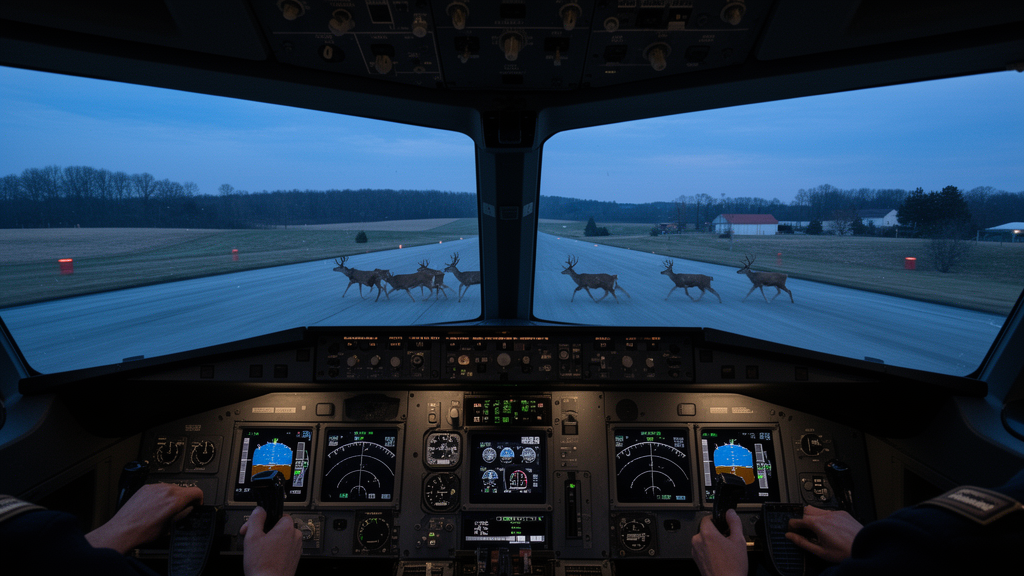
Image Credits: AI Generated

DOI: Not provided

Keywords: wildlife detection, driver warnings, thermal cameras, artificial intelligence, elk crossings, driver speed, road safety, Appalachian highways, smart transportation, field pilot, Real-time, driver

Cite Scienmag News

Margaret Porter. (October 20, 2026). Virginia Pilot Links Wildlife Alerts to 3 mph Speed Reduction. Scienmag. https://scienmag.com/virginia-pilot-links-wildlife-alerts-to-3-mph-speed-reduction/

Margaret Porter. "Virginia Pilot Links Wildlife Alerts to 3 mph Speed Reduction." Scienmag, 20 October 2026, https://scienmag.com/virginia-pilot-links-wildlife-alerts-to-3-mph-speed-reduction/. Accessed 20 October 2026.

Margaret Porter. "Virginia Pilot Links Wildlife Alerts to 3 mph Speed Reduction." Scienmag. October 20, 2026. https://scienmag.com/virginia-pilot-links-wildlife-alerts-to-3-mph-speed-reduction/


Tags: AI-powered animal detectionAppalachian Highway SystemAppalachian highwaysArtificial Intelligenceautomated roadside warning signscollision prevention strategiesdriverdriver speeddriver warningselk collision costselk crossingsfield pilotreal-timeroad safetyroadside wildlife alertssmart transportationthermal camera technologythermal camerastransportation safety innovationvehicle speed reductionVirginia transportation projectswildlife crossing safetywildlife detectionwildlife warning system
Share26Tweet16
Previous Post

DNA taxonomy reveals high species diversity in African Metastenasellus

Next Post

Synchrotron experiments identify natron as potential Enceladus mission target

Related Posts

AI Could Transform Nanotechnology Literature Reviews, but Maps Need Validation
Technology and Engineering

AI Could Transform Nanotechnology Literature Reviews, but Maps Need Validation

October 20, 2026
Raw PERG waveforms lead in four of six retinal disease classification tasks
Technology and Engineering

Raw PERG waveforms lead in four of six retinal disease classification tasks

October 20, 2026
Self-supervised deep learning enables reliable 20-fold accelerated fMRI mapping
Technology and Engineering

Self-supervised deep learning enables reliable 20-fold accelerated fMRI mapping

October 20, 2026
Sustained exosome delivery improves bone formation in p75NTR-deficient mice
Technology and Engineering

Sustained exosome delivery improves bone formation in p75NTR-deficient mice

October 20, 2026
Review links critical inclusions to fatigue in high-strength steels
Technology and Engineering

Review links critical inclusions to fatigue in high-strength steels

October 20, 2026
Research report: KAIST develops AI that reconstructs cloud-covered ground in satellite images with photo-like clarity
Technology and Engineering

Research report: KAIST develops AI that reconstructs cloud-covered ground in satellite images with photo-like clarity

October 20, 2026
Next Post
Synchrotron experiments identify natron as potential Enceladus mission target

Synchrotron experiments identify natron as potential Enceladus mission target

  • Mothers who receive childcare support from maternal grandparents show more optimized

    Mothers who receive childcare support from maternal grandparents show more parental warmth, finds NTU Singapore study

    27656 shares
    Share 11059 Tweet 6912
  • University of Seville Breaks 120-Year-Old Mystery, Revises a Key Einstein Concept

    1061 shares
    Share 424 Tweet 265
  • Bee body mass, pathogens and local climate influence heat tolerance

    682 shares
    Share 273 Tweet 171
  • Researchers record first-ever images and data of a shark experiencing a boat strike

    546 shares
    Share 218 Tweet 137
  • Groundbreaking Clinical Trial Reveals Lubiprostone Enhances Kidney Function

    531 shares
    Share 212 Tweet 133
Science

Embark on a thrilling journey of discovery with Scienmag.com—your ultimate source for cutting-edge breakthroughs. Immerse yourself in a world where curiosity knows no limits and tomorrow’s possibilities become today’s reality!

RECENT NEWS

  • Dopamine amplifies delayed subthalamic responses in Parkinson’s patients
  • Abundance estimation with DNA metabarcoding – recent advancements for terrestrial arthropods
  • Aflatoxin M1 in Milk and Aflatoxin B1 in Animal Feed in Bangladesh: A Systematic Review, Meta-Analysis and Literature-Based Dietary Risk Assessment
  • AI Could Transform Nanotechnology Literature Reviews, but Maps Need Validation

Categories

  • Agriculture
  • Anthropology
  • Archaeology
  • Athmospheric
  • Biology
  • Biotechnology
  • Blog
  • Bussines
  • Cancer
  • Chemistry
  • Climate
  • Earth Science
  • Editorial Policy
  • Marine
  • Mathematics
  • Medicine
  • Pediatry
  • Policy
  • Psychology & Psychiatry
  • Science Education
  • Science News
  • Social Science
  • Space
  • Technology and Engineering

Subscribe to Blog via Email

Enter your email address to subscribe to this blog and receive notifications of new posts by email.

Join 5,149 other subscribers

© 2025 Scienmag - Science Magazine

Welcome Back!

Login to your account below

Forgotten Password?

Retrieve your password

Please enter your username or email address to reset your password.

Log In
No Result
View All Result
  • HOME
  • SCIENCE NEWS
  • CONTACT US

© 2025 Scienmag - Science Magazine

Discover more from Science

Subscribe now to keep reading and get access to the full archive.

Continue reading