


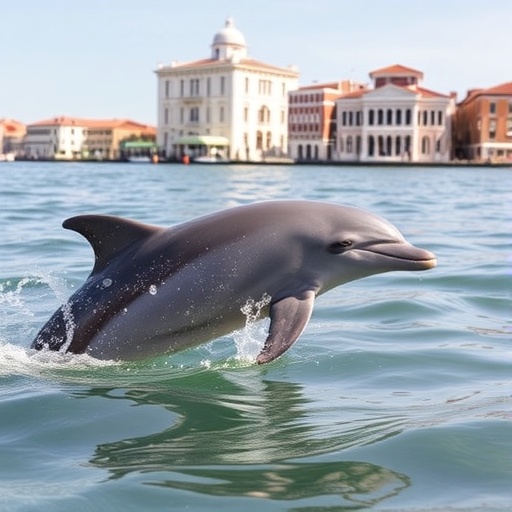
In the shimmering waters of Venice’s iconic lagoon, an extraordinary marine visitor has captured the attention of scientists and city dwellers alike—a solitary bottlenose dolphin, affectionately named Mimmo. Unlike typical bottlenose dolphins that travel in cohesive pods along coastal and open-sea waters, Mimmo’s decision to inhabit the Venetian Lagoon, particularly near Venice’s bustling San Marco Basin, presents a fascinating case of wildlife adaptation and human-wildlife interaction in an urban seascape. This unusual scenario has prompted an extensive observational study, shedding light on the complexities of managing marine species in densely populated, tourist-heavy environments.
Bottlenose dolphins (Tursiops truncatus) are renowned for their adaptability and intelligence, traits that have allowed them to thrive in diverse habitats worldwide. Historically, the Adriatic Sea—encompassing the Venetian Lagoon—was home to both common and bottlenose dolphins. However, anthropogenic influences, including habitat degradation and overfishing, led to a severe decline in common dolphins by the 1970s, leaving bottlenose dolphins as the primary cetacean inhabitants in the region. Despite their resilience, bottlenose dolphins have largely avoided lagoon waters in recent decades, making Mimmo’s presence both scientifically intriguing and ecologically significant.
First spotted in June 2025, Mimmo’s unexpected appearance triggered an immediate response from local researchers, who launched systematic monitoring efforts to document the dolphin’s movements, health, and behavioral patterns. Utilizing boat-based observational techniques, the research team, supported by local authorities and citizen scientists, tracked Mimmo’s gradual progression from the lagoon’s southern reaches toward the city center. As Mimmo navigated this waterway labyrinth, the animal displayed behaviors consistent with typical bottlenose dolphin ecology, such as active foraging on mullets, underscoring his successful adaptation to the lagoon environment.
What makes Mimmo’s story particularly compelling is his proximity to Venice’s pulsating San Marco Square, a hotspot of human activity and tourism. This setting is atypical for wild bottlenose dolphins, which usually avoid areas with intensive boat traffic. The risks Mimmo faces here are numerous, including potential injuries from propeller strikes, disturbances from tourist vessels, and exposure to pollutants. This urban marine interface highlights a growing paradox in wildlife conservation: the intrinsic value of species adapting to human-dominated landscapes versus the heightened anthropogenic risks these animals may encounter therein.
The management of Mimmo’s presence in Venice thus pivots more on controlling human behavior than on intervening directly with the dolphin. The key challenge lies in fostering coexistence that prioritizes the animal’s well-being without compromising the city’s maritime activities. Experts emphasize the importance of regulating boat speed and enforcing safe-distance guidelines to minimize disruptions. These measures reflect a broader paradigm shift in conservation biology, which increasingly recognizes the critical role of human responsibility in safeguarding wildlife in anthropogenically altered habitats.
Previous attempts to influence Mimmo’s movement through acoustic deterrents proved ineffective, further underscoring the limitations and potential ethical concerns of manipulating wild animal behavior. The consensus among researchers is that displacing the dolphin by capture or forced relocation would introduce more harm than benefit, disrupting natural behaviors and introducing undue stress. Instead, fostering public awareness about the importance of non-interference is pivotal. Educating boaters and tourists on legal protections and ecological considerations is vital for creating a respectful environment conducive to Mimmo’s continued presence.
The legal framework protecting Mimmo as a wild, protected species mandates a strict prohibition of any direct interactions, including feeding or touching. Enforcement of these regulations is paramount in preventing accidental harm and habituation, which may lead to behavioral changes detrimental to the dolphin’s survival. Conservation authorities and researchers advocate that this case serves as a model for managing solitary marine mammals in urban environments, demonstrating the efficacy of informed human stewardship over reactive wildlife management interventions.
Mimmo’s presence in the Venetian Lagoon offers a unique window into marine mammal ecology in the context of increasing human encroachment on natural habitats. It raises fundamental questions about how urban ecosystems can accommodate large, mobile wildlife species without compromising their ecological integrity or individual welfare. The case also stimulates discourse on future urban planning and marine traffic regulation in coastal cities, where balancing economic vitality with biodiversity conservation presents ongoing challenges.
From a scientific perspective, continuous monitoring of Mimmo provides an unprecedented dataset on the behavior, health, and habitat use of solitary bottlenose dolphins in lagoonal ecosystems. This information enriches our understanding of species plasticity and resilience in face of environmental changes and anthropogenic pressures. Such research is indispensable for designing adaptive management strategies that cater to both wildlife needs and human interests in complex socio-ecological systems.
The cultural and symbolic significance of Mimmo’s presence in Venice cannot be overstated. For centuries, dolphins have been intertwined with human maritime activities in the Adriatic region, emblematic of harmony between nature and civilization. Yet, the current challenges in coexisting with these sentient creatures underscore an evolving dynamic, where human respect, legal protection, and responsible behavior form the cornerstone of successful conservation in the Anthropocene.
Ultimately, the story of the ‘dolphin of Venice’ encapsulates a broader environmental narrative concerning wildlife conservation in urbanized marine settings worldwide. It exemplifies the urgent need for collaborative efforts among scientists, policymakers, stakeholders, and the public to cultivate coexistence frameworks that respect animal autonomy and promote ecological sustainability. As rivers of tourists traverse Venice’s waterways, the silent glide of Mimmo beneath their boats reminds us of the delicate balance between human progress and the enduring presence of wild nature on our doorstep.
News Publication Date: 25-Feb-2026
Web References:
10.3389/fetho.2026.1770678
Cite Scienmag News
Margaret Porter. (February 25, 2026). Venice’s Celebrity Dolphin Thrives Naturally—Only Human Intervention Poses a Threat. Scienmag. https://scienmag.com/venices-celebrity-dolphin-thrives-naturally-only-human-intervention-poses-a-threat/
Margaret Porter. "Venice’s Celebrity Dolphin Thrives Naturally—Only Human Intervention Poses a Threat." Scienmag, 25 February 2026, https://scienmag.com/venices-celebrity-dolphin-thrives-naturally-only-human-intervention-poses-a-threat/. Accessed 3 September 2026.
Margaret Porter. "Venice’s Celebrity Dolphin Thrives Naturally—Only Human Intervention Poses a Threat." Scienmag. February 25, 2026. https://scienmag.com/venices-celebrity-dolphin-thrives-naturally-only-human-intervention-poses-a-threat/


