


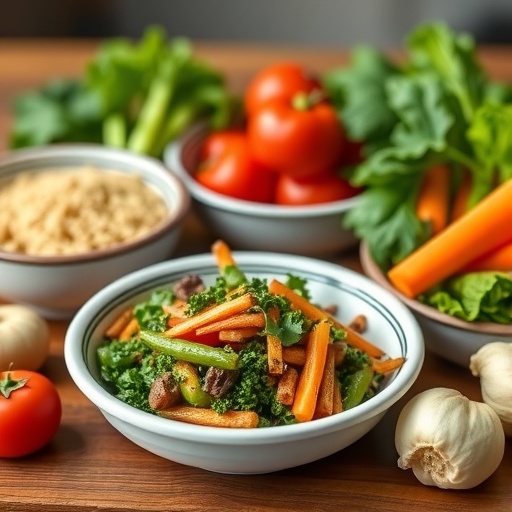
A groundbreaking new study spanning nine prospective cohorts and encompassing nearly two million participants across three continents has shed unprecedented light on the relationship between vegetarian diets and cancer risk. Published in the British Journal of Cancer, this massive pooled analysis, led by Dunneram, Lee, Watling, and colleagues, provides compelling evidence that adopting a vegetarian diet is associated with a significantly reduced risk of developing various types of cancer. This research harnesses data from a heterogeneous population of women and men, providing robust insights that could redefine nutritional guidelines and public health strategies globally.
The comprehensive nature of this study stems from its unparalleled sample size—1.8 million individuals monitored over extended periods—allowing for a precise examination of diet-cancer correlations that few prior studies could attempt. Vegetarian diets, typically characterized by the absence of meat and sometimes other animal products, have long been touted for their health benefits, yet empirical evidence linking them directly to cancer risk has been limited and inconsistent. This new analysis addresses those gaps by pooling large-scale, prospective data to conclusively establish protective associations.
Dietary patterns were meticulously classified, with vegetarians being defined as individuals who abstained from meat consumption but might consume eggs and dairy products. In contrast, non-vegetarians included those who regularly consumed meat and processed meats. This granularity helps isolate the impact of meat avoidance from other lifestyle factors, leading to more accurate assessments of dietary influence. The multi-continental scope ensures a diverse genetic and environmental background, enhancing the external validity of the findings and making them applicable across varied demographic groups.
One of the defining features of the research was its methodical approach to data harmonization across the nine contributing studies. Each cohort underwent rigorous adjustments for potential confounders—such as age, sex, smoking status, physical activity, alcohol intake, and BMI—to isolate the independent effect of vegetarian dietary patterns on cancer incidence. Such meticulous control for confounders enhances confidence that observed associations are likely due to diet rather than extraneous variables.
Statistically, the research team employed advanced pooled hazard ratio models and meta-analytic techniques to integrate findings from the individual cohorts. These methods accounted for inter-study heterogeneity and allowed for nuanced sub-analyses by cancer type, sex, and geographical region. Remarkably, vegetarians exhibited a consistent reduction in overall cancer risk, with hazard ratios indicating up to 15% lower risk compared to non-vegetarians after multivariable adjustment.
These protective associations were particularly pronounced in cancers linked to dietary carcinogens commonly found in processed and red meats, such as colorectal, stomach, and pancreatic cancers. Emerging evidence from the study suggests that plant-based diets may mitigate exposure to harmful heme iron compounds, nitrates, and advanced glycation end products, all implicated in carcinogenesis. Moreover, the high fiber content typical of vegetarian diets likely contributes to beneficial gut microbiota modulation, enhancing colon health and systemic immune surveillance.
Beyond specific cancer types, the study also revealed intriguing sex-specific findings, with vegetarian women showing stronger risk reductions for breast and ovarian cancers relative to male participants. This observation invites further exploration into hormonal and metabolic pathways influenced by diet that might confer differential cancer protection across genders. It also underscores the necessity for tailored nutritional recommendations that reflect sex-related biological nuances.
Importantly, the research did not identify any increased cancer risks associated with vegetarian diets, alleviating concerns about potential nutritional deficiencies or hormonal imbalances that some have feared might arise from plant-exclusive eating patterns. Instead, the data suggest that carefully planned vegetarian diets not only meet nutritional needs but also provide bioactive compounds—such as antioxidants, phytochemicals, and vitamins—that collectively exert anti-carcinogenic effects.
The implications of this vast study extend far beyond individual dietary choices. The authors emphasize that global adoption of vegetarian-like diets could substantially reduce cancer incidence, alleviate healthcare burdens, and contribute to environmental sustainability. With cancer remaining one of the leading causes of mortality worldwide, identifying modifiable risk factors like diet is crucial for preventive oncology.
Mechanistically, the research frames vegetarian diets as modulators of systemic inflammation, oxidative stress, and metabolic dysfunction—key drivers of carcinogenesis. Plant-based foods provide abundant polyphenols and micronutrients that downregulate oncogenic signaling pathways while upregulating DNA repair mechanisms. These biochemical effects, combined with reduced exposure to meat-derived carcinogens, create a biological milieu less conducive to tumor initiation and progression.
The enormous scope of the study also allowed for an innovative evaluation of dose-response relationships, revealing that higher adherence to vegetarian principles—such as consistent meat exclusion and increased intake of whole grains, legumes, fruits, and vegetables—correlates with progressively lower cancer risks. This dose-dependent pattern bolsters the argument for promoting plant-based diets as a cornerstone of public health interventions.
Despite the strengths, the researchers caution that residual confounding and misclassification biases inherent to observational designs cannot be entirely excluded. However, the prospective nature and large sample size substantially mitigate these limitations, making the findings some of the most definitive to date. Randomized controlled trials, while challenging for long-term dietary outcomes, may eventually provide further validation of these observational insights.
The study casts light on the burgeoning field of nutritional epidemiology with a precision that was previously unattainable. It signals a paradigm shift where diet is not only a factor in metabolic diseases but also a critical lever in cancer prevention strategies. Nutritionists, oncologists, and policymakers alike will likely incorporate these findings to advocate for dietary patterns that emphasize plant-based nutrition.
Future research directions highlighted include dissecting the molecular pathways modulated by vegetarian diets in carcinogenesis and exploring the interplay of genetics, microbiome composition, and dietary patterns in cancer susceptibility. Integrative multi-omics approaches could unravel complex biological networks underpinning the protective effects observed, paving the way for personalized dietary recommendations.
In sum, this monumental analysis of 1.8 million participants offers robust epidemiological evidence that adopting vegetarian diets significantly lowers the risk of diverse cancers. It elevates plant-based nutrition from a lifestyle choice to a scientifically validated cancer preventive measure, aligning health and sustainability goals for populations worldwide. With cancer incidence projected to rise globally, this study provides a crucial roadmap for health interventions and policy frameworks emphasizing the power of diet in cancer control.
The unveiling of these findings marks a pivotal moment in oncology and nutrition science. As more people reconsider traditional Western dietary paradigms, integrating vegetarian principles could become a linchpin of global cancer prevention efforts. This research not only deepens our understanding of diet-cancer links but also empowers individuals and societies to choose ways of eating that promote longer, healthier lives.
Cite Scienmag News
Nathaniel Bowman. (February 27, 2026). Vegetarian Diets Linked to Cancer Risk: Global Study. Scienmag. https://scienmag.com/vegetarian-diets-linked-to-cancer-risk-global-study/
Nathaniel Bowman. "Vegetarian Diets Linked to Cancer Risk: Global Study." Scienmag, 27 February 2026, https://scienmag.com/vegetarian-diets-linked-to-cancer-risk-global-study/. Accessed 3 September 2026.
Nathaniel Bowman. "Vegetarian Diets Linked to Cancer Risk: Global Study." Scienmag. February 27, 2026. https://scienmag.com/vegetarian-diets-linked-to-cancer-risk-global-study/


