


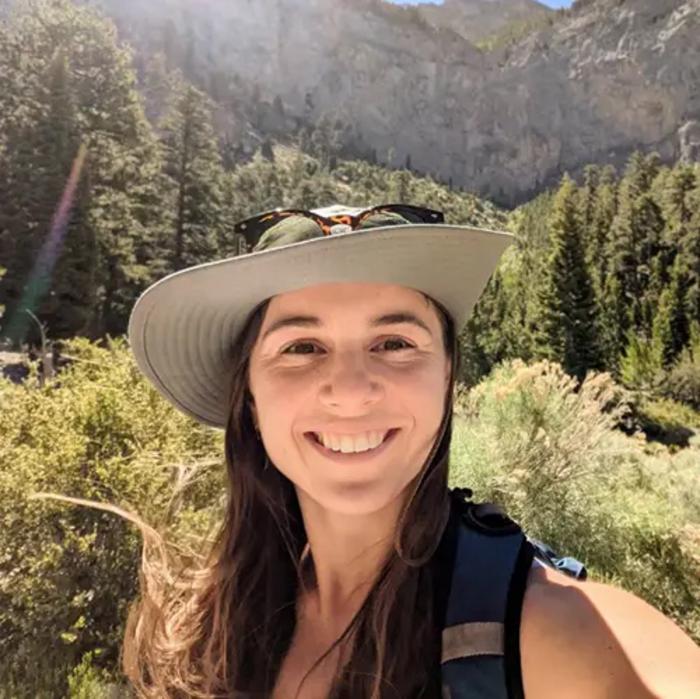
Post-doctoral researcher Joe Edwards and graduate student Sarah Love, both in the Department of Ecology and Evolutionary Biology, published findings this spring that can save fellow researchers a lot of time and energy when storing soil samples for later study of their microbial content.

Credit: University of Tennessee, Knoxville
Post-doctoral researcher Joe Edwards and graduate student Sarah Love, both in the Department of Ecology and Evolutionary Biology, published findings this spring that can save fellow researchers a lot of time and energy when storing soil samples for later study of their microbial content.
The preferred method for storing soil samples for the study of microbes has long been to freeze them to keep the DNA intact for studies that might need to extract information years down the road. The downside is the need to power these freezers and maintain facilities to house them.
Edwards and Love examined a wide array of soil samples in a project funded by the National Science Foundation and the US Forest Service. Their analysis indicates that soil stored under refrigerated or air-dried conditions can still retain the needed information for understanding microbial community composition and structure for many years.
“We wanted to show that these air-dried soils were still useful for understanding soil microbial communities,” said Edwards. “We’re using dried soil microbes from an archived national database to look at long-term, continent-wide spatial patterns in fungal communities and compare those with forest census data from all of those same plots.”
This soil database stores a history of the ecological changes in an area over long periods of time. Researchers want to study these soils with relatively new methods to build a timeline of ecological changes in fungi at the microbial level.
“This microbial sequencing technology has only been around for maybe the last 10 to 15 years or so,” said Edwards. “We don’t have very long-term trajectories for these microbiomes. The cool thing about these archives is that they were sampled more than once, so we have multiple resampling. We can look at how much of that community changes over time and get historical patterns for them, which is something really nobody has done yet.”
The results that Edwards and Love found show that dry-storage soil samples can be extremely useful for studying how soil properties and fungal communities change over longer periods, potentially up to decades.
“What we were saying in the paper is a little nuanced,” said Edwards. “We managed to maintain the environmental variance that was explained in the microbial community. The method isn’t quite as reliable if you’re just trying to track specific taxa of fungi across time. But for looking at broad patterns in community diversity and community composition, it’s useful. We can get a good idea of the overall shape of these communities as they change over space and time.”
Knowing the reliability of available archived information can help future researchers know that their samples will give them the accurate data they need.
Edwards and Love will apply the findings themselves to the next phase of their own soil research: sequencing thousands of air-dried soils from across the country. The information they find can offer important new understanding of long-term, global patterns of change.
Journal
Soil Biology and Biochemistry
Article Title
Long- and short-term soil storage methods other than freezing can be useful for DNA-based microbial community analysis
Article Publication Date
2-Feb-2024
COI Statement
The authors declare no financial or personal interests that may be perceived as influencing the findings in this work.
Cite Scienmag News
Morgan Morrow. (May 20, 2024). UT researchers dig up good news for microbial studies. Scienmag. https://scienmag.com/ut-researchers-dig-up-good-news-for-microbial-studies/
Morgan Morrow. "UT researchers dig up good news for microbial studies." Scienmag, 20 May 2024, https://scienmag.com/ut-researchers-dig-up-good-news-for-microbial-studies/. Accessed 5 September 2026.
Morgan Morrow. "UT researchers dig up good news for microbial studies." Scienmag. May 20, 2024. https://scienmag.com/ut-researchers-dig-up-good-news-for-microbial-studies/

