

Wednesday, July 8, 2026
Science
No Result
View All Result
  • Login
  • HOME
  • SCIENCE NEWS
  • CONTACT US
  • HOME
  • SCIENCE NEWS
  • CONTACT US
No Result
View All Result
Scienmag
No Result
View All Result
Home Science News Social Science

UNM Student Discovers New Insights into Ancient Maize Farming Practices

July 8, 2026
in Social Science
Reading Time: 2 mins read
0
UNM Student Discovers New Insights into Ancient Maize Farming Practices

UNM Student Discovers New Insights into Ancient Maize Farming Practices

65
SHARES
587
VIEWS
Share on FacebookShare on Twitter
ADVERTISEMENT

New Research Unveils How Ancient Maya Overcame Nutritional Limits of Maize Through Animal Protein

Maize, or corn, was a cornerstone of ancient Maya civilization, valued not only as a reliable food source but also woven deeply into their cultural and religious fabric. However, despite its prominence, maize poses a significant nutritional challenge: it is notably deficient in lysine, an essential amino acid critical for human tissue development and maintenance. Previous estimates suggested that up to 70% of ancient Maya protein intake came exclusively from maize, yet an adult would require consumption of an impractically large quantity—over 13 pounds of dry maize daily—to meet lysine needs.

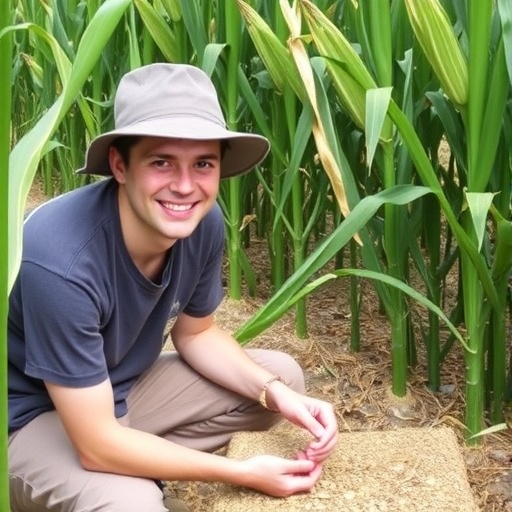
Groundbreaking research led by Nadia Neff, a doctoral candidate at the University of New Mexico, provides novel insights into how early Mesoamerican communities circumvented this dietary hurdle. Published in the journal Science Advances, Neff’s study employs advanced amino acid isotope analysis and sophisticated statistical modeling to trace the movement of individual amino acids from maize, through domesticated animals, and into human diets dated as far back as 6,100 years ago.

The study reveals that animals such as turkeys, which were fed maize or consumed maize-growing environments, functioned as biological “protein concentrators.” These animals, capable of metabolizing large amounts of maize relative to their body size, converted maize’s lysine into high-quality animal protein. When consumed by humans, these animals provided access to concentrated lysine that maize alone could not supply.

This finding reshapes our understanding of early agricultural practices by highlighting a symbiotic relationship between maize cultivation and animal management. Rather than developing independently, these innovations emerged as complementary strategies that formed a resilient and nutritionally balanced food system. This adaptive food engineering demonstrates that early Maya farmers deliberately optimized their diets beyond caloric intake to target essential nutritional needs.

Neff’s initial data puzzled her: carbon stable isotope ratios in amino acids, especially lysine, were unexpectedly elevated in human bone collagen samples. Such ratios were inconsistent with a maize-only diet, prompting further investigation and interdisciplinary collaboration spanning archaeology, biochemistry, ecology, and nutrition science. This cross-disciplinary approach allowed the researchers to decode ancient dietary patterns with unprecedented precision.

Fieldwork conducted in Belize under the ROOTS archaeological project facilitated recovery of bone collagen samples for isotope analysis at UNM’s Center for Stable Isotopes. This facility is among the few capable of conducting fine-scale amino acid isotope studies that offer granular insights into ancient human nutrition and foodways.

Overall, Neff’s research not only revises timelines for early maize domestication and animal husbandry in the Neotropics but also underscores the power of isotopic methods in unraveling complex ancient food webs. It opens new avenues for understanding human dietary adaptation and offers lessons on creating nutritionally resilient food systems—knowledge that remains vital today amid global challenges in food security and agricultural sustainability.

Subject of Research: Nutritional adaptations in early maize cultivation and animal provisioning in ancient Neotropical societies
Article Title: Nutritional Adaptations to Early Maize Cultivation: Earliest Isotopic Evidence of Maize-Based Animal Provisioning in the Neotropics
News Publication Date: 8-Jul-2026
Web References: https://www.science.org/journal/sciadv
Image Credits: Nadia Neff / University of New Mexico
Keywords: Maize, Lysine, Ancient Maya, Amino Acid Isotope Analysis, Animal Provisioning, Archaeology, Nutrition, Protein Concentration, Stable Isotopes

Tags: advanced statistical modeling in archaeologyamino acid isotope analysisAncient Maya maize farming practicesanimal protein in Mesoamerican dietsarchaeological food reconstructiondomesticated animals in ancient civilizationsearly Mesoamerican agricultureisotope tracing of ancient dietslysine deficiency in maizenutrition and cultural practices in ancient societiesnutritional strategiesrole of turkeys in ancient diets
Share26Tweet16
Previous Post

Over Half of NYC Free-Roaming Cats Carry Zoonotic Roundworm Parasites

Next Post

Sister Projects Urge Stronger EU Measures to Save Europe’s Wetlands

Related Posts

Storm Daniel Flooding in Libya Highlights Urgent Need for Rapid Assessments
Social Science

Storm Daniel Flooding in Libya Highlights Urgent Need for Rapid Assessments

July 8, 2026
Virtual patients offer real-world medical training
Social Science

Virtual patients offer real-world medical training

July 8, 2026
Study finds low usage of gambling addiction treatment in Quebec
Social Science

Study finds low usage of gambling addiction treatment in Quebec

July 6, 2026
Reward learning biomarkers across species: 20 years of the Probabilistic Reward Task
Social Science

Reward learning biomarkers across species: 20 years of the Probabilistic Reward Task

July 6, 2026
Pioneering Science and the Foundations Others Must First Build
Social Science

Pioneering Science and the Foundations Others Must First Build

July 6, 2026
A Century of Chinese Synonym Rivalry
Social Science

A Century of Chinese Synonym Rivalry

July 6, 2026
Next Post
Sister Projects Urge Stronger EU Measures to Save Europe’s Wetlands

Sister Projects Urge Stronger EU Measures to Save Europe's Wetlands

  • Mothers who receive childcare support from maternal grandparents show more

    Mothers who receive childcare support from maternal grandparents show more parental warmth, finds NTU Singapore study

    27656 shares
    Share 11059 Tweet 6912
  • University of Seville Breaks 120-Year-Old Mystery, Revises a Key Einstein Concept

    1061 shares
    Share 424 Tweet 265
  • Bee body mass, pathogens and local climate influence heat tolerance

    682 shares
    Share 273 Tweet 171
  • Researchers record first-ever images and data of a shark experiencing a boat strike

    546 shares
    Share 218 Tweet 137
  • Groundbreaking Clinical Trial Reveals Lubiprostone Enhances Kidney Function

    531 shares
    Share 212 Tweet 133
Science

Embark on a thrilling journey of discovery with Scienmag.com—your ultimate source for cutting-edge breakthroughs. Immerse yourself in a world where curiosity knows no limits and tomorrow’s possibilities become today’s reality!

RECENT NEWS

  • Storm Daniel Flooding in Libya Highlights Urgent Need for Rapid Assessments
  • Harnessing Neglected Livestock for Sustainable Food Systems in the Global South
  • Proteomic Analysis Identifies Prognostic Subgroups in SMARCA-Deficient Esophageal Cancer
  • Discovering the Key to Natural Disaster Prediction and Prevention Research

Categories

  • Agriculture
  • Anthropology
  • Archaeology
  • Athmospheric
  • Biology
  • Biotechnology
  • Blog
  • Bussines
  • Cancer
  • Chemistry
  • Climate
  • Earth Science
  • Editorial Policy
  • Marine
  • Mathematics
  • Medicine
  • Pediatry
  • Policy
  • Psychology & Psychiatry
  • Science Education
  • Social Science
  • Space
  • Technology and Engineering

Subscribe to Blog via Email

Enter your email address to subscribe to this blog and receive notifications of new posts by email.

Join 5,147 other subscribers

© 2025 Scienmag - Science Magazine

Welcome Back!

Login to your account below

Forgotten Password?

Retrieve your password

Please enter your username or email address to reset your password.

Log In
No Result
View All Result
  • HOME
  • SCIENCE NEWS
  • CONTACT US

© 2025 Scienmag - Science Magazine

Discover more from Science

Subscribe now to keep reading and get access to the full archive.

Continue reading
