

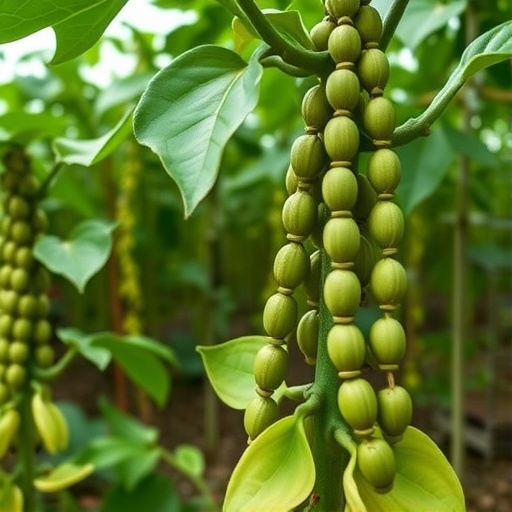
In a groundbreaking study that underscores the crucial nexus between genomics and conservation, researchers have embarked on a journey to unravel the contributing factors behind the decline of the tree bean, scientifically known as Parkia Roxburghii G. Don. This remarkable species, cherished for its nutritional and ecological significance, faces alarming threats that jeopardize its survival. The research team, led by S.K. Dutta, R.S. Jasrotia, and S. Mandal, has leveraged transcriptome profiling to provide compelling molecular evidence illuminating the factors steering this decline.
Transcriptomics, the study of the complete set of RNA transcripts produced in a cell, serves as a powerful tool in the field of plant genomics. By examining the RNA profiles of Parkia Roxburghii, researchers seek to identify the pathways affected by stressors such as environmental changes, pests, and pathogens that may contribute to the tree bean’s dwindling numbers. This innovative approach not only sheds light on the molecular mechanisms at play but also opens new avenues for conservation strategies aimed at preserving this vital species.
Historically, Parkia Roxburghii has been a significant species in various ecosystems, revered for its edible pods and seeds that provide essential nutrients to both humans and wildlife. Its decline is more than just an ecological concern; it represents a loss of cultural heritage and biodiversity. By delving deep into the transcriptomic data, the researchers hope to unearth genetic markers that could serve as indicators of health and resilience in populations of tree beans, guiding future conservation projects.
One of the critical aspects of the study is the focus on abiotic and biotic stress responses. Understanding how Parkia Roxburghii reacts to environmental stressors, such as drought or nutrient deficiency, can reveal vital information regarding the plant’s adaptive capabilities. These responses, characterized at the molecular level, can lead to the identification of genetically resilient variants that could be prioritized in conservation efforts or agricultural applications.
Additionally, the impact of pathogens and pests on tree bean populations is a pressing concern. The transcriptomic analysis conducted by the researchers focuses on identifying genes that exhibit differential expression during pathogen attacks or pest invasions. By pinpointing these genes, conservationists can develop targeted strategies for pest management, potentially reducing losses in the wild and on farms. This proactive approach may increase not only the population resilience of Parkia Roxburghii but also enhance its productivity and sustainability.
The creation of a web-genomic resource is another significant milestone in this research. By compiling a comprehensive database of genetic information, the research team aims to facilitate the accessibility of data for other researchers, conservationists, and agricultural scientists. This collaborative resource is invaluable for fostering partnerships across disciplines and geographies to ensure that the insights gleaned from the research can be applied effectively and broadly, thus amplifying the conservation efforts surrounding Parkia Roxburghii.
Moreover, the study highlights the interdisciplinary nature of modern plant science, where ecology, genetics, and computational biology converge. These collaborative efforts can lead to innovative solutions that integrate traditional ecological knowledge with cutting-edge genomic techniques, enabling comprehensive strategies for conservation. The prospect of marrying different scientific fields is a testament to the complexity of the natural world and the multifaceted approaches required to address its challenges.
As Parkia Roxburghii faces numerous threats, the implications of this research extend beyond single-species conservation. It serves as a case study for understanding the broader implications of biodiversity loss and highlights the interconnectedness of ecosystems. The principles derived from this project can potentially be extrapolated to other threatened species, thereby broadening the scope of the study and emphasizing the importance of genetic research in ecology.
Furthermore, as climate change continues to reshape our planet, the findings from this transcriptomics-focused study become even more urgent. The ability to understand how Parkia Roxburghii responds to various environmental challenges will be pivotal in anticipating future challenges posed by climate change. This knowledge can inform conservation practices, ensuring that they are adaptable and forward-thinking in their frameworks, thereby fostering a resilient future for the species.
The researchers’ commitment to disseminating their findings and engaging the broader public is also commendable. By raising awareness about the plight of Parkia Roxburghii, the study aims to foster public interest and support for conservation initiatives. This engagement is essential, as it nurtures a sense of stewardship and responsibility among communities, encouraging them to contribute to the preservation of this vital species.
In conclusion, the work conducted by Dutta, Jasrotia, and Mandal marks a pivotal moment in plant conservation science. The use of transcriptome profiling offers significant insights into the genetic underpinnings of Parkia Roxburghii‘s decline while illustrating the broader importance of integrating genomics into conservation practices. As the world continues to grapple with biodiversity loss, studies like this highlight pathways toward a more sustainable and resilient future for innumerable plant species critical for our ecosystems and human survival.
Through their innovative approach, the researchers have opened a window into the genetic landscape of tree beans, sparking hope that armed with this knowledge, the conservation of Parkia Roxburghii and other at-risk species can be bolstered. The implications of their findings are resounding; they remind us that the health of our planet is intricately linked to the stories of the plants that inhabit it. The intersection of genomics and ecology reveals solutions and empowers humans to act as stewards of nature.
Subject of Research: The decline of tree bean (Parkia Roxburghii) and the creation of its web-genomic resource.
Article Title: Transcriptome profiling as a means to provide molecular evidence for the decline of tree bean (Parkia Roxburghii G. Don) and the creation of its web-genomic resource.
Article References: Dutta, S.K., Jasrotia, R.S., Mandal, S. et al. Transcriptome profiling as a means to provide molecular evidence for the decline of tree bean (Parkia Roxburghii G. Don) and the creation of its web-genomic resource. Discov. Plants 2, 350 (2025). https://doi.org/10.1007/s44372-025-00444-5
Image Credits: AI Generated
DOI: https://doi.org/10.1007/s44372-025-00444-5
Keywords: Transcriptomics, Parkia Roxburghii, conservation, biodiversity, molecular evidence, ecosystem health, genetic markers, environmental stressors, climate change, resilience, web-genomic resource.


