


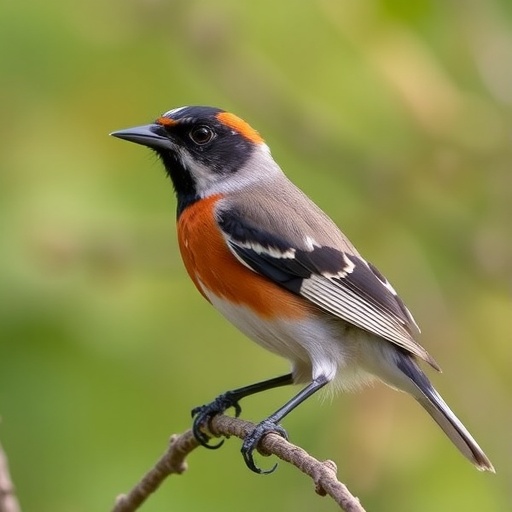
North America’s avian populations are undergoing a troubling transformation, with declines not only persisting but intensifying year after year. A landmark study recently published in Science provides comprehensive evidence that bird numbers across the continent are shrinking at accelerating rates, particularly in regions dominated by intensive agricultural practices. This revelation carries profound implications for biodiversity conservation, ecosystem stability, and the scientific understanding of anthropogenic impacts on wildlife.
For centuries, human activities such as land use modification, agricultural intensification, pollution, and direct exploitation have altered natural habitats worldwide. These changes have cumulatively contributed to dramatic declines in numerous wildlife populations. Despite widespread recognition of these trends, critical questions have remained unanswered—chief among them: Are species losses increasing as time progresses, and if so, what underlying drivers are accelerating these declines?
To address this knowledge gap, François Leroy and colleagues undertook an expansive analysis using data from the North American Breeding Bird Survey (BBS), one of the longest-running and most comprehensive avian monitoring programs globally. The team examined counts from 1,033 migration routes across North America encompassing 261 distinct bird species, with observations spanning from 1987 through 2021. This longitudinal design enabled an unprecedented temporal and spatial assessment of avian population dynamics.
Employing sophisticated statistical models tailored to detect not only population trends but the acceleration of those trends, the researchers uncovered a continent-wide decline in bird abundance. This downward trajectory appeared particularly steep in warmer southern regions of North America. Of note were several “acceleration hotspots” where loss rates intensified with exceptional rapidity—specifically in the Mid-Atlantic, Midwest, and California. These regions correlate closely with landscapes dominated by intensive agricultural activity, suggesting agriculture as a key factor driving decline acceleration.
The study’s findings reveal that nearly half of the species examined (47%, equating to 122 species) exhibited statistically significant population decreases. Even more concerning, of those declining species, 63 displayed declining trajectories that had accelerated over the study period, underscoring that population losses are not static but worsening. Furthermore, demographic assessments indicated that 67 species experienced declines surpassing population recruitment, signaling acute reproductive or survival challenges within these bird populations.
This acceleration phenomenon reflects a complex interplay of ecological stressors. Intensive agriculture often involves habitat fragmentation, pesticide application, altered nutrient cycles, and reduced food availability. Such intensive land management practices can degrade habitat quality and disrupt ecological functions critical to sustaining healthy bird populations. These cumulative stresses may contribute to declines in fecundity and increased mortality, consequently eroding population resilience over time.
The geographic patterning of decline rates lends additional insight into the mechanisms at work. Agricultural hotspots identified in the Mid-Atlantic, Midwest, and California correspond with high-density crop production zones featuring monocultures and extensive chemical use. These areas have undergone rapid land use intensification over recent decades, suggesting that incremental environmental degradation compounds impacts on avifauna, accelerating population collapses in a relatively short timeframe.
This study also highlights the broader ramifications of avian declines on ecosystem services. Birds perform vital ecological roles, including insect population regulation, seed dispersal, and nutrient cycling. Their diminishing numbers could precipitate cascading effects throughout ecosystems, thereby threatening overall biodiversity and agricultural productivity itself. Understanding and mitigating the drivers of these accelerated declines is thus critical for ecological sustainability and human well-being.
Moreover, the researchers emphasize the importance of continuous, systematic biodiversity monitoring programs like the North American Breeding Bird Survey. Such long-term datasets enable scientists to detect subtle shifts in population trajectories that might otherwise go unnoticed, facilitate early-warning assessments, and guide targeted conservation interventions. This study serves as a stark call for enhanced monitoring efforts coupled with integrated policy approaches that balance agricultural productivity with biodiversity conservation.
In sum, the accelerating decline of North American birds demonstrated in this study underscores an urgent conservation crisis. The convergence of habitat degradation driven by agricultural intensification and broader environmental changes has placed many species on a trajectory toward rapid population loss. Without immediate and concerted efforts to reduce these pressures, the continent faces not only the loss of countless bird species but also diminished ecosystem services upon which societies depend.
Efforts to mitigate these declines will require multi-disciplinary cooperation involving ecologists, agronomists, policymakers, and land managers. Strategies may include implementing bird-friendly farming practices, restoring habitat connectivity, reducing pesticide use, and fostering landscapes that sustain both agriculture and wildlife. Public awareness and engagement are equally critical to support these efforts and promote stewardship for avian conservation.
As the pressure intensifies, this study highlights that the fate of North America’s avian biodiversity hinges on how swiftly and effectively decision-makers respond. The accelerating nature of declines demands immediate attention and innovative solutions to forestall irreversible damage to these emblematic species and the vital ecosystems they inhabit.
News Publication Date:
26-Feb-2026
Web References:
http://dx.doi.org/10.1126/science.ads0871
Cite Scienmag News
Margaret Porter. (February 26, 2026). Accelerating Declines of North American Birds Threaten Agricultural Regions. Scienmag. https://scienmag.com/accelerating-declines-of-north-american-birds-threaten-agricultural-regions/
Margaret Porter. "Accelerating Declines of North American Birds Threaten Agricultural Regions." Scienmag, 26 February 2026, https://scienmag.com/accelerating-declines-of-north-american-birds-threaten-agricultural-regions/. Accessed 3 September 2026.
Margaret Porter. "Accelerating Declines of North American Birds Threaten Agricultural Regions." Scienmag. February 26, 2026. https://scienmag.com/accelerating-declines-of-north-american-birds-threaten-agricultural-regions/


