


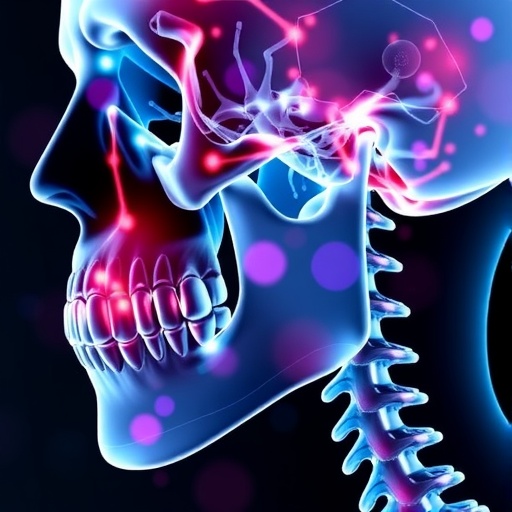
Temporomandibular joint osteoarthritis (TMJ-OA) represents a significant yet understudied facet of musculoskeletal degenerative diseases. Unlike osteoarthritis affecting larger joints such as the knee, TMJ-OA presents unique biological complexities owing to limited clinical specimens and the intricate anatomy of the jaw joint. This condition manifests through chronic pain, cartilage deterioration, and tissue remodeling that ultimately impair essential functions like chewing and speaking. The gap in comprehensive molecular understanding has galvanized a group of researchers at Showa Medical University, Japan, led by Associate Professor Fumiko Yano, to probe into the cellular and subcellular mechanisms that initiate TMJ degeneration.
Employing an innovative multilevel analytic framework integrating histology, bulk RNA sequencing, single-cell RNA sequencing, and spatial transcriptomics, the team recreated pathological conditions in mouse models. These models encapsulate two predominant etiologies of TMJ-OA: mechanical overload simulating malocclusion and articular disc derangement provoking synovial inflammation. Through this elaborated experimental design, the researchers mapped the complex interplay of cellular populations, gene expression patterns, and localized molecular changes within the synovium—the pivotal soft tissue lining the joint cavity.
The joint microenvironment of TMJ-OA reveals profound alterations in both structure and molecular signaling. The experimental data uncovered cartilage erosion and abnormal bone remodeling intrinsic to the diseased joint architecture. Notably, the synovial membrane exhibited pronounced inflammatory responses characterized by heightened expression of pro-inflammatory cytokines and matrix-degrading enzymes. Differential responses emerged between the models: mechanical stress induced adipogenesis within the synovial zone, while disc displacement fostered excessive fibrosis and proliferation of synovial lining cells. These divergent synovial adaptations underscore distinct pathogenic trajectories that converge in TMJ degeneration.
At the cellular resolution offered by single-cell RNA sequencing, the synovial niche emerged as a heterogeneous ecosystem comprising fibroblasts, endothelial cells, macrophages, and keratinocyte-like populations. Fibroblast subclusters functioned as central regulators, orchestrating communication with immune constituents and vascular cells via mechanotransduction pathways and inflammatory signaling axes. Spatial transcriptomic mapping localized these interactions predominantly to the posterior synovium adjacent to the articular disc, implicating this region as a critical epicenter for early osteoarthritic changes. This spatially resolved insight is crucial for understanding focal disease initiation and progression.
Mechanistically, the study illuminated the activation of key molecular circuits with therapeutic relevance. The endothelial Notch signaling pathway was significantly upregulated within the affected synovial microenvironment, suggesting a role in vascular remodeling and inflammatory perpetuation. Concurrently, networks governing tissue degradation, immune cell recruitment, and metabolic reprogramming were elaborated. These findings provide a nuanced appreciation of how mechanical and structural disruptions interface at the molecular level to catalyze irreversible joint pathology.
Dr. Yano emphasizes the transformative potential of integrating spatially resolved transcriptomics with single-cell data in unveiling early-stage disease processes previously obscured in bulk tissue analyses. This approach unmasks the temporal and spatial sequence of molecular events that shape the synovial landscape under stress, enabling the identification of precise cellular targets for intervention. The revelation of early synovial markers and pro-fibrotic drivers furnishes a platform for devising diagnostic tools capable of detecting preclinical TMJ-OA.
Beyond their immediate investigative domain, these insights bear wider implications for joint biology and degenerative disease research. The methodology established here offers a paradigm for dissecting cellular crosstalk and microenvironmental remodeling in other musculoskeletal disorders subjected to mechanical and inflammatory insults. By extending such multi-omics strategies, researchers can refine therapeutic approaches tailored to the nuanced pathophysiology of varied joint diseases.
Looking ahead, the integration of these molecular datasets with clinical phenotyping portends advancements in personalized medicine for TMJ disorders. The prospective development of anti-inflammatory, anti-fibrotic, and angiogenesis-modulating agents informed by this study could revolutionize management strategies. Early intervention targeting synovial pathology may arrest or reverse cartilage damage, offering patients relief from chronic pain and improved joint functionality.
The pioneering work conducted by the Showa Medical University team deepens our comprehension of TMJ osteoarthritis, a condition impacting global populations with insufficient therapeutic options. The elucidation of synovial dynamics at an unprecedented resolution redefines our conceptual framework of joint degeneration and ushers in new horizons for biomedical innovation. As Dr. Yano notes, their research lays a foundational blueprint for translational efforts aimed at mitigating the burden of TMJ disorders worldwide.
In sum, this study propels TMJ-OA research into a new era, where the synergy of cutting-edge genomic technologies and classical histopathology can decode the earliest and most elusive stages of joint degradation. Through understanding the cellular and molecular underpinnings of synovial inflammation and remodeling, science moves closer to halting the progression of this debilitating disease and enhancing quality of life for affected individuals.
Cite Scienmag News
Juliet Wilcox. (April 23, 2026). Uncovering the Cellular Secrets Behind Jaw Joint Arthritis Triggers. Scienmag. https://scienmag.com/uncovering-the-cellular-secrets-behind-jaw-joint-arthritis-triggers/
Juliet Wilcox. "Uncovering the Cellular Secrets Behind Jaw Joint Arthritis Triggers." Scienmag, 23 April 2026, https://scienmag.com/uncovering-the-cellular-secrets-behind-jaw-joint-arthritis-triggers/. Accessed 5 September 2026.
Juliet Wilcox. "Uncovering the Cellular Secrets Behind Jaw Joint Arthritis Triggers." Scienmag. April 23, 2026. https://scienmag.com/uncovering-the-cellular-secrets-behind-jaw-joint-arthritis-triggers/


