


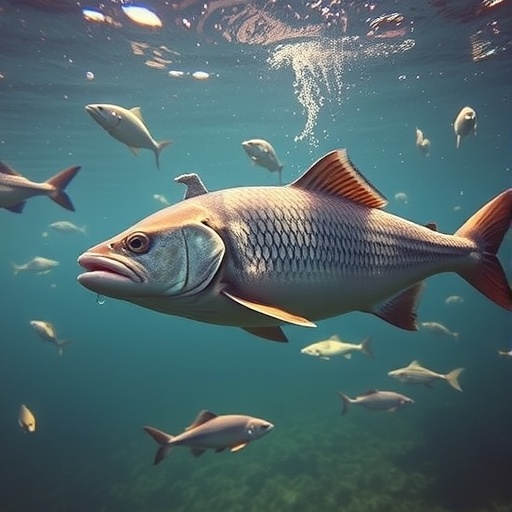
Beneath the world’s rivers lies a secret realm of epic journeys, where migratory freshwater fish undertake some of the most impressive and vital migrations on Earth. Yet, these aquatic migrations are faltering rapidly, imperiled by human-made obstacles and environmental degradation. A groundbreaking global assessment released at the 15th Meeting of the Conference of the Parties (COP15) under the United Nations’ Convention on the Conservation of Migratory Species (CMS) unravels the magnitude of this crisis. It reveals that tens of millions of kilometers of freshwater pathways once traveled by migratory fishes are being severed, leading to catastrophic population declines, threatening ecological stability, and jeopardizing the livelihoods of communities dependent on these resources.
The comprehensive study, a scientific effort unprecedented in scale, evaluated nearly 15,000 freshwater fish species using data from the International Union for Conservation of Nature (IUCN) Red List and extensive global datasets. The authors identify 325 migratory freshwater fish species as urgently requiring international conservation cooperation, an addition to the 24 species already under CMS protection. These migratory fish, which traverse vast and often transboundary river basins, play crucial roles in maintaining river ecosystem functions, sustaining food security, and supporting some of the largest inland fisheries on the planet.
Asia emerges as the epicenter of this biodiversity crisis, harboring 205 of the species identified as facing critical conservation challenges. South America follows with 55 species, while Africa, Europe, and North America have 42, 50, and 32 species, respectively. Notably, these numbers reflect overlap because many species’ ranges span multiple continents, underscoring the inherently cross-border nature of freshwater migratory fish conservation. Among the world’s most vital river systems at risk are the Amazon, the La Plata–Paraná, the Mekong, the Nile, and the Ganges–Brahmaputra basins — each home to complex hydrological networks underpinning extensive migratory routes.
Migratory freshwater fish depend on continuous, connected river corridors to complete their life cycles, migrating from spawning grounds to nurseries and feeding areas. Human activities such as dam construction, deforestation, pollution, and excessive fishing disrupt these critical pathways, fragmenting habitats and impeding migratory routes. The CMS assessment estimates that migratory freshwater fish populations worldwide have declined by an extraordinary 81% since 1970, a rate surpassed by few vertebrate groups and dwarfing declines seen in terrestrial and marine species. Disturbingly, almost all species currently listed under CMS protection—97%—are threatened with extinction.
South America’s Amazon Basin provides a poignant case study revealing both the ecological and socioeconomic stakes involved. The Amazon remains one of the last bastions of robust freshwater migration, harboring species that sustain roughly 93% of regional fisheries landings, with an estimated value of $436 million annually. Among these is the dorado catfish (Brachyplatystoma rousseauxii), a standout for undertaking the longest freshwater migration recorded globally, spanning over 11,000 kilometers from Andean streams to coastal nurseries. This gigantic predator, reaching lengths of up to two meters, is critical to the ecosystem’s health, yet its migratory journey is increasingly jeopardized by expanding hydropower developments and unsustainable fishing.
In response to these pressures, Brazil and neighboring countries are promoting a Multi-species Action Plan for Amazonian Migratory Catfish, a decade-long cooperative strategy designed to safeguard these emblematic species. By coordinate policy frameworks, monitoring, and conservation actions across national boundaries, this initiative aims to maintain uninterrupted migration corridors and restore critical habitats. Complementarily, Brazil has proposed the inclusion of the spotted sorubim catfish (Pseudoplatystoma corruscans) into CMS Appendix II, highlighting the growing recognition that conservation must scale beyond isolated national efforts toward regional and international collaboration.
This assessment’s overarching message is clear: freshwater fish conservation demands holistic river basin management that perceives rivers not as fragmented national resources but as integrated ecological systems. Environmental flows, protection of migration corridors, and seasonally coordinated fisheries management emerge as indispensable tools for reversing dramatic declines. The report advocates for basin-scale action plans coupled with transboundary research and data sharing as critical to sustaining migratory fish and the human communities reliant on them.
The imperiled state of migratory freshwater fish is a reflection of broader environmental changes, including climate-driven alterations in river hydrology, rising temperatures, and increasing frequency of extreme weather events. These stressors compound the threats posed by infrastructure and direct exploitation, necessitating adaptive management approaches informed by cutting-edge ecological modeling and long-term monitoring. Conservationists emphasize the urgency of initiating coordinated international action before irreversible damage fragments once-thriving migratory pathways, leading to regional extirpations and potential extinctions.
The Convention on Migratory Species plays a pivotal role in this environmental endeavor as a legally binding treaty facilitating multinational cooperation for migratory wildlife protection. With 132 Parties plus the European Union, CMS anchors international commitments to safeguard species crossing political borders. The biennial COP meetings serve as vital fora for reviewing conservation progress and expanding treaty coverage. COP15, held from March 23–29, 2026, in Campo Grande, Brazil, positions freshwater fish migration amidst a wider agenda addressing marine pollution, habitat loss, wildlife trade, climate impacts, and technological threats.
Leading scientists like Dr. Zeb Hogan underscore the sheer scale of underwater migrations and their critical importance to global biodiversity. Meanwhile, CMS Executive Secretary Amy Fraenkel and conservation leaders stress aligning scientific evidence with policy initiatives to ensure that international cooperation translates into effective protection on the ground. The voices of organizations such as the World Wildlife Fund highlight the necessity of managing rivers as integrated systems transcending borders, a concept essential for reversing the decline of migratory fish before these ancient aquatic circuits collapse beyond repair.
Ultimately, the global assessment conducted by CMS offers a wake-up call to the scientific community, policymakers, and public worldwide. It reveals a largely hidden yet monumental biodiversity crisis beneath the water’s surface, reminding us that the fate of migratory freshwater fish is inextricably connected to broader ecosystem health, food security, and economic development. Protecting these species requires more than isolated national efforts; it mandates unprecedented international collaboration and action to preserve river connectivity, ecological integrity, and the enduring wonder of the world’s great freshwater migrations.
News Publication Date: March 2026
Web References:
- Global Assessment of Migratory Freshwater Fishes: https://bit.ly/migratory-freshwater-fish-report-2026
- Multi-species Action Plan for Amazonian Migratory Catfish (2026–2036): https://www.cms.int/document/2565-multi-species-action-plan-amazonian-migratory-catfish
- Listing proposal: Spotted Sorubim (Pseudoplatystoma corruscans): https://www.cms.int/document/30217-proposal-inclusion-spotted-sorubim-pseudoplatystoma-corruscans-appendix-ii
- CMS Convention: http://www.cms.int/
Cite Scienmag News
Violet Maxwell. (March 25, 2026). UN Report Reveals Critical Decline in Vital Freshwater Fish Migrations. Scienmag. https://scienmag.com/un-report-reveals-critical-decline-in-vital-freshwater-fish-migrations/
Violet Maxwell. "UN Report Reveals Critical Decline in Vital Freshwater Fish Migrations." Scienmag, 25 March 2026, https://scienmag.com/un-report-reveals-critical-decline-in-vital-freshwater-fish-migrations/. Accessed 3 September 2026.
Violet Maxwell. "UN Report Reveals Critical Decline in Vital Freshwater Fish Migrations." Scienmag. March 25, 2026. https://scienmag.com/un-report-reveals-critical-decline-in-vital-freshwater-fish-migrations/


