


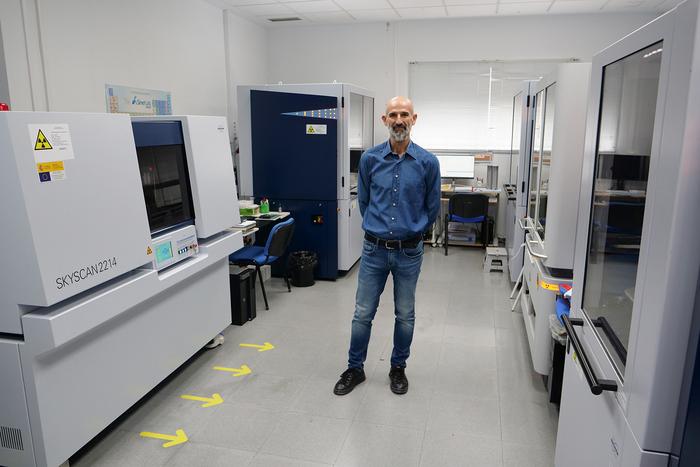
The University of Malaga (UMA) is embarking on an unprecedented venture as it coordinates an innovative project under the Horizon Europe – European Innovation Council (EIC) Pathfinder Challenges programme. This initiative, which aims to revolutionize technology and scientific approaches, marks a significant milestone for the university, as it has not previously taken on a coordinating role in such a vast international collaboration. The grant for this project amounts to over 4 million euros and spans four years, reflecting the ambition to address crucial environmental issues.
The project, dubbed ‘X-SeeO2,’ consists of a coalition of leading institutions. Alongside UMA, the consortium includes the prestigious universities of Bath and Manchester from the United Kingdom, as well as the European Synchrotron Radiation Facility (ESRF) based in France. Their combined expertise seeks to accelerate the adoption of cements as carbon dioxide sinks, a pivotal strategy in the global fight against pollution and climate change. This goal aligns with increasing international recognition of cement’s potential in impacting greenhouse gas emissions positively.
In the recent Horizon Europe call, only a small fraction of projects were funded, highlighting the intense competition and rigorous evaluation processes involved. Out of approximately 80 applications for the ‘Cement as Carbon Sinks’ challenge, only six were chosen, yielding a mere 7.5 percent success rate. Such statistics underline the high standards and scientific ingenuity synonymous with this initiative, led by Miguel Ángel García Aranda, professor of inorganic chemistry at UMA.
García Aranda’s team aims to develop innovative cements that can sequester carbon dioxide effectively while maintaining the essential properties of concrete. Emphasizing the balance between performance and sustainability, the researchers endeavor to formulate cements that could lower their carbon footprint by at least 50 percent. The initiative is not only a significant leap towards reducing emissions but also a critical point of collaboration with other selected projects, as reported by the University of Malaga.
The focus on cement as a carbon sink is not merely an academic endeavor but a response to the escalating urgency surrounding climate change. Garcia Aranda elucidates the importance of this research in developing smarter concrete materials capable of absorbing carbon dioxide during hydration and subsequent curing processes. The insights gained from studying these cementitious materials will be instrumental in shaping future construction techniques and materials, which will significantly contribute to global emissions reduction efforts.
One of the essential techniques that will underpin the research is real-time X-ray diffraction, combined with microstructure imaging. These advanced analytical techniques will allow for a deeper understanding of the transformation of cementitious materials, enhancing the efficiency of converting them into effective CO2 sinks. As a field-leading institution in X-ray powder diffraction and synchrotron techniques, UMA aims to leverage its expertise to push the boundaries of current construction material science.
The X-SeeO2 project has been identified as an ‘enabling technology,’ meaning that the advanced analytical methods already established by the UMA will assist other projects selected in this initiative. This collaborative model signifies a shift in research dynamics, where knowledge is shared across various initiatives, enhancing collective outcomes in battling climate change and contributing to sustainability.
Further emphasizing this transformative approach is the position of María de los Ángeles Gómez de la Torre, another distinguished researcher in the consortium. Her insights into cement improvement and sustainability echo the project’s overarching theme of circular economy principles, with an emphasis on upcycling waste materials into viable construction alternatives. The collaboration exemplifies how academia can harness collective intelligence to address global challenges.
Moreover, the collaboration within the X-SeeO2 project presents an opportunity for knowledge-sharing that can lead to unprecedented innovations. The unique synergies generated by the project will not only benefit the immediate team but will also enrich the entire cohort of EIC projects under the same challenge, paving the way for holistic solutions that are both environmentally and technologically advanced.
Involved in the Horizon Europe programme for several years, UMA’s participation in prior EU-funded projects, such as ‘Zeus’ and ‘BioRobot-MiniHeart’, reflects its proactive approach to tackling pressing research questions. However, no initiative has prepared the university for a leadership role until now, marking a pivotal transition in its research strategy, particularly in cement science and construction materials.
The journey ahead for the X-SeeO2 project is ripe with potential; leveraging the expertise of experts in cement science and synchrotron techniques could redefine how the construction industry approaches carbon emissions. This groundbreaking effort symbolizes a cry for action amidst a global climate crisis, transforming traditional construction methodologies into sustainable practices capable of reshaping our environment for future generations.
García Aranda’s commitment to his field extends beyond research; as the Scientific Director of the ALBA synchrotron, he has showcased an exemplary career dedicated to advancing scientific inquiry in cement chemistry. His leadership will be pivotal in steering the X-SeeO2 initiative towards its envisioned impact and aligning it with the broader aims of the EU’s sustainability agenda.
For students, scientists, and policymakers alike, the insights and technologies arising from the X-SeeO2 project represent not just a scientific endeavor but a clarion call for a reimagined future in cement production and construction methods. The groundwork laid by this initiative could indeed inspire a generation to innovate within the realms of science and engineering, creating a world where carbon emissions from cement are significantly minimized through intelligent design and research-driven solutions.
As the urgency of environmental issues escalates, initiatives like ‘X-SeeO2’ serve as a beacon of hope and innovation. By harnessing cutting-edge scientific knowledge and fostering international collaborations, the University of Malaga is positioning itself at the forefront of addressing one of the most daunting challenges of our time—climate change.
Keywords
Cement, Carbon Reduction, Climate Change, Construction Materials, Environmental Innovation, University Research, Sustainability, Horizon Europe, Chemical Processes, Advanced Materials, Civil Engineering, Inorganic Chemistry.
Cite Scienmag News
Sloane Callahan. (March 28, 2025). UMA Leads Global Consortium to Accelerate Cement’s Role as a Carbon Sink. Scienmag. https://scienmag.com/uma-leads-global-consortium-to-accelerate-cements-role-as-a-carbon-sink/
Sloane Callahan. "UMA Leads Global Consortium to Accelerate Cement’s Role as a Carbon Sink." Scienmag, 28 March 2025, https://scienmag.com/uma-leads-global-consortium-to-accelerate-cements-role-as-a-carbon-sink/. Accessed 3 September 2026.
Sloane Callahan. "UMA Leads Global Consortium to Accelerate Cement’s Role as a Carbon Sink." Scienmag. March 28, 2025. https://scienmag.com/uma-leads-global-consortium-to-accelerate-cements-role-as-a-carbon-sink/


