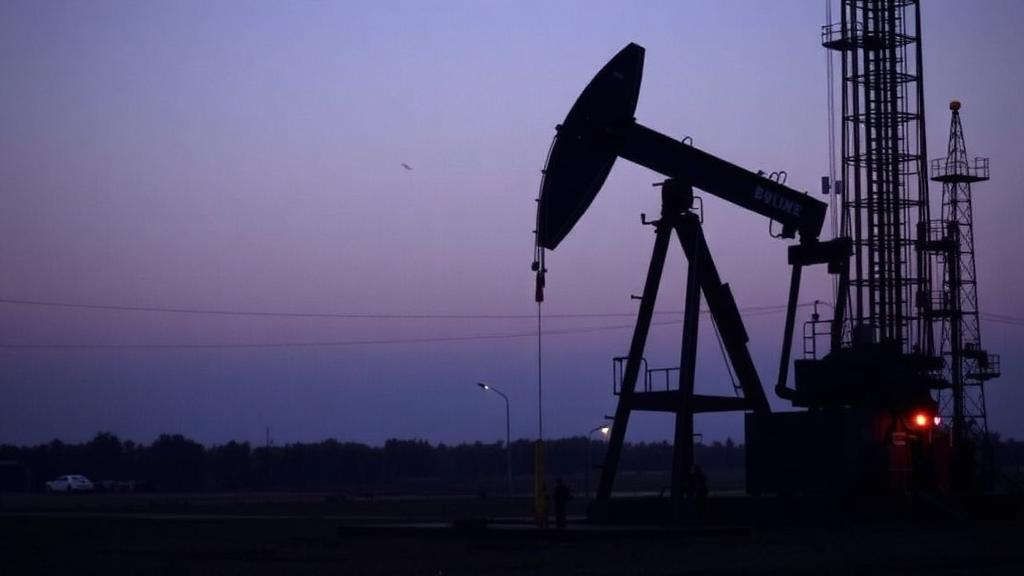
American oil and gas production has surged over the past decade, yet the methane escaping from the sector has stubbornly refused to follow the same upward trajectory. New research from Johns Hopkins University finds that methane emissions from the U.S. oil and gas industry remained essentially flat between 2019 and 2024, a period that encompassed both a dramatic expansion of drilling activity and an unprecedented wave of federal climate legislation. The study, published in the journal Communications Earth & Environment, offers one of the most comprehensive satellite-based assessments to date of whether recent greenhouse gas policies have actually moved the needle on the nation’s second most important contributor to climate change. The answer, according to the researchers, is a nuanced one: emissions did not explode as many scientists had feared, but neither did they fall in response to the flurry of regulatory activity in Washington.
The stakes of this question are enormous. Methane is a far more potent greenhouse gas than carbon dioxide over short timescales, trapping nearly 30 times more heat per molecule while persisting in the atmosphere for a much shorter period. That combination of high potency and brief atmospheric lifetime makes methane reduction one of the fastest available levers for slowing near-term warming, and it explains why the gas has become a central target for emissions monitoring programs worldwide. Scot Miller, an associate professor of environmental health and engineering at Johns Hopkins University and senior author of the study, emphasized that the flat trend carries both reassurance and disappointment. The good news, he noted, is that emissions have not markedly increased despite the enormous growth in natural gas production that followed the hydraulic fracturing boom. The bad news is that oil and gas operations still account for a large share of U.S. methane emissions, and the research found no detectable evidence that recent federal legislation had an impact on the total.
The regulatory backdrop against which this study unfolds is remarkable. In 2021, the Environmental Protection Agency restarted the process of developing rules to address methane emissions under the Clean Air Act, reviving an effort that had been stalled. Congress then enacted the Inflation Reduction Act of 2022, which went further than any previous federal measure by establishing fees on methane emissions from oil and gas facilities and allocating more than $1 billion in technical assistance to help the industry detect and repair leaks. Although some of these provisions proved short-lived in practice, the researchers describe the package as an unprecedented push toward reducing one of the major contributors to climate change. The central question motivating the study was whether that push produced measurable results in the atmosphere, where it ultimately matters.
Answering that question required a methodological approach capable of seeing past the self-reported inventories that have historically dominated emissions accounting. The research team turned to space. They combined observations from Europe’s TROPOMI instrument and the GOSAT satellite, both of which measure the concentration of methane in the air at countless locations across the globe, with sophisticated atmospheric modeling. Because methane released at the surface does not simply hover above its source but is carried and dispersed by winds and other meteorological forces, the researchers developed an algorithm that traced the gas observed from orbit back to its origins on the ground. This inverse modeling framework allowed them to estimate where methane emissions from the oil and gas sector occurred across the United States and how large those emissions were, year by year, for the period bookending the legislative activity from 2019 through 2024.
The numbers that emerged paint a picture of remarkable stability. Total methane emissions from oil and gas activities across the contiguous United States remained within a narrow band, between 9.3 and 10.4 teragrams per year, throughout the study period. Emissions declined by 0.58 teragrams between 2019 and 2023, a modest dip that was partially offset by a slight rise from 2023 to 2024. Set against the backdrop of rising production, that stability is itself a finding. Ao Chen, a PhD student at Johns Hopkins and the study’s first author, stated plainly that the team does not see a detectable decrease in emissions after the Inflation Reduction Act. She was careful, however, to acknowledge the limits of such an assessment: there is no way to test the counterfactual, and it remains possible that without the legislation, methane emissions would have climbed much higher.
One metric did show meaningful movement. The intensity of emissions, defined as the amount of methane released relative to the volume of oil and gas produced, decreased by approximately 11 percent over the study period. Yet the researchers interpret this decline cautiously, describing it as the continuation of a decades-long trend rather than a sudden improvement attributable to policy. Emissions intensity has been gradually falling for years as the industry has matured, and the new data suggest the recent period simply extends that trajectory. In other words, the sector is becoming somewhat more efficient at delivering energy without leaking methane, but because production keeps growing, the absolute quantity of methane entering the atmosphere has not budged.
The gradual improvement in emissions intensity may reflect a fundamental economic shift in how the industry treats natural gas. Methane, the primary component of natural gas, was once regarded largely as a nuisance byproduct of oil extraction, something to be disposed of as cheaply as possible. When there is no pipeline to carry gas from a wellhead to market, drilling companies have little financial incentive to prevent leaks and often simply flare the gas to get rid of it. But when pipeline infrastructure became available in regions such as West Texas, that same gas moved to market, where consumers burned it for heating, cooking, powering appliances, and generating electricity. Evidence from other studies suggests that leaks decline when gas becomes a valuable commodity, because every cubic foot that escapes is revenue lost. Companies have also been updating and improving their infrastructure, replacing aging equipment and adopting better operational protocols. As Miller put it, better industry protocols and less flaring have likely helped gradually curb emissions intensity even as gas and oil production have increased.
Beneath the national averages, the study uncovered striking regional variation. Texas, home to the largest oil-producing basin in the country, recorded a 14 percent decline in oil and gas methane emissions over the same period, a drop that stands out given the state’s dominant role in American energy production. By contrast, the researchers found that California and Colorado are likely falling short of their own emissions reduction goals, suggesting that state-level commitments have not yet translated into atmospheric reality in those jurisdictions. This geographic heterogeneity underscores a key advantage of the satellite-based approach: rather than relying on bottom-up inventories that may lag or misrepresent actual conditions, the method captures what is genuinely happening on the ground, basin by basin, and can reveal where progress is real and where it remains aspirational.
The findings arrive at a moment of uncertainty for methane policy in the United States. The fee mechanism established under the Inflation Reduction Act and the EPA’s Clean Air Act rules represented the most aggressive federal attempt yet to price and regulate methane leakage, yet the atmosphere, at least through 2024, shows no clear signature of their effect. Chen warned that without long-term regulatory durability, the industry may lack the incentive to further reduce methane emissions, and she argued that while curbing emissions intensity is a step in the right direction, a reduction in total methane emissions is what is truly needed to have an impact on the climate. The study is part of a broader scientific effort to determine whether federal greenhouse gas legislation and mandates have meaningfully decreased methane emissions, and its verdict so far is sobering: stability in the face of growth is preferable to the increases many scientists feared, but holding the line is not the same as bending the curve downward.
For the growing community of researchers and policymakers focused on methane, the study demonstrates both the power and the promise of atmospheric monitoring from space. By pairing satellite observations with models that trace pollutants back to their sources, scientists can now audit national emissions claims with a degree of independence that was impossible a decade ago. As more satellites come online and inversion techniques grow more refined, the ability to verify whether policies, technologies, and market forces are genuinely reducing methane pollution will only sharpen. For now, the U.S. oil and gas sector presents a paradox worth watching closely: an industry producing more energy than ever, leaking no more methane than before, and yet still releasing roughly ten teragrams of one of the most powerful greenhouse gases into the atmosphere every single year, with the total showing no sign yet of the sustained decline that climate goals demand.
Subject of Research: Satellite-based assessment of U.S. oil and gas methane emissions and the impact of federal climate policy from 2019 to 2024
Article Title: U.S. methane emissions flatline, despite increases in oil and gas production
Article References: U.S. methane emissions flatline, despite increases in oil and gas production. (n.d.). Original publication
Image Credits: AI Generated
DOI: Not provided
Keywords: methane emissions, oil and gas, greenhouse gases, satellite monitoring, Inflation Reduction Act, EPA regulations, hydraulic fracturing, emissions intensity, TROPOMI, GOSAT, climate policy, Communications Earth & Environment
Cite Scienmag News
Marcus Vaughn. (October 14, 2026). U.S. oil and gas methane emissions hold steady as production climbs. Scienmag. https://scienmag.com/u-s-oil-and-gas-methane-emissions-hold-steady-as-production-climbs/
Marcus Vaughn. "U.S. oil and gas methane emissions hold steady as production climbs." Scienmag, 14 October 2026, https://scienmag.com/u-s-oil-and-gas-methane-emissions-hold-steady-as-production-climbs/. Accessed 14 October 2026.
Marcus Vaughn. "U.S. oil and gas methane emissions hold steady as production climbs." Scienmag. October 14, 2026. https://scienmag.com/u-s-oil-and-gas-methane-emissions-hold-steady-as-production-climbs/