


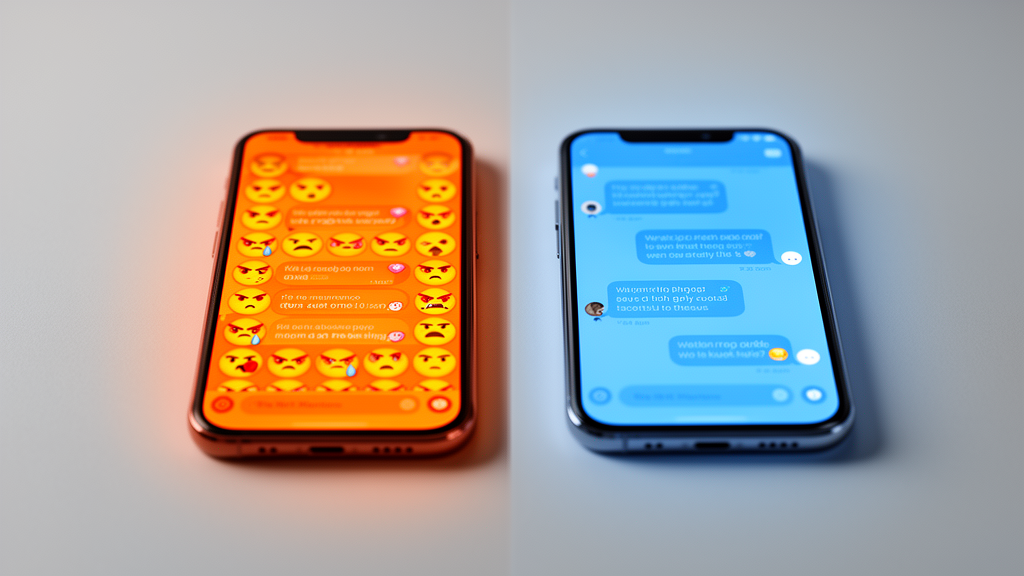
When Russia launched its full-scale invasion of Ukraine in February 2022, the world’s attention turned not only to the battlefield but also to the digital arenas where the conflict was debated in real time. A new study published in PLOS Complex Systems by Andrea Russo of the University of Pavia and Alessandro Caliandro of the University of Milan offers one of the most detailed comparisons yet of how two very different online communities processed the same war. By analyzing conversations on X, the platform formerly known as Twitter, and the editorial discussions behind Wikipedia’s coverage of the invasion, the researchers show that the architecture of a platform can be as decisive as the opinions of its users in determining whether discourse collapses into polarization or hardens into consensus.
The study focused on the earliest and most volatile days of the invasion. Because the Russian government blocked X just two days after the invasion began, sharply limiting the ability of Russian users to comment publicly, the researchers restricted their X dataset to the first 48 hours, collecting a total of 5,480 tweets tagged with the most active hashtags, #RussiaUkraineConflict and #RussiaUkraineWar. For Wikipedia, they cast a wider temporal net, gathering user interactions from one month before the invasion to one month after it, covering roughly 85 distinct discussion threads on the article’s talk pages. This asymmetry in data collection is itself revealing: it captures the moment when a fast-moving social media firestorm collided with a slower, more deliberate knowledge-building process.
To make sense of the X data, the team turned to natural language processing. They cleaned the corpus with stopword filtering and extracted discussion themes using bigrams, pairs of adjacent words whose co-occurrence frequencies reveal which concepts travel together in the same sentences. The conditional probability of one word following another was computed from the counts of word pairs, allowing the researchers to build networks in which the most frequently used words became nodes connected to their most common companions. To classify each tweet’s stance without importing the researchers’ own political judgments, they used Amazon Mechanical Turk workers, deliberately excluding anyone residing in Russia, Ukraine, or Belarus. Each sentence was evaluated by at least three independent annotators, and a tweet was labeled pro-war or anti-war only if at least two-thirds of its tags agreed. In the end, 78.4 percent of the sample received a reliable stance label, while the ambiguous remainder was excluded.
The results exposed a striking fragmentation. The pro-war community on X organized its discourse around geopolitical and ideological narratives, with NATO’s eastward expansion and the 2014 ‘Revolution of Dignity’ in Ukraine, framed by that community as a coup, serving as central justifying themes. The anti-war community, by contrast, largely ignored the NATO question and instead concentrated on humanitarian arguments: civilian casualties, the suffering of families under bombardment, and the characterization of Vladimir Putin as a war criminal. Crucially, the researchers found almost no thematic overlap between the two camps. The only shared topic, NATO, was itself so deeply polarized that it offered no common ground for dialogue. Without a single shared channel of discussion, the two communities talked past each other, each expressing opinions largely unsupported by sources, which further reduced the possibility of criticism, correction, or any meaningful exchange.
Wikipedia told a fundamentally different story. On the encyclopedia’s talk pages, where editors must arrive at wording that all parties can accept, the researchers found that almost none of the themes dominating X appeared at all. Instead, discussions revolved around editing requests, sourcing requirements, naming conventions, and factual accuracy. Editors debated how to frame events, which actors to identify, and how to maintain contextual precision, rather than whether the war was justified. The platform’s rules requiring verifiable citations and a neutral point of view transformed what had been an explosive ideological clash on X into a technical negotiation over evidence and language. Conflict did not vanish, but it was channeled into procedures designed to resolve it.
One of the study’s most intriguing findings emerged from a heatmap of Wikipedia editing activity. Two accounts, Tobby72 and the IP-based user 8.28.81.21, had been active on the article well before the invasion, even requesting that the page title be changed to ‘Russo-Ukrainian War’ months before Russian forces crossed the border. The authors suggest this early activity could be consistent with preparation for the invasion as part of a propaganda effort, though they present this as an observation rather than a proven conclusion. The heatmap also revealed a division of labor typical of large collaborative projects: a small core of experienced, named editor accounts performed most of the sustained work of reviewing and correcting the page, while many casual or anonymous contributors offered a single suggestion and never returned. Unanswered proposals, the researchers note, were treated as tacitly accepted modifications.
The most technically distinctive contribution of the paper lies in its measurement of linguistic entropy, a quantity borrowed from information theory that captures the unpredictability, and by extension the complexity, of the language used. Applying Shannon entropy alongside BERT-based sentiment and emotion models, the researchers found that sentiment levels were broadly similar across the two platforms, but entropy diverged dramatically. X exhibited significantly lower entropy, reflecting the short, punchy, emotionally direct statements that the platform’s character limit and real-time dynamics reward. Wikipedia showed markedly higher entropy, consistent with the formal, precise, and contextually rich prose that editors must produce to satisfy standards of verifiability and neutrality. In other words, the platforms were not merely hosting different opinions; they were inducing different kinds of language altogether.
The authors frame this difference through the social roles each platform assigns to its users. On X, participants behave as citizens exercising free expression with minimal constraint, an arrangement that favors immediacy and provocation over nuance. On Wikipedia, participants function as volunteers embedded in a structured culture of editorial guidelines, peer review, and dispute resolution mechanisms that mirror organized labor. This culture, the study argues, creates a collaborative environment in which disagreement is processed through rules rather than raw confrontation, allowing contributors who hold opposing views about the war itself to cooperate on the narrower question of how to document it accurately. The requirement to cite sources also opens every claim to criticism, which paradoxically strengthens rather than weakens the possibility of agreement.
The study is candid about its limitations. The absence of Russian voices on X after the government blockade restricts the comparison, a larger dataset might have revealed temporal fluctuations in sentiment and entropy tied to specific events, and the possible presence of bots in the X data cannot be excluded. The researchers also acknowledge that they could not verify whether any X users and Wikipedia editors were the same individuals, since neither platform exposes account-level identifiers that would permit reliable cross-platform matching. Sentiment and emotion detection, applied through validated pretrained models rather than ones retrained on war discourse, may also have missed domain-specific expressions such as sarcasm or euphemism. Yet even with these caveats, the findings carry a clear message for anyone concerned with the health of the digital public sphere. Platform design, community norms, and the presence or absence of shared evidentiary standards can determine whether a polarizing event fractures a community into warring echo chambers or becomes the occasion for structured, evidence-based collaboration. As debates over algorithmic amplification and content moderation intensify, this comparison of X and Wikipedia suggests that the most powerful algorithmic influence on online conflict may not be the recommendation engine at all, but the deeper architecture that decides what kind of conversation a platform makes possible.
Subject of Research: Comparative analysis of conflict and cooperation dynamics on X and Wikipedia during the Russia-Ukraine war
Article Title: Algorithmic influence on conflict and cooperation in digital communities
Article References: Algorithmic influence on conflict and cooperation in digital communities. (n.d.). https://doi.org/10.1371/journal.pcsy.0000087
Image Credits: AI Generated
DOI: 10.1371/journal.pcsy.0000087
Keywords: algorithmic influence, X platform, Wikipedia, polarization, natural language processing, Shannon entropy, Russia-Ukraine war, online cooperation, echo chambers, sentiment analysis, platform design, digital communities
Cite Scienmag News
Reid Dalton. (October 9, 2026). Two Platforms, One War: How Design Shapes Conflict and Cooperation Online. Scienmag. https://scienmag.com/two-platforms-one-war-how-design-shapes-conflict-and-cooperation-online/
Reid Dalton. "Two Platforms, One War: How Design Shapes Conflict and Cooperation Online." Scienmag, 9 October 2026, https://scienmag.com/two-platforms-one-war-how-design-shapes-conflict-and-cooperation-online/. Accessed 9 October 2026.
Reid Dalton. "Two Platforms, One War: How Design Shapes Conflict and Cooperation Online." Scienmag. October 9, 2026. https://scienmag.com/two-platforms-one-war-how-design-shapes-conflict-and-cooperation-online/


