


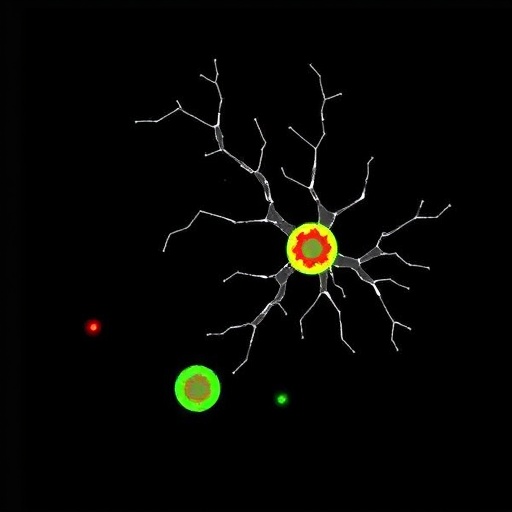
In a groundbreaking study set to redefine our understanding of malaria pathology, researchers have identified two RNA-binding proteins expressed specifically during the hypnozoite stage of Plasmodium vivax that play a crucial role in inhibiting liver stage replication. This discovery, published in Nature Communications in 2026, offers unprecedented insight into the elusive biology of the hypnozoite, the dormant form of the parasite responsible for malaria relapses, and opens new avenues for therapeutic intervention in one of the most persistent forms of malaria affecting millions worldwide.
Plasmodium vivax has long been a challenging parasite to study because of its unique ability to form hypnozoites—dormant forms that can reactivate weeks, months, or even years after the initial infection. Unlike the more lethal Plasmodium falciparum, P. vivax can evade complete eradication by sequestering itself in the liver, escaping the immune system and antimalarial drugs. Understanding the molecular mechanisms that maintain this hypnozoite state is essential for developing strategies to prevent relapses, which are a significant obstacle in malaria control and elimination efforts.
The authors, Vo, van Biljon, Zanghi, and colleagues, employed advanced transcriptomic and proteomic techniques to isolate and characterize the RNA-binding proteins (RBPs) that are selectively expressed during the hypnozoite phase of the parasite’s life cycle. These proteins, previously undetected in blood-stage parasites, exhibit high affinity for specific RNA motifs that are thought to regulate the translational repression necessary for maintaining dormancy in liver cells. The identification of these RBPs is a pivotal breakthrough in malaria biology, as it reveals how the hypnozoite arrests its growth and evades host defenses.
Using innovative single-cell RNA sequencing combined with crosslinking immunoprecipitation (CLIP) assays, the research team delineated the RNA interactome of each RBP. These data indicate that the proteins bind to transcripts encoding crucial cell cycle and replication factors, effectively silencing their translation and thereby halting progression into the replicative schizont stage. This insight into post-transcriptional regulation adds a new layer of complexity to the malaria parasite’s developmental control, highlighting the sophistication of its dormant state management.
Furthermore, the study demonstrated through gene knockdown experiments conducted in a humanized liver mouse model that suppression of these RNA-binding proteins leads to a premature reactivation of the hypnozoite and uncontrolled replication of liver-stage parasites. This phenomenon, while potentially catastrophic for the parasite’s survival strategy, offers a tantalizing therapeutic target. If drugs can be developed to destabilize these RBPs or alter their RNA-binding capacity, it may be possible to flush out dormant hypnozoites, making radical cure of P. vivax malaria a feasible objective.
The implications of these findings extend beyond basic parasitology into the realms of drug discovery and public health policy. Currently, the only approved drug for hypnozoite eradication, primaquine, carries significant toxicity risks and requires prolonged treatment regimens, limiting its use in vulnerable populations. Targeting the RNA-binding proteins introduced in this study could yield safer, more effective therapeutics that minimize side effects and improve patient compliance, potentially revolutionizing malaria treatment protocols worldwide.
The researchers also postulate that these RBPs might interact with host cell factors to modulate the liver microenvironment, promoting parasite survival during dormancy. This hypothesis stems from observed alterations in hepatocyte gene expression profiles subsequent to parasite invasion. Deciphering these parasite-host interactions is a promising future direction that could uncover additional biomarkers or drug targets essential for controlling P. vivax infections.
Moreover, evolutionary analysis conducted as part of the investigation shows that these RNA-binding proteins are highly conserved among P. vivax strains but are absent or significantly divergent in P. falciparum and other Plasmodium species that do not produce hypnozoites. This specificity underscores their unique adaptation to dormancy and relapse biology and may explain why P. vivax malaria remains problematic even in regions with substantial malaria control efforts.
In the broader context of infectious disease research, these findings contribute to a growing recognition of RNA-binding proteins as critical regulators of pathogen life cycles. Similar mechanisms controlling dormancy or latency have been observed in viruses and bacteria, suggesting that post-transcriptional control strategies may be a widespread evolutionary solution to balancing persistence and replication in hostile host environments.
The study’s methodological rigor is noteworthy, integrating cutting-edge molecular techniques with in vivo validation in models that closely mimic human liver biology. The team’s use of clinically relevant parasite isolates and minimally manipulated liver cultures enhances the translational potential of their results, offering a reliable platform for future drug screening and vaccine development.
Vo and colleagues emphasize that while these discoveries lay the foundation for novel therapeutic approaches, significant challenges remain. The complexity of hypnozoite biology and the fine balance it strikes between dormancy and activation require a deep mechanistic understanding before safe and effective interference is possible. Additionally, the technical difficulties in maintaining and studying hypnozoites in vitro reiterate the importance of developing robust model systems to accelerate research.
Experts in the field hail this work as a milestone in tackling P. vivax malaria. Dr. Helena Martinez, a leading malariologist not involved with the study, comments, “The identification of functionally critical RNA-binding proteins specific to hypnozoites is a paradigm shift. This research unveils a molecular Achilles’ heel in the parasite’s lifecycle that could finally enable us to eliminate the dormant reservoirs that have long thwarted eradication efforts.”
As the global health community continues to push for malaria eradication by 2030, research such as this will be instrumental in addressing the distinct challenges posed by P. vivax. The discovery of these RBPs enriches the toolkit available to scientists and healthcare providers seeking to deliver radical cures that preclude relapse, reduce transmission, and save millions of lives in endemic regions.
Overall, this study represents a vital leap forward in malaria biology, merging molecular parasitology with translational research to bring us closer to a future where P. vivax infections can be definitively controlled and ultimately eliminated. It is a testament to the power of interdisciplinary collaboration and technological innovation in solving one of the world’s oldest and deadliest diseases.
Cite Scienmag News
Juliet Wilcox. (May 30, 2026). Two Plasmodium vivax Proteins Block Liver Stage. Scienmag. https://scienmag.com/two-plasmodium-vivax-proteins-block-liver-stage/
Juliet Wilcox. "Two Plasmodium vivax Proteins Block Liver Stage." Scienmag, 30 May 2026, https://scienmag.com/two-plasmodium-vivax-proteins-block-liver-stage/. Accessed 3 September 2026.
Juliet Wilcox. "Two Plasmodium vivax Proteins Block Liver Stage." Scienmag. May 30, 2026. https://scienmag.com/two-plasmodium-vivax-proteins-block-liver-stage/


