


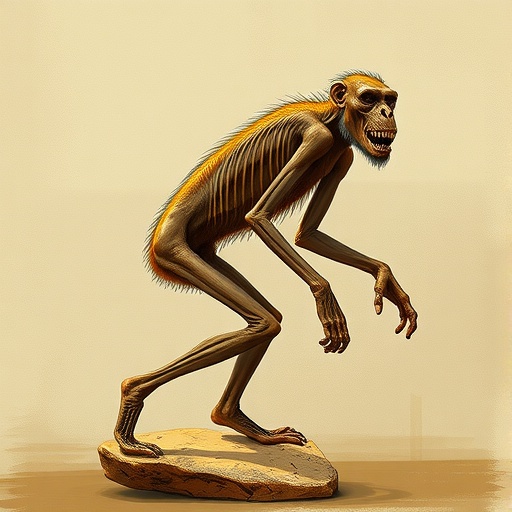
Unraveling the Genetic Blueprint Behind the Human Pelvis: How Two Key Shifts Enabled Upright Walking
By Kermit Pattison / Harvard Staff Writer
The complex architecture of the human pelvis stands as a remarkable testament to evolutionary ingenuity. Unlike any other primate, our pelvis serves as the foundational keystone that supports our extraordinary ability to walk upright, a mode of locomotion that has profoundly shaped our species’ journey. For decades, scientists have marveled at the distinctive bowl-like shape of the human pelvis, understanding that it emerged from a radical transformation of ancestral structures, yet the precise mechanisms of this metamorphosis remained elusive—until now.
A groundbreaking new study spearheaded by researchers at Harvard offers unprecedented insight into the genetic and developmental processes that remodeled the pelvis from a narrow, climbing-adapted form seen in our closest African ape relatives into the broad, balancing structure essential for bipedalism. This research identifies not one but two pivotal evolutionary steps that together rewired pelvis morphology through shifts in growth plate orientation and ossification timing, unraveling a mystery that has long stymied paleoanthropologists and developmental biologists alike.
Professor Terence Capellini, Chair of the Department of Human Evolutionary Biology and senior author on the study, emphasized the magnitude of this discovery. “What we’ve uncovered is a fundamental mechanistic shift unlike anything observed in other primates,” he explained. “Similar to how evolutionary novelties like the transition from fins to limbs or the formation of bat wings involve massive redeployments of developmental growth, the human pelvis underwent a comparable profound restructuring to support upright walking.”
The pelvis of African apes such as chimpanzees, bonobos, and gorillas contrasts starkly with our own. Their ilia—the uppermost hip bones—are slender, vertically tall, and aligned front-to-back, resembling thin blades designed to anchor powerful climbing muscles. In humans, these bones have rotated outward and broadened into a bowl shape, a form that supports the shifting weight dynamics inherent in bipedal locomotion. Despite this conspicuous difference, the underlying developmental mechanisms responsible for the change until recently remained beyond the reach of empirical observation.
Using an extensive collection of embryonic tissue samples from humans and nearly two dozen primate species—some painstakingly preserved for over a century—study lead author Gayani Senevirathne employed advanced imaging techniques such as CT scanning and microscopic histological analysis to scrutinize pelvic development from its earliest stages. This meticulous approach integrated diverse methodologies, enabling the researchers to reconstruct a comprehensive developmental timeline that captures the dynamic transformations at play.
The first major revelation pertains to an astonishing 90-degree rotation of the pelvic growth plate, the cartilage zone essential for bone elongation. Whereas in nonhuman primates this cartilage grows aligned along the bone’s long axis, in humans, it reorients perpendicularly during a critical embryonic window around day 53. This flip simultaneously shortens and widens the ilium, effectively shaping the hipbones to their iconic broad dimensions. Such a sudden mechanistic shift overturns previous assumptions that modification of the pelvis occurred gradually and sequentially.
The second evolutionary innovation involves a radical alteration in the timing and pattern of bone ossification within the pelvis. Contrary to typical skeletal development where mineralization begins at a primary center in the bone shaft and progressively replaces cartilage, human ilia initiate ossification starting at the posterior region near the sacrum, spreading outward in a radial pattern. Intriguingly, ossification within the pelvis’s internal core is delayed by approximately sixteen weeks, preserving its structural shape throughout development and instigating the characteristic basin-like geometry.
At the heart of these transformative developmental processes, researchers detected the involvement of over 300 genes. Among these, three key players stand out for orchestrating the growth plate reorientation and ossification timing: SOX9, PTH1R, and RUNX2. Mutations in these genes underscore their pivotal roles; for instance, disruptions to SOX9 lead to Campomelic Dysplasia, a condition marked by abnormally narrow hipbones lacking lateral expansion. Similarly, anomalies in PTH1R manifest as skeletal malformations that impede normal pelvic morphology.
These genetic shifts appear to have coincided with a critical juncture in human evolution approximately 5 to 8 million years ago, around the time our lineage diverged from the African apes. The pelvis, according to the research team, remained a focal point of evolutionary modification well beyond these earliest episodes. As encephalization advanced and fetal brain size increased, the pelvis came under additional selective pressures known as the “obstetrical dilemma” — a balancing act between ensuring pelvis narrowness for efficient bipedal locomotion and widening for the safe delivery of large-brained infants. The later delay in ossification likely emerged in response to these competing demands within the past two million years.
Fossil evidence aligns compellingly with these findings. Ardipithecus ramidus, an approximately 4.4 million-year-old specimen from Ethiopia representing a blend between arboreal and terrestrial traits, exhibits early indications of a pelvis transitioning toward humanlike morphology. The famed Australopithecus afarensis skeleton popularly known as Lucy, dating to about 3.2 million years ago, displays a more pronounced pelvic adaptation featuring flare to support bipedal musculature.
Professor Capellini hopes the study will reshape fundamental assumptions within the field of human evolution. “All hominid fossils following our divergence evolved pelvis growth distinct from other primates,” he remarked. “Models of growth and brain size development must be recalibrated to reflect these evolutionary novelties within the pelvis. The unique pelvic developmental architecture provided the structural context against which fetal head growth co-evolved.”
Collectively, these discoveries illuminate a previously hidden genetic and developmental narrative embedded within our bones. By delineating the precise steps that transformed a climbing-oriented pelvis into a foundation for human upright gait, this research not only deepens our understanding of the evolutionary past but also offers new perspectives on congenital pelvic disorders and developmental biology. The confluence of genetics, embryology, and paleontology embodied in this study represents a landmark in comprehending what makes the human form uniquely adapted to bipedalism.
Cite Scienmag News
Gavin Prescott. (August 27, 2025). Two Major Advances in the Evolution of Bipedalism. Scienmag. https://scienmag.com/two-major-advances-in-the-evolution-of-bipedalism/
Gavin Prescott. "Two Major Advances in the Evolution of Bipedalism." Scienmag, 27 August 2025, https://scienmag.com/two-major-advances-in-the-evolution-of-bipedalism/. Accessed 3 September 2026.
Gavin Prescott. "Two Major Advances in the Evolution of Bipedalism." Scienmag. August 27, 2025. https://scienmag.com/two-major-advances-in-the-evolution-of-bipedalism/


