


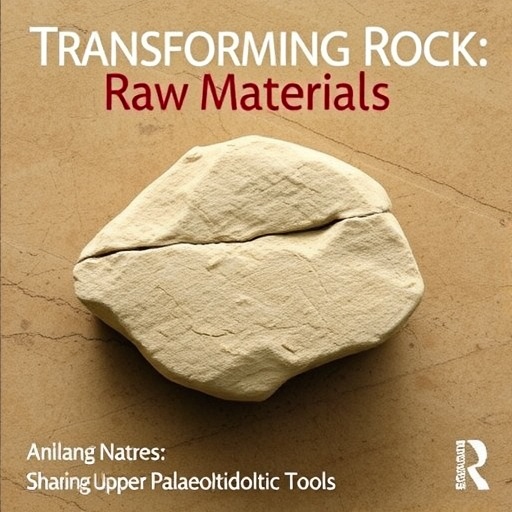
The evolution of tool-making represented a pivotal point in human history, marking a significant transition that helped shape the very fabric of society as we know it today. A recent study led by Belmiro, Bicho, and Terradas delves deep into this intricate relationship between raw materials and Upper Palaeolithic technology, with a specific focus on the Vale Boi region of southwestern Iberia. The research sheds light on how the availability and selection of raw materials fundamentally influenced the development and sophistication of tool-making techniques during this prehistoric period.
The Vale Boi site, rich in archaeological significance, serves as a platform for understanding the adaptive strategies employed by Upper Palaeolithic communities. These early humans were not mere hunters and gatherers; they were adept strategists who could manipulate their environment for survival. The strategic exploitation of raw materials in tool production underscores a nuanced understanding of their surroundings, highlighting their ability to communicate, collaborate, and innovate. This study illuminates how the materials available in their environment dictated the types of tools they crafted and subsequently used.
One of the fascinating findings of this study centers on the variety of raw materials employed by Upper Palaeolithic people. The authors discuss the critical nature of stone, particularly flint, which was the primary material for tool-making. However, they also highlight the significance of other materials, such as bone and wood, in crafting tools for diverse purposes. Each of these raw materials brought unique physical properties that informed the tools’ design and utility. For instance, the sharpness of flint made it ideal for cutting, while bone could be fashioned into effective points and hooks. The interplay of these materials with technological choices reflects a remarkable adaptability and resourcefulness among ancient communities.
The researchers employed a multidisciplinary approach, integrating archaeological data with experimental archaeology and material science to draw comprehensive conclusions about tool-making practices. By engaging in experiments that recreated ancient techniques using the same materials, they could replicate and analyze the effectiveness of various tool designs. This practice not only validated their hypotheses but also underscored the empirical nature of prehistoric technology, revealing that such innovations likely evolved over time through trial and error.
The study further emphasizes the role of social learning in the development of technology. As raw materials influenced tool design, cultural transmission among groups became pivotal. Knowledge about which materials to utilize, how to procure them, and the techniques involved in making tools could be shared and transmitted among members of a community. This social aspect of learning contributed to the rapid progression and refinement of technology, effectively creating a shared cultural heritage that transcended generations.
Intriguingly, the paper discusses how geographic factors played a role in shaping technological advancements. The availability of different types of stone and other raw materials throughout southwest Iberia determined the diversity of tools produced. This spatial variability allowed for localized styles and preferences in tool-making, providing insights into the mobility patterns and land use of Upper Palaeolithic societies. It raises critical questions about trade and exchange, suggesting that knowledge and craftsmanship may have flowed between groups along with the materials themselves.
In addition to highlighting the practical aspects of prehistoric technology, the authors delve into the symbolic meanings associated with tools during the Upper Palaeolithic. Tools were not only functional artifacts but also carried ideological and cultural significance. The act of crafting tools may have been imbued with social rituals, denoting identity, status, and belonging within a community. Such perspectives emphasize the broader implications of technology beyond mere survival; it reflects a connection to the narrative of humanity’s journey and evolution.
As the research illuminates the bridges between raw materials, technology, and culture, it raises awareness about the ongoing relationship between humans and their environment. In contemporary times, understanding the biocultural connections that have shaped human innovation is vital, particularly in discussions surrounding sustainability and resource management. This historical framework urges us to consider how modern societies can learn from the adaptive strategies of past communities in safeguarding our environment for future generations.
In conclusion, the research conducted by Belmiro, Bicho, and Terradas offers profound insights into the interplay of raw materials and technological development among Upper Palaeolithic communities in southwestern Iberia. By painstakingly analyzing archaeological evidence and integrating multidisciplinary methodologies, they contribute to a nuanced understanding of human innovation’s origins. Their findings not only enrich our historical narrative but also provide critical reflections relevant to contemporary discussions about technology and resource management.
As we delve into the annals of prehistoric technology and tool-making practices, it becomes clear that the connection between raw materials and our ancestors’ cognitive capabilities was far more intricate than previously understood. This study reaffirms the belief that by studying the past, we can glean invaluable lessons that resonate in the challenges we face today.
Through this research, we not only honor the ingenuity of Upper Palaeolithic peoples but also reaffirm the relevance of archaeology in comprehending the complexities of human advancement. The legacy of these ancient craftspeople continues to inspire modern innovations and invites us to ponder how we, too, can harness our surroundings to forge the tools for a sustainable future.
Belmiro, J., Bicho, N., Terradas, X. et al. From stone to tool: how raw materials influenced Upper Palaeolithic technology in southwestern Iberia (Vale Boi).
Archaeol Anthropol Sci 17, 220 (2025). https://doi.org/10.1007/s12520-025-02339-8
Cite Scienmag News
Courtney Benton. (November 17, 2025). Transforming Rock: Raw Materials Shaping Upper Palaeolithic Tools. Scienmag. https://scienmag.com/transforming-rock-raw-materials-shaping-upper-palaeolithic-tools/
Courtney Benton. "Transforming Rock: Raw Materials Shaping Upper Palaeolithic Tools." Scienmag, 17 November 2025, https://scienmag.com/transforming-rock-raw-materials-shaping-upper-palaeolithic-tools/. Accessed 4 September 2026.
Courtney Benton. "Transforming Rock: Raw Materials Shaping Upper Palaeolithic Tools." Scienmag. November 17, 2025. https://scienmag.com/transforming-rock-raw-materials-shaping-upper-palaeolithic-tools/


