


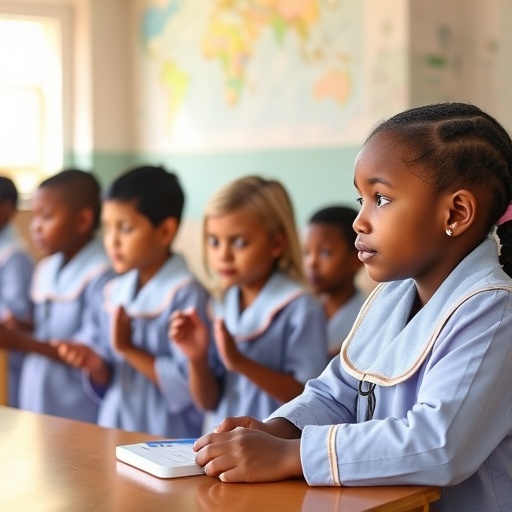
In recent years, the paradigm of education has witnessed a profound transformation, with child-friendly schools emerging as a pivotal concept in shaping inclusive and nurturing learning environments. This transformative shift has gained notable traction, especially within religious-based educational frameworks in Indonesia, across Asia, and within the global context. The latest narrative review by Jailani, Prahmana, and Widodo delves deeply into the intricacies of implementing child-friendly schools in religious settings, providing a comprehensive analysis that embodies both cultural sensitivity and educational innovation.
At the heart of the discourse lies the fundamental challenge of reconciling traditional religious education paradigms with contemporary child-friendly pedagogical principles. The integration is not merely administrative but deeply reflective, requiring educators to balance reverence and doctrine with the rights and psychological well-being of children. This narrative review comprehensively surveys this delicate interplay, showing how educational institutions can evolve without compromising their religious foundations while fostering environments where children’s voices and needs are prioritized.
One of the critical technical insights of the review is the emphasis on child-centered learning methodologies as a transformative agent. These methodologies promote active engagement, creativity, and critical thinking—skills often overlooked in rigid educational systems. By focusing on developmental appropriateness and psychological safety, these approaches redefine the role of the teacher from an authoritarian figure to a facilitator and mentor, tailoring education to fit children’s unique learning trajectories while respecting religious values.
The review underscores the systemic adjustments necessary for child-friendly schools to flourish within religious contexts. This includes reworking curricula to embed both religious and child-centered themes, ensuring that educational content is accessible and engaging to children of diverse backgrounds and abilities. Additionally, building capacity among teachers through specialized training programs equips them with the competences needed to navigate the intersection of faith and child development theory effectively.
Moreover, the assessment strategies employed within these institutions undergo significant reformation. Traditional rote memorization and high-stakes testing give way to formative assessments that promote reflection, dialogue, and holistic evaluation of the child’s progress. Such shifts require robust policy support and collaborative engagement with stakeholders, including parents, religious leaders, and educational authorities, to create a shared vision of child-friendly education that honors spiritual teachings and child development principles.
An essential dimension highlighted in the review is the socio-cultural dynamics unique to Indonesia and broader Asian contexts, which influence the implementation of child-friendly schooling in religious settings. These dynamics include community attitudes toward education, religious expectations, family involvement, and the socio-economic environment. Understanding these parameters is pivotal for tailoring interventions that resonate culturally and effectively address the barriers to child-friendly learning environments.
Jailani and colleagues also draw comparisons with global initiatives, offering a lens into international best practices and challenges faced by religious-based schools in accommodating child-friendly principles. The cross-cultural analysis reveals universal themes such as the tension between tradition and modernity, the role of religious narratives in shaping pedagogical approaches, and the vital importance of safeguarding children’s rights irrespective of cultural setting.
Technologically, the review discusses the integration of modern educational technologies within religious schools, highlighting their potential to enhance interactive learning and bridge gaps in resource-constrained environments. Digital tools and platforms enable personalized learning experiences that adapt to individual student needs, while simultaneously providing channels for religious instruction that is engaging and accessible.
The narrative review also tackles the policy implications derived from its findings. It suggests comprehensive frameworks that governments, religious organizations, and educational bodies can adopt to institutionalize child-friendly practices within religious schools. Such frameworks advocate for inclusive policymaking that respects religious autonomy while mandating adherence to child protection standards and educational quality benchmarks.
Importantly, the study emphasizes the role of community participation in sustaining child-friendly schooling environments. Parental involvement, community awareness programs, and partnerships with local religious authorities constitute a triad of support that reinforces the ethos of child-centered education. Mobilizing grassroots support not only legitimizes educational reform but also fosters a culture of accountability and shared responsibility.
Future research directions, as outlined by the authors, highlight the necessity for longitudinal and impact studies that assess the long-term outcomes of child-friendly school implementations in religious contexts. These studies would provide empirical evidence on how such educational reforms affect children’s cognitive, emotional, and social development, thereby informing continuous improvement and policy refinement.
The collective insights from this comprehensive narrative review offer a roadmap for policymakers, educators, and religious leaders striving to harmonize faith-based instruction with progressive, child-centric education. It advocates for a transformative mindset, where education transcends mere knowledge transmission and becomes a catalyst for holistic child development within culturally meaningful and respectful frameworks.
In conclusion, the review by Jailani, Prahmana, and Widodo represents a critical and timely contribution to educational science and religious pedagogy. Its integrative approach not only charts practical pathways for implementing child-friendly schools in religious settings but also elevates the discourse on how educational systems globally can reconcile tradition with the rights and needs of children.
Cite Scienmag News
Courtney Benton. (December 18, 2025). Transforming Religious Schools: Child-Friendly Education Worldwide. Scienmag. https://scienmag.com/transforming-religious-schools-child-friendly-education-worldwide/
Courtney Benton. "Transforming Religious Schools: Child-Friendly Education Worldwide." Scienmag, 18 December 2025, https://scienmag.com/transforming-religious-schools-child-friendly-education-worldwide/. Accessed 7 September 2026.
Courtney Benton. "Transforming Religious Schools: Child-Friendly Education Worldwide." Scienmag. December 18, 2025. https://scienmag.com/transforming-religious-schools-child-friendly-education-worldwide/


