


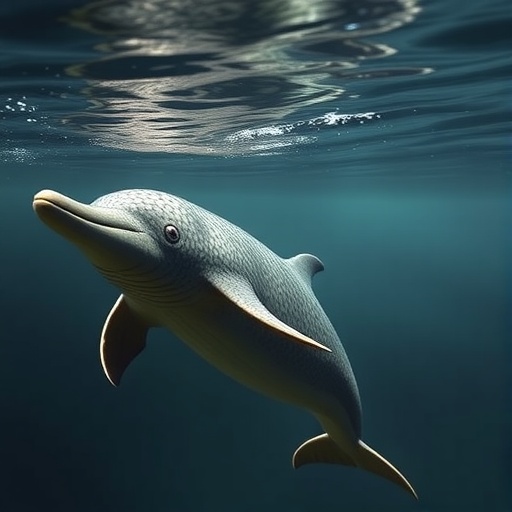
In a groundbreaking discovery that sheds new light on the evolutionary history of one of the world’s most enigmatic mammals, paleontologists from Flinders University have unveiled rare fossils of an ancient, toothed platypus species dating back 25 million years. These extraordinary remains, excavated from remote inland fossil sites east of the Flinders Ranges in South Australia, reveal a fascinating chapter in the evolutionary narrative of the iconic platypus, indicating it once roamed ancient rivers and lakes alongside a diverse assemblage of prehistoric creatures including lungfish, flamingos, and freshwater dolphins.
The find centers on the species Obdurodon insignis, a distant relative of the modern platypus, which intriguingly retained well-formed teeth — a stark contrast to the almost toothless modern-day monotreme. Contemporary platypuses hatch with rudimentary teeth but lose them rapidly, relying on specialized horny pads to grind their aquatic prey. In contrast, O. insignis displayed prominent molars and premolars, equipping it with a powerful jaw capable of crushing hard-shelled prey such as yabbies, demonstrating a dietary versatility that modern platypuses lack.
This significant scientific advancement comes after decades of piecing together meager fossil fragments, as platypus remains have historically been rare and fragmentary. Prior to this discovery, knowledge about O. insignis was limited to a small set of dental and skeletal fragments. However, the recent acquisition of an intact premolar tooth and a partial scapulocoracoid bone — essential for supporting the forelimb — has provided unprecedented insight into the morphology and lifestyle of this ancient monotreme.
Detailed anatomical analysis suggests that the forelimb structure of O. insignis was remarkably similar to that of the modern platypus, implying proficient swimming abilities and an aquatic lifestyle. This resemblance underscores an impressive evolutionary continuity spanning millions of years between ancient toothed ancestors and the toothless platypus familiar to us today. The combination of aquatic adaptations and fully developed teeth illustrates a fascinating blend of primitive and derived traits, highlighting evolutionary experimentation during the late Oligocene epoch.
The discovery site itself paints a vivid picture of a lost ecosystem — an expanse of slow-moving rivers, expansive lakes, and forested lowlands that hosted a thriving biota. This environment supported a remarkable diversity of species, including ancient lungfish, fish schools, various birds such as flamingos and cormorants, and even freshwater dolphins equipped with teeth adapted to hunting in these habitats. These coexisting species suggest a complex aquatic food web where O. insignis likely played an important role as a mid-level predator.
This ancient world was further enriched by terrestrial fauna, with evidence pointing to dense forests inhabited by tree-dwelling marsupials like koalas and possums. Ground-dwelling marsupials, small carnivores, skinks, and frogs formed an intricate terrestrial mosaic alongside dominant avian predators, including the giant eagle genus Archaehierax. The intimate ecosystem interplay discovered through this assemblage informs our understanding of the dynamic faunal communities in prehistoric Australia.
Professor Trevor Worthy, who has dedicated more than two decades to uncovering this desert fossil locality, emphasized the serendipity of the find. Continuous erosion and shifting sands have gradually revealed an unmatched window into a bygone era, reminding us of the limitless evolutionary stories buried beneath Australia’s arid landscapes. According to Worthy, each fossil excavation carries the possibility of rewriting parts of Australia’s natural history and adding new dimensions to extinct species’ ecological roles.
The evolutionary implications of O. insignis extend beyond morphology, challenging previous assumptions about platypus feeding behavior and adaptation. The presence of large premolars and molars indicates an ability to process more robust prey items than previously thought, suggesting a broader ecological niche for the ancient platypus. This contrasts with the more specialized diet of modern platypuses that forage mainly on soft-bodied aquatic invertebrates. Hence, O. insignis demonstrates a distinct evolutionary trajectory that included dental retention as an effective feeding adaptation.
Fossil comparisons with a younger, related species, Obdurodon dicksoni, from Queensland’s Riversleigh World Heritage Area, reveal remarkable similarities in skull shape and overall anatomy, albeit with differences in size and bite force. O. dicksoni possessed a larger skull and stronger jaw musculature, indicating an evolutionary trend in the genus for robust dental and cranial features. The evolutionary persistence of toothed monotremes through millions of years until their eventual transition to toothless adulthood showcases the complexity of monotreme evolution.
In addition to deepening our comprehension of monotreme phylogeny, these fossils contribute to the broader narrative of Australia’s paleogeography and climatic transformation through the Miocene and Oligocene epochs. The once verdant lakes and forests have long vanished, replaced by the arid regions we see today, yet the lineage of the platypus has endured. Modern monotremes retain aquatic adaptations deeply rooted in their predecessors’ biology, spotlighting the remarkable resilience and adaptability of these unique mammals over geological time.
This discovery sets a new benchmark for palaeontological research in Australia, reaffirming the Flinders University team’s pivotal role in unearthing extraordinary fossil records. Their ongoing fieldwork in challenging desert conditions demonstrates the value of long-term, systematic exploration to uncover evolutionary milestones. Moreover, this revelation invites further interdisciplinary research combining paleobiology, ecology, and evolutionary genetics to decode the complex history of monotremes and their evolutionary innovations.
The full scientific account of this discovery has been published in the prestigious journal Australian Zoologist, where the authors present detailed morphological assessments and contextual ecological interpretations. This work, accessible via the DOI 10.1071/AZ26011, is destined to stimulate renewed interest in monotreme evolutionary history and aquatic mammalian adaptations. As we continually refine our understanding of ancient life, this new material of Obdurodon insignis stands as a testament to the enduring mystery and wonder of Australia’s prehistoric past.
Cite Scienmag News
Gavin Prescott. (April 27, 2026). Toothed Platypuses Swam Alongside Dolphins 25 Million Years Ago, New Study Finds. Scienmag. https://scienmag.com/toothed-platypuses-swam-alongside-dolphins-25-million-years-ago-new-study-finds/
Gavin Prescott. "Toothed Platypuses Swam Alongside Dolphins 25 Million Years Ago, New Study Finds." Scienmag, 27 April 2026, https://scienmag.com/toothed-platypuses-swam-alongside-dolphins-25-million-years-ago-new-study-finds/. Accessed 4 September 2026.
Gavin Prescott. "Toothed Platypuses Swam Alongside Dolphins 25 Million Years Ago, New Study Finds." Scienmag. April 27, 2026. https://scienmag.com/toothed-platypuses-swam-alongside-dolphins-25-million-years-ago-new-study-finds/


