


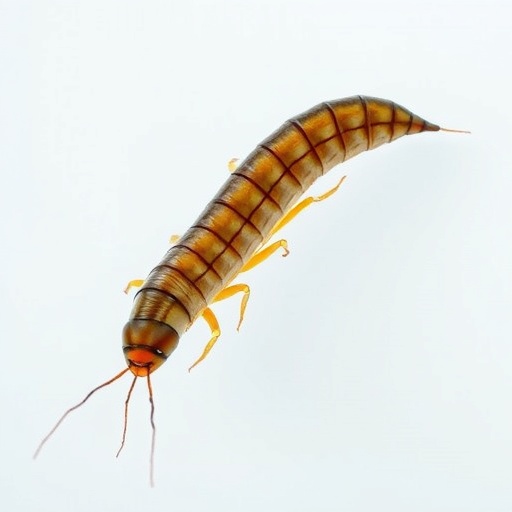
In the absence of specialized immune cells, the nematode Caenorhabditis elegans has evolved an extraordinary network of cross-tissue signalling circuits to defend itself against pathogens. Recent advances in genetic screens have unveiled the intricate communication pathways that connect neurons, intestines, epidermis, and even the germline in orchestrating immune responses and behavioural adaptations. These findings challenge traditional views of immunity as a solely cell-autonomous phenomenon, highlighting instead a sophisticated, systemic interplay that enables C. elegans to mount precise, context-dependent defence mechanisms without the immune cell armamentarium typical of higher organisms.
At the forefront of this emerging paradigm is intestinal epithelial immunity, modulated non-cell autonomously by sensory neurons. A landmark genetic screen utilizing irg-4p::GFP expression as a readout for innate immune activation against Pseudomonas aeruginosa led to the identification of OLRN-1, a transmembrane protein. Intriguingly, OLRN-1 functions within AWC chemosensory neurons, repressing the p38 MAPK PMK-1 signalling in intestinal cells. Loss-of-function mutations in olrn-1 derepress this pathway, resulting in heightened intestinal immune activation. This discovery exemplifies the role of sensory inputs in fine-tuning mucosal immunity remotely, establishing the gut-brain axis as a critical interface in C. elegans immune regulation.
Further refinement of this axis came from an RNA interference (RNAi) screen targeting neuropeptides, highlighting npr-15 as essential in the ASJ neurons to suppress intestinal immunity. npr-15 modulates immune gene expression through the transcription factors ELT-2/GATA and HLH-30/TFEB. Remarkably, npr-15 also governs avoidance behaviours linked to intestinal distension, likely sensed via the transient receptor potential melastatin (TRPM) channel GON-2. This dual role foregrounds how molecular and behavioural immune responses converge, constituting an integrated defence strategy against microbial threats.
Beyond immune gene regulation, the neuronal TIR-1–NSY-1–SEK-1 kinase cascade influences pathogen avoidance by upregulating serotonin biosynthesis via tph-1 induction in ADF chemosensory neurons. Specialized genetic screens exploiting ocr-2 mutants, deficient in serotonin production, uncovered a gain-of-function mutation in tir-1 (yz68) that constitutively activates tph-1 expression, concurrently enhancing resistance to P. aeruginosa. Suppression screens implicated DAF-19, a homolog of the mammalian RFX transcription factor family, as a pivotal regulator of tph-1 in these neurons. DAF-19’s functional repertoire extends to boosting antimicrobial gene expression downstream of TIR-1 signalling, reinforcing its centrality in neuroimmune crosstalk.
DAF-19’s collaboration with ATF-7, a bZIP transcription factor from the ATF/CREB family, mimics the evolutionarily conserved RFX-CREB partnership pivotal for MHC class II gene regulation in mammals. This synergy facilitates tph-1 induction in ADF neurons and upregulation of intestinal antimicrobial genes upon P. aeruginosa challenge, illustrating a shared molecular framework governing adaptive immunity across phylogenetic boundaries. Furthermore, serotonergic chemosensory neurons modulate immunity against Microbacterium nematophilum in rectal epithelial cells, underscoring the breadth of neuronal influence over peripheral immune tissues.
Pathogen-induced alterations in intestinal physiology, notably luminal distension, serve as potent triggers of immune activation. Forward genetic screens targeting genes linked to intestinal homeostasis identified aex-5, encoding a prohormone convertase integral to the defecation motor programme. Knock-down of aex-5 leads to luminal enlargement and robust induction of immune effectors such as clec-60, a secreted C-type lectin. A subsequent screen for mutants deficient in clec-60 expression revealed a loss-of-function mutation in acc-4, encoding an acetylcholine receptor operational within non-cholinergic RIM neurons. ACC-4 modulates a Wnt-dependent immune response, demonstrating how neural cholinergic signalling interfaces with intestinal immunity via a gut-brain axis.
Expanding upon this neural-intestinal interplay, a recent screen identified USP-14, a deubiquitinase that acts cell autonomously within the intestine to activate immune gene expression through modulation of Wnt signalling. Parallel findings underscore the role of ubiquitin-mediated regulation in maintaining immune homeostasis; for instance, the E3 ubiquitin ligase WWP-1 stabilizes HLH-30/TFEB levels, ensuring expression of antimicrobial genes like ilys-2 during Staphylococcus aureus infection. These results collectively spotlight ubiquitination as a critical post-translational mechanism fine-tuning immune responses at the tissue level.
Interestingly, microbial infections can precipitate neurodegenerative changes, revealing an unexpected intersection of immunity and neural integrity. In C. elegans, P. aeruginosa infection triggers dendritic anomalies in sensory neurons resembling pathological features of neurodegeneration, including beading, abnormal branching, and soma distortion. A genetic screen for mutants resistant to infection-induced neural damage pinpointed mes-1, a receptor tyrosine kinase-like protein requisite for asymmetric germline cell division. Loss-of-function in mes-1 conferred both neuroprotection and enhanced survival upon bacterial challenge, implicating germline-derived signals in modulating neuronal vulnerability during infection.
Corroborating this germline influence, mutants defective in glp-1 and glp-4, essential for germline development, similarly exhibited resistance to infection-associated neurodegeneration. These findings unveil a novel germline-to-neuron communication axis that regulates neural health under pathogenic stress. Though molecular specifics remain elusive, the implication that reproductive tissues emit systemic signals substantiates a holistic view of organismal immunity where previously unappreciated tissue crosstalk governs pathogen responses and tissue resilience.
The interface between sensory neurons and immune tissues extends to responses against eukaryotic pathogens, particularly the oomycete recognition pathway. Genetic screens have implicated the redundant roles of receptor tyrosine kinases OLD-1 and FLOR-1 in regulating chil gene expression in the epidermis, a hallmark response to oomycete infection. These genes are activated downstream of CLEC receptor-mediated pathogen recognition within both AWA/AWB neurons and the anterior intestine. Although the precise mechanisms behind inter-tissue communication remain to be elucidated, this system exemplifies how robustness in host defence arises from parallel and redundant pathways involving multiple tissues.
Taken together, these genetic screens have illuminated a complex and dynamic network of cross-tissue signalling that enables C. elegans to mount integrated immune responses despite lacking classical immune cell types. Sensory neurons detect environmental cues and modulate intestinal immune gene expression; the intestine, in turn, communicates physiological changes back to the nervous system; the epidermis and neurons coordinate responses tailored to specific pathogens; and the germline influences neural susceptibility to infection. This multi-tissue orchestration reflects a systems-level paradigm where immunity emerges from the collective dialogue among diverse cellular players.
These discoveries also provoke reassessment of conserved immune mechanisms across animal taxa. The parallels between the RFX transcription factor roles in C. elegans and mammalian MHC class II regulation suggest deep evolutionary roots for certain immune regulatory modules. Moreover, the elucidation of gut-brain and germline-neuron axes in nematode immunity may provide valuable insights into analogous pathways in higher organisms, including humans, where such communication channels are implicated in complex diseases like neurodegeneration and inflammatory disorders.
The power of unbiased genetic screens continues to surprise by revealing multifaceted regulators that were previously unlinked to immunity or neural function. As techniques advance, especially with genome-wide CRISPR and single-cell transcriptomics, the resolution to unravel tissue-specific pathways and intercellular networks will refine our understanding of innate immunity as a holistic, cross-system phenomenon. In C. elegans, these insights reinforce the concept that immunity is not merely a defense isolated in specialized cells but an emergent property of the organism’s entire cellular consortium.
This body of work opens intriguing avenues for future research, including deciphering molecular signals mediating neuron-to-intestine communication, identifying the factors secreted by the germ line that influence neuronal health, and parsing the mechanisms that allow redundant tissue sensors to cooperate during pathogen recognition. Such efforts may uncover new therapeutic targets and strategies to manipulate immune or neuroprotective responses across species.
In conclusion, the immunity of C. elegans emerges as an exquisite example of biological systems integration, where sensory neurons, gut epithelia, epidermal layers, and reproductive tissues engage in continuous dialogue to orchestrate tailored responses to microbial threats. This systemic perspective not only expands the conceptual boundaries of innate immunity but also anticipates novel principles of tissue crosstalk with broad implications for understanding health and disease across the animal kingdom.
Cite Scienmag News
Juliet Wilcox. (May 16, 2026). Uncovering C. elegans Immunity via Genetic Screens. Scienmag. https://scienmag.com/uncovering-c-elegans-immunity-via-genetic-screens/
Juliet Wilcox. "Uncovering C. elegans Immunity via Genetic Screens." Scienmag, 16 May 2026, https://scienmag.com/uncovering-c-elegans-immunity-via-genetic-screens/. Accessed 5 September 2026.
Juliet Wilcox. "Uncovering C. elegans Immunity via Genetic Screens." Scienmag. May 16, 2026. https://scienmag.com/uncovering-c-elegans-immunity-via-genetic-screens/


