


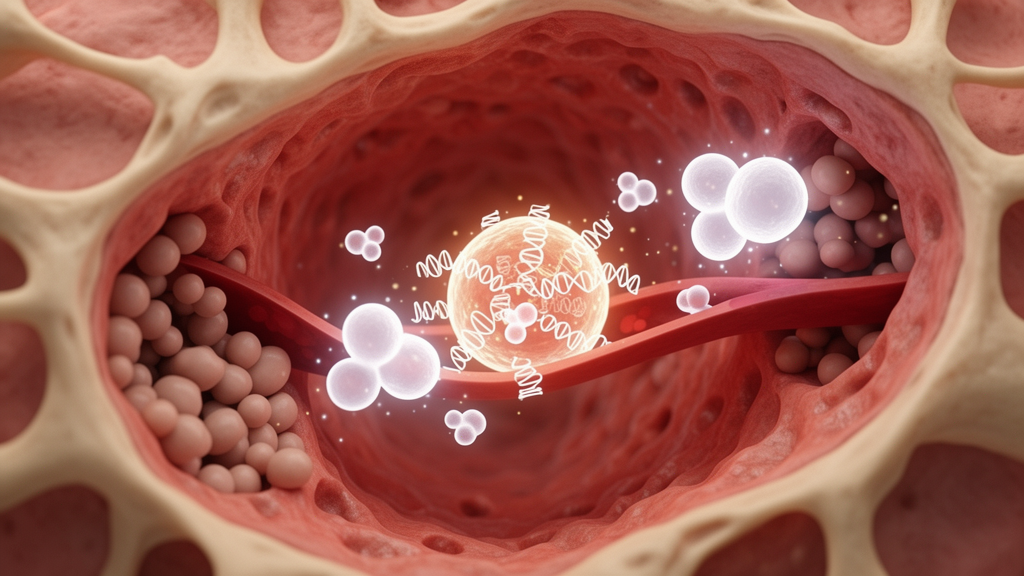
When an allergen strikes the airways, the immune system does not fight alone. Deep inside the bone marrow, a factory of eosinophils ramps up production, releasing waves of these inflammatory cells into the bloodstream and, eventually, into the lungs. A new study published in Frontiers in Allergy has mapped the molecular choreography behind this process, revealing that a family of tiny gene-regulating molecules called microRNAs (miRNAs) acts as tissue-specific switches that govern how allergic inflammation unfolds from the bone marrow to the airways.
MicroRNAs are short, evolutionarily conserved strands of non-coding RNA that do not make proteins themselves. Instead, they fine-tune gene expression by binding to messenger RNAs and blocking their translation or marking them for destruction. Because a single miRNA can regulate dozens of genes at once, these molecules serve as powerful master regulators of cellular behavior. In allergic diseases such as asthma, allergic rhinitis, and atopic dermatitis, patterns of miRNA expression are known to shift dramatically, reflecting both the changing cellular composition of inflamed tissues and the pathological state of individual cell types.
The research team, led by investigators at the Krefting Research Centre at the University of Gothenburg in Sweden, focused on interleukin-33 (IL-33), a so-called alarmin cytokine released by damaged airway epithelial cells. IL-33 is a central driver of type 2 immunity, the branch of the immune system that evolved to combat parasites but which, in modern environments, fuels allergic disease. Genome-wide association studies have repeatedly linked IL-33 signaling to allergic conditions, and the cytokine is known to activate type 2 innate lymphoid cells (ILC2s), enhance T helper 2 cell responses, and promote the development of eosinophils in the bone marrow by upregulating the IL-5 receptor alpha chain on committed progenitors.
To model this process, the researchers exposed C57BL/6 mice to recombinant murine IL-33 intranasally every other day for five days. The treatment triggered a dramatic influx of eosinophils into the bronchoalveolar lavage fluid, confirming that airway IL-33 alone is sufficient to drive systemic eosinophilic inflammation. Crucially, the bone marrow of these mice showed a corresponding increase in both immature and mature eosinophils, demonstrating that the airway signal had reached the primary site of eosinophil production and activated local maturation programs.
Using a combination of miRNA microarray, NanoString nCounter profiling, quantitative PCR, and a technique called PrimeFlow—which merges flow cytometry with single-cell miRNA detection—the team mapped miRNA expression in both the lungs and the bone marrow. The results revealed striking compartmentalization. In the lungs, IL-33 upregulated miRNAs previously implicated in type 2 immunity, including miR-155-5p, miR-223-3p, miR-21, and miR-210. In the bone marrow, by contrast, a larger subset of miRNAs was downregulated, including regulators of lymphoid effector cell differentiation such as miR-29a/c-3p, the miR-23∼27∼24 cluster, and miR-15a/b-5p.
Only two miRNAs, miR-378a-3p and miR-501-3p, were significantly altered in both compartments, and they moved in opposite directions: upregulated in the lungs but downregulated in the bone marrow. miR-378a-3p, which has been linked to IL-33 regulation, eosinophil differentiation, and poor bronchodilator responses in pediatric asthma, displayed a significant negative correlation between lung and bone marrow expression, hinting at a coordinated but tissue-specific regulatory role.
The most consistent hit across all profiling platforms was miR-150-5p, which was significantly downregulated in the bone marrow of IL-33-challenged mice. PrimeFlow analysis revealed that miR-150-5p is highly enriched in ILC2s and CD4-positive T cells but expressed at low levels in eosinophils and eosinophil progenitors. Although total bone marrow miR-150-5p decreased after IL-33 challenge, cell-specific levels within ILC2s and CD4-positive T cells remained unchanged, suggesting that the drop reflects the expanding population of eosinophils, which naturally carry little of this miRNA, rather than a direct suppression within lymphoid subsets.
Functional experiments showed that bone marrow ILC2s from IL-33-challenged mice produced significantly more IL-5 upon ex vivo restimulation than those from control animals, and expressed higher levels of the IL-33 receptor ST2. When the researchers used a synthetic miR-150-5p inhibitor in bone marrow cultures, they successfully knocked down the miRNA but did not observe changes in IL-5 or IL-10 production, indicating that miR-150-5p may not directly control cytokine output in this setting. However, RNA sequencing analysis of isolated ILC2s revealed that 44 conserved miR-150-5p target genes were actively modulated during both inflammatory and regulatory ILC2 activation states, suggesting a broader role in shaping ILC2 functionality.
Targeted mRNA profiling of the bone marrow further revealed that IL-33 modulated genes associated with eosinophil maturation and migration, including Csf2rb, a shared receptor subunit for IL-5 and GM-CSF, as well as Il13ra1 and Il4ra, which encode receptors for type 2 cytokines. Computational analysis using TargetScan Mouse 8.0 showed that predicted miR-223-3p target genes were downregulated in the bone marrow, and that expression of miR-19b-3p and miR-760-3p correlated significantly with their predicted targets, including Csf2rb, Ets1, and Casp3, providing mechanistic links between miRNA regulation and eosinophil biology.
The findings carry significant clinical implications. Severe eosinophilic asthma is characterized by persistent airway eosinophilia that correlates with disease severity and exacerbations, and while biologics targeting IL-5 or IL-4/IL-13 pathways are available, some patients exhibit residual tissue eosinophilia or paradoxical hypereosinophilia. The authors suggest that identifying miRNAs that control specific cellular trajectories during type 2 inflammation could lead to novel therapeutic strategies that selectively restrict bone marrow eosinophil egress or reprogram mature cells into a less inflammatory state, rather than systemically depleting the entire eosinophil pool. Although miRNA-directed therapeutics face delivery and safety challenges, the study provides a detailed molecular map that may guide future efforts to dampen excessive bone marrow eosinophilopoiesis in allergic disease.
Subject of Research: Exploration of miRNAs promoting eosinophilia and type 2 immunity
Article Title: Exploration of miRNAs promoting eosinophilia and type 2 immunity
Article References: Exploration of miRNAs promoting eosinophilia and type 2 immunity. (n.d.). https://doi.org/10.3389/falgy.2026.1968077
Image Credits: AI Generated
DOI: 10.3389/falgy.2026.1968077
Keywords: microRNA, eosinophils, interleukin-33, type 2 immunity, asthma, bone marrow, ILC2, allergic inflammation, Exploration, miRNAs, promoting, eosinophilia
Cite Scienmag News
Juliet Wilcox. (October 16, 2026). Tiny RNA switches revealed in the bone marrow behind allergic eosinophilia. Scienmag. https://scienmag.com/tiny-rna-switches-revealed-in-the-bone-marrow-behind-allergic-eosinophilia/
Juliet Wilcox. "Tiny RNA switches revealed in the bone marrow behind allergic eosinophilia." Scienmag, 16 October 2026, https://scienmag.com/tiny-rna-switches-revealed-in-the-bone-marrow-behind-allergic-eosinophilia/. Accessed 16 October 2026.
Juliet Wilcox. "Tiny RNA switches revealed in the bone marrow behind allergic eosinophilia." Scienmag. October 16, 2026. https://scienmag.com/tiny-rna-switches-revealed-in-the-bone-marrow-behind-allergic-eosinophilia/


