


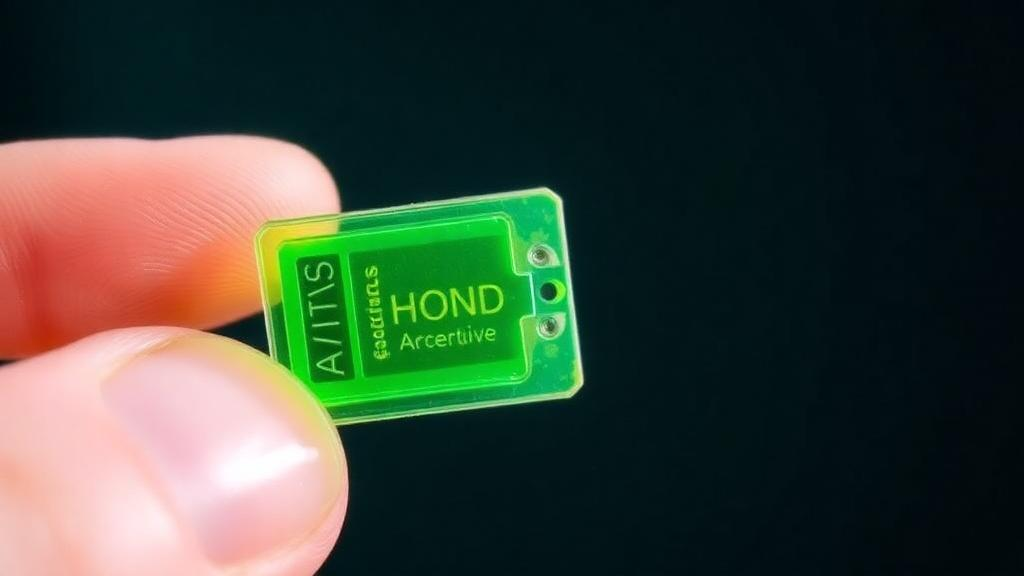
For the millions of people worldwide who live with food allergies, the greatest danger is often invisible. A trace of sesame flour carried over from one production line to another, or an undeclared ingredient buried deep inside a bakery premix, can be enough to trigger a life-threatening reaction. Food producers and regulators therefore depend on highly sensitive analytical methods to catch these hidden hazards before products reach consumers. A new study published in npj Science of Food describes a miniaturized solid-phase extraction cartridge that could make DNA-based allergen screening simpler, cheaper, and more adaptable to automated workflows, offering a practical alternative to commercial DNA extraction kits.
The research, led by Carla Teixeira of the International Iberian Nanotechnology Laboratory in Braga, Portugal, together with colleagues at the University of Santiago de Compostela in Spain, the University of Minho, and FOCOS GmbH in Germany, focuses on the often overlooked first step of any DNA-based diagnostic: getting clean, amplifiable DNA out of a complicated food matrix. The team built a prototype device that uses controlled pore glass as the solid phase onto which DNA binds and from which it is later released, and they paired it with a protocol that avoids chaotropic salts, the harsh chemicals that most conventional extraction chemistries rely on to disrupt proteins and free nucleic acids from their surroundings.
DNA has become an increasingly favored target for allergen detection because of a combination of properties that protein-based methods struggle to match. Genetic material is thermally stable, surviving the baking, roasting, and extrusion processes that can denature or destroy the allergenic proteins themselves. DNA sequences are also highly specific, allowing assays to distinguish sesame from botanically related species with confidence. Perhaps most importantly, the polymerase chain reaction, particularly its quantitative real-time variant known as qPCR, can amplify even vanishingly small amounts of target DNA into measurable signals, enabling trace-level detection that corresponds to the contamination scenarios that matter most in real food factories.
The efficiency of the entire detection chain, however, hinges on the extraction and purification step. Complex food samples contain fats, polyphenols, polysaccharides, and other inhibitors that can sabotage the enzymes used in PCR if they are not removed. Traditional liquid-phase extraction methods are labor-intensive and introduce multiple opportunities for sample loss and cross-contamination. Commercial spin-column kits standardize the process but come with recurring costs and limited flexibility. The miniaturized cartridge developed by the team aims to address these constraints by packing the DNA-binding solid phase into a small, self-contained format whose chemistry has been optimized specifically for allergen screening rather than for general-purpose nucleic acid work.
Controlled pore glass, the material at the heart of the new device, is a well-known medium in molecular biology: it is chemically robust, presents a high surface area for nucleic acid adsorption, and can be manufactured with precisely defined pore sizes. In the study, the researchers used this porous glass to capture DNA efficiently from processed samples and then release it cleanly for downstream analysis. By eliminating chaotropic salts from the protocol, the team simplified the workflow and reduced the chemical burden of the extraction, an important consideration for laboratories that process large numbers of samples and for portable or point-of-testing applications where harsh reagents are impractical.
The benchmark against a commercial kit is the most telling part of the evaluation. Despite yielding lower absolute quantities of DNA, in the range of approximately one to four nanograms per microliter, and purity ratios between roughly 0.8 and 1.2, values that look modest on paper compared with the numbers often quoted by conventional kits, the cartridge consistently delivered DNA that amplified successfully in qPCR assays. The researchers emphasize this point because amplifiability, not raw yield, is what ultimately determines whether an extraction method supports reliable allergen detection. A modest but clean extract that performs well in PCR is more useful than a high-volume extract riddled with inhibitors.
To test real-world performance, the team applied the cartridge to three challenging scenarios. In raw seeds, the device extracted DNA suitable for qPCR detection of sesame, one of the allergens for which mandatory labeling requirements have expanded in recent years in both the European Union and the United States. In commercial bakery mixes supplied by the Dutch company Sonneveld, the method successfully discriminated sesame-positive samples from negative ones, demonstrating that the extraction chemistry could cope with the sugars, fats, and starches that make baked goods among the most difficult matrices for DNA analysis. This discrimination capability is precisely what allergen control plans require: a clear, defensible answer about whether a prohibited ingredient is present.
The third scenario brought the technology out of the mixing bowl and onto the factory floor. Using swabs taken from stainless-steel coupons, the researchers showed that the cartridge could confirm the presence of sesame contamination at a surface density of 2.5 micrograms per square centimeter. Surface swabbing is a cornerstone of allergen management in food processing, because cross-contact between production runs on shared equipment is one of the most common routes by which undeclared allergens enter food. A verification method that works directly on swabs from processing surfaces gives quality teams a way to clear lines before the next product runs, potentially preventing recalls and protecting allergic consumers.
Beyond its analytical performance, the prototype’s most strategically significant feature may be its automation potential. Miniaturized cartridges with simplified, salt-free chemistry are natural candidates for integration into robotic liquid-handling platforms and microfluidic systems, where each pipetting step that can be removed from a protocol translates into faster turnaround, fewer errors, and lower costs. The work was carried out in part under the TITAN project, funded by the European Union’s Horizon Europe research and innovation program, which reflects the broader European push to strengthen food safety monitoring with advanced analytical technology.
The study, published open access with the DOI 10.1038/s41538-026-01196-6, arrives at a moment when allergen labeling regulations are tightening globally and the list of priority allergens continues to grow. Sesame alone became a newly mandatory label declaration in the United States in 2023, forcing many producers to re-evaluate their testing regimes. Tools that lower the barrier to sensitive, DNA-based allergen screening, whether applied to raw ingredients, complex premixes, or the surfaces of shared equipment, could meaningfully reduce the risk of undeclared allergens slipping through. While the device remains a prototype and further validation across additional allergens and matrices will be needed before it sees routine industrial use, the demonstration that a small controlled pore glass cartridge, run without chaotropic salts, can match a commercial kit where it counts, in amplifiable DNA and positive sample discrimination, marks a promising step toward faster, leaner, and more accessible allergen testing for the food industry.
Subject of Research: A miniaturized solid-phase extraction cartridge for DNA-based detection of food allergens
Article Title: A miniaturized solid-phase extraction cartridge for DNA-based detection of food allergens
Article References: Teixeira, C., Ipatov, A., Macedo, M., Popping, B., & Prado, M. (2026). A miniaturized solid-phase extraction cartridge for DNA-based detection of food allergens. npj Science of Food. https://doi.org/10.1038/s41538-026-01196-6
Image Credits: AI Generated
DOI: 10.1038/s41538-026-01196-6
Keywords: food allergens, DNA extraction, solid-phase extraction, controlled pore glass, qPCR, sesame, food safety, allergen detection, bakery mixes, surface swabbing, chaotropic salts, automation
Cite Scienmag News
Alan Morgan. (October 11, 2026). Tiny DNA Cartridge Promises Faster, Cleaner Detection of Hidden Food Allergens. Scienmag. https://scienmag.com/tiny-dna-cartridge-promises-faster-cleaner-detection-of-hidden-food-allergens/
Alan Morgan. "Tiny DNA Cartridge Promises Faster, Cleaner Detection of Hidden Food Allergens." Scienmag, 11 October 2026, https://scienmag.com/tiny-dna-cartridge-promises-faster-cleaner-detection-of-hidden-food-allergens/. Accessed 11 October 2026.
Alan Morgan. "Tiny DNA Cartridge Promises Faster, Cleaner Detection of Hidden Food Allergens." Scienmag. October 11, 2026. https://scienmag.com/tiny-dna-cartridge-promises-faster-cleaner-detection-of-hidden-food-allergens/


