


…
…
The challenge that 3L-GBC addresses is one that has quietly shaped decades of clustering research: the assumption that a cluster is a homogeneous object. Classical algorithms such as k-means implicitly model clusters as roughly spherical regions of uniform density, which is why they struggle when a real cluster resembles a comet with a bright head and a diffuse tail. Density-based methods like DBSCAN improved matters by defining clusters through connectivity, but they typically operate with a single global density threshold, and when a dataset mixes dense cores with sparse peripheries, that threshold becomes a compromise that serves neither region well. The three-layer representation adopted in this work reflects a growing recognition in the granular computing community that clusters are better understood as graded structures rather than binary memberships, with dense, transitional, and sparse zones that must each be modeled on their own terms.
Granular-ball computing, the foundation on which 3L-GBC builds, emerged as a way to reconcile the accuracy of point-wise analysis with the efficiency of coarse-grained representation. Instead of treating every sample individually, the framework encapsulates groups of nearby points into balls whose size adapts to local data distribution. Large balls cover unambiguous regions cheaply, while smaller balls are reserved for areas where the data is ambiguous or tightly packed. This coarse-to-fine philosophy has proven effective for scalable learning, and prior work has extended it to manifold clustering and spectral clustering. What distinguishes the present method is that it does not merely use granular balls as a computational shortcut; it treats the layered internal anatomy of each ball structure as informative in its own right, reading the density gradient across layers as a signal about how a cluster is organized.
The density peak strategy that guides candidate center identification traces back to a widely cited 2014 Science paper by Rodriguez and Laio, which proposed that cluster centers are points of unusually high local density surrounded by points of lower density. That insight spawned an entire research lineage, including refinements for uneven densities, automatic centroid identification, and graph-based label propagation. A persistent weakness across this lineage, however, has been the treatment of density as a scalar property of a point rather than as a spatially varying field within a cluster. By embedding density-peak thinking inside a granular-ball framework, the new method effectively lifts the idea from the level of individual points to the level of regions, which is a natural fit for datasets where density changes gradually across a cluster rather than abruptly between clusters.
The curvature-based mechanism for revealing internal structure deserves particular attention, because it speaks to a broader trend in unsupervised learning: making latent structure explicit rather than leaving it implicit in a final partition. Many clustering algorithms output only labels, discarding the intermediate geometry that justified those labels. By explicitly exposing a three-layer internal structure, the method offers something closer to an interpretable anatomy of each cluster, which matters in application domains where understanding why points belong together is as important as the assignment itself. In biomedical sequence analysis, for example, researchers often need to distinguish core functional groups from peripheral variants, and a layered view of cluster organization could align naturally with such questions.
The merging stage, driven by adaptive density propagation and multi-regional structural consistency, addresses another classic failure mode: over-segmentation. Methods that are sensitive to local density variation often fragment a single coherent cluster into several pieces when density fluctuates along its extent. Requiring structural consistency across multiple regions before merging provides a safeguard against joining genuinely separate clusters while still allowing a single cluster with heterogeneous density to be assembled from its layered parts. This echoes ideas from graph-based clustering, where connectivity and neighborhood structure, rather than distance alone, determine membership, but it applies those ideas at the granularity of regions rather than points.
The experimental evaluation reported in the paper spans synthetic and real datasets, which is the standard but important dual test for clustering methods. Synthetic datasets allow precise control over cluster shape, density heterogeneity, and noise, making it possible to demonstrate that an algorithm handles specific pathological geometries rather than merely performing well on average. Real datasets test whether the assumptions embedded in an algorithm match the messiness of actual data. The claim of competitive performance on complex structures is meaningful in a field where benchmarks increasingly include elongated, manifold-like, and multi-density configurations specifically designed to expose the weaknesses of single-threshold methods.
It is worth situating this work within the wider landscape of clustering research surveyed in recent literature. Deep clustering has attracted enormous attention, using neural representations to make points clusterable in learned feature spaces, and it dominates applications in image segmentation and beyond. Yet deep clustering introduces its own dependencies: training data volume, computational cost, and the opacity of learned representations. Classical and granular approaches occupy a complementary niche, offering transparent geometry, modest computational requirements, and applicability when labeled or high-volume data is unavailable. A method like 3L-GBC, which is efficient by design through its ball representation and lightweight center identification, fits that niche and may prove especially attractive in settings where interpretability and scalability are priorities.
The connection to granular computing also carries theoretical interest. Granular computing treats information processing at multiple levels of granularity as a first-class concern, and the principle of justifiable granularity formalizes when a granule is an honest summary of the data it covers. The three-layer construction in this paper can be read as an application of that philosophy to cluster anatomy: rather than forcing a single granularity per cluster, it maintains a hierarchy of granularities that mirrors the density structure of the data. This layered view may generalize beyond clustering, since the same dense-core, transition, periphery pattern appears in phenomena ranging from urban population distributions to protein interaction networks.
Practical deployment considerations follow from the design. Because the method builds granular balls adaptively and propagates density through them, its computational profile depends more on the number and size of balls than on raw point count, which is the source of its claimed scalability. The authors note that the data supporting the study are publicly available from open sources, which facilitates independent verification, though code availability is listed as not applicable, meaning reproduction would require reimplementation from the paper’s description. The work was supported by the Natural Science Foundation of Shandong Province, and the author team spans Qufu Normal University and Jining Medical University, reflecting the collaborative character of much algorithmic machine learning research in China.
Looking forward, several directions suggest themselves from the structure of the method. The three-layer model is currently defined by density gradients, but other signals, such as local direction centrality or shared-neighbor relationships, could plausibly define alternative layerings, and comparing these could clarify which structural cues are most robust. The curvature-based mechanism invites theoretical study of when curvature reliably indicates genuine structural boundaries versus sampling artifacts. And the multi-regional consistency criterion for merging raises questions about how it behaves near the boundary between one heterogeneous cluster and two adjacent homogeneous ones, a notoriously ambiguous case for any density-based method. As clustering benchmarks continue to evolve toward datasets with realistic density structure, methods that model clusters as layered, graded objects rather than uniform blobs are likely to play an increasing role, and this paper offers a concrete, well-motivated instance of that shift.
For practitioners, the immediate takeaway is that datasets exhibiting density heterogeneity, which are common in spatial data, customer segmentation, and biological measurements, are poorly served by methods that impose a single density criterion, and layered approaches provide a principled alternative. For researchers, the paper illustrates how an established computational paradigm, granular-ball computing, can be repurposed not just for efficiency but as a lens for discovering structure that point-wise methods obscure. The broader lesson is that the geometry of a dataset is not merely an obstacle to be overcome by an algorithm but a source of information to be modeled explicitly, and the most successful clustering methods of the coming years may be those that, like this one, treat internal cluster anatomy as a first-class object of study.
Subject of Research: A density-gradient-guided three-layer granular-ball clustering method for discovering layered structure in datasets with heterogeneous internal densities.
Article Title: 3L-GBC: structure-aware granular-ball clustering for layered structure discovery
Article References: Yin, L., Ma, Y., Dai, L., & Wang, M. (2026). 3L-GBC: structure-aware granular-ball clustering for layered structure discovery. Applied Intelligence, 56(16), Article 495. https://doi.org/10.1007/s10489-026-07543-0
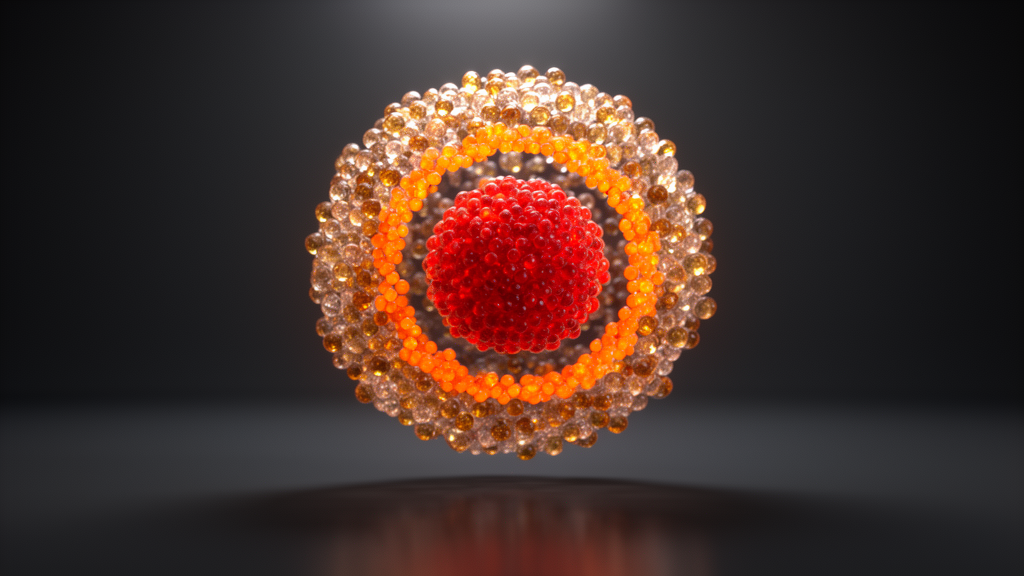
Image Credits: AI Generated
DOI: 10.1007/s10489-026-07543-0
Keywords: clustering, granular ball computing, density peak clustering, machine learning, unsupervised learning, data science, pattern recognition, graph clustering, artificial intelligence, algorithm, L-GBC, structure-aware
Cite Scienmag News
Blake Davidson. (October 16, 2026). Three-Layer Granular Balls Give Clustering Algorithms a New Way to See Inside Complex Data. Scienmag. https://scienmag.com/three-layer-granular-balls-give-clustering-algorithms-a-new-way-to-see-inside-complex-data/
Blake Davidson. "Three-Layer Granular Balls Give Clustering Algorithms a New Way to See Inside Complex Data." Scienmag, 16 October 2026, https://scienmag.com/three-layer-granular-balls-give-clustering-algorithms-a-new-way-to-see-inside-complex-data/. Accessed 16 October 2026.
Blake Davidson. "Three-Layer Granular Balls Give Clustering Algorithms a New Way to See Inside Complex Data." Scienmag. October 16, 2026. https://scienmag.com/three-layer-granular-balls-give-clustering-algorithms-a-new-way-to-see-inside-complex-data/


